Einleitung – Deutsch Die fortschreitende Digitalisierung von Wissenschaft, Kultur, Kommunikation und Gesundheit eröffnet die Möglichkeit, Wissensbereiche miteinander zu verbinden, die bislang überwiegend getrennt erforscht und vermittelt wurden. Kommunikation, künstliche Intelligenz, Kunst- und Kreativitätsforschung, d...
Liedtke Dieter· Zenodo (CERN European Organi...· 0 citations
The NeuroDraft software standardizes and quantifies qualitative Luria's syndromic analysis, mitigating human-error bias and reducing the medical reporting cycle to 5-10 minutes, which provides reproducible cognitive profiling suitable for routine clinical workflows.
We construct a connected graph on 15 vertices with burning number 4 and Slater number 2, refuting the candidate inequality b(G) <= s(G) + 1 recorded in AutoGraphForge's public conjecture audit. The graph consists of a clique K7 joined by one edge to a path on eight new vertices. Its Slater number is determined by its t...
A near-universal test of independence: the three-pole calibrated envelope, its joint null law, and dependent-null higher-criticism attainment William J. Dwyer, MD, MPH, FAAP — Department of Mathematics and Statistics, University of Massachusetts Lowell. ORCID 0009-0004-0855-7222. Concept DOI (always resolves to the lat...
William Dwyer· Zenodo (CERN European Organi...· 0 citations
Reach audiences
Advertise in front of researchers, engineers, and readers.
Whether consciousness can emerge in artificial systems is a central open problem of cognitive science. We report a complete pure-software simulation, executed on a single personal computer, built on the desire-driven ASMF-DE (Adaptive Symbolic-Spiking Hybrid Architecture): a spiking neural agent endowed with an L0 inte...
Tiphis Jia· Zenodo (CERN European Organi...· 0 citations
This software package accompanies the manuscript Exhaustive Reassignment Reveals Identity Dependence in MOS Gas Sensor Correction Tables by Yibo Wang, Zhixian Zhao, and Yu Tang. Software and reproduction The package reproduces the numerical results for exhaustive reassignment of fixed metal-oxide-semiconductor (MOS) ga...
This preprint proves that, for every finite simple graph without isolated vertices, the power domination number is at most half the Roman domination number, rounded down. More strongly, any Roman dominating function of weight w yields a sensor set of size at most floor(w/2) that observes the graph after initial dominat...
This dataset provides held-out testing and production-model provenance analysis for the Pt–C–O fourth-generation neuroevolution potential (NEP4) used in the manuscript “Species-Dependent Interfacial Aggregation and Local Graphene Lifting on Pt(111)”. It supplements the main computational dataset available at [PARENT DA...
Electronics education at vocational high schools (SMK) in Indonesia often faces a gap between curriculum requirements and limited laboratory infrastructure. This situation makes it difficult for students to develop an understanding of abstract electrical concepts. This study evaluates the effectiveness of integrating t...
Ulfah Mediaty Arief, Sri Sukamta, Tatyantoro Andrasto et al.· Frontiers in Education· 0 citations
Background: Optoelectronic plethysmography (OEP) is a non-invasive technique that can be used to assess both respiratory volumes and chest wall kinematics. An interpolation surface method (ISM) has been recently developed to enhance OEP kinematic analysis. The aim of this study was to test whether ISM is as accurate as...
L Gaillard, Laurent Stubbe, Damien Riquet et al.· Sensors· 0 citations
This replication package accompanies the manuscript “Three faces of autonomy: Exploring configurations of high team autonomy in software project teams.”The study examines how different combinations of control, alignment, and interaction are associated with high team autonomy in software development projects. The empiri...
This paper proposes a hybrid IDS framework that integrates three key components, such as the novel exponential grey wolf-optimized grid search algorithm (EGWOGSA), which is a stochastic optimization algorithm, while feature selection is achieved using the novel symmetric gradient Boruta for enhanced feature selection a...
Joseph Kipongo, Theo G. Swart, Ebenezer Esenogho· Soft Computing - A Fusion of...· 0 citations
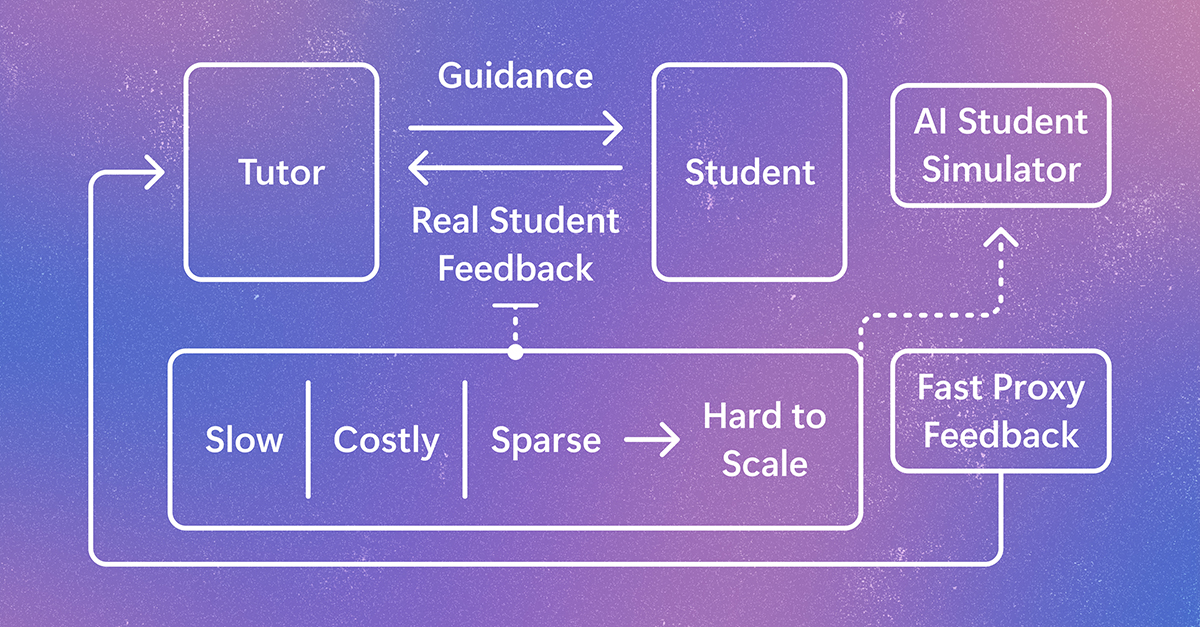
StudentSim is a research system for evaluating and improving AI tutoring tools before they are tested with learners. It models how individuals may engage with tutors, giving feedback to improve tutor performance across subjects like chess, writing, and mathematics. The post Simulating student learning for better AI tutoring appeared first on Microsoft Research.
MIT News · Artificial Intelligence· news.mit.eduOct 6, 2026
Writing as a participant and researcher, PhD student JS Tan SM ’22 has co-authored a new book about the rise of tech worker protests and the employer backlash that followed.
MIT News · Artificial Intelligence· news.mit.eduOct 2, 2026
Writing as a participant and researcher, PhD student JS Tan SM ’22 has co-authored a new book about the rise of tech worker protests and the employer backlash that followed.
Requirements in large systems rarely exist in isolation. Their meaning depends on the wider project context - other requirements, policies, decisions, tests, and implementation details. That becomes especially important when AI is used for review, because spotting a possible conflict or gap is only the beginning. ReqSpace explores how AI, visualisation, and connected project context can help reviewers understand those findings, trace the relationships behind them, and focus on the questions that…
We use cookies to run the site and, with your consent, for analytics and to show ads.
See our Cookie Policy.