Skip to content
#software testing Open access

Unbounded Burning Number at Slater Number Two

Sep 2026 · Figshare

Abstract

We construct a connected graph on 15 vertices with burning number 4 and Slater number 2, refuting the candidate inequality b(G) <= s(G) + 1 recorded in AutoGraphForge's public conjecture audit. The graph consists of a clique K7 joined by one edge to a path on eight new vertices. Its Slater number is determined by its two largest degrees. A ten-vertex geodesic excludes three burning rounds, while an explicit four-round schedule burns the whole graph. More generally, joining a path on t new vertices to K_(t-1), for t >= 8, gives s(G) = 2 and b(G) >= ceil(sqrt(t + 2)). Burning number is therefore unbounded on connected graphs with Slater number two. The proof uses the established diameter lower bound for graph burning. Complete finite certificates and reproducible verification accompany the self-contained arguments. Author: Seth Christopher — Independent Researcher. Scientific version 1.0.0. Files in this itemUnbounded_Burning_Number_at_Slater_Number_Two.pdf is the complete seven-page mathematical preprint. Burning_Slater_Manuscript_Source_and_Evidence_v1.0.0.zip contains the LaTeX source, finite certificate, tables, original research evidence, historical receipts, and fresh source-replay results. These materials are offered under CC BY 4.0, to the extent the licensor holds applicable rights. Mathematical facts and raw numbers are not claimed as newly copyrighted, and cited works retain their own rights. Companion verification softwareThe executable Python code is supplied separately under the MIT License in the companion Software item titled “Verification software for Unbounded Burning Number at Slater Number Two”, file Burning_Slater_Verification_Software_v1.0.0.zip. This separation preserves the paper/evidence and software licensing scopes. Extract both ZIPs into the same parent directory and merge their shared Burning_Slater_v1.0.0 directory. The software is offline and standard-library-only; the full source replay is supported on Linux with Python 3.10+. Verification and limitsThe finite checker evaluates all 3375 ordered three-center sequences for the 15-vertex graph, checks the capacity obstruction, and verifies the four-round witness. The full replay includes bounded search, checking, admission, regression tests and three finite-family instances. The infinite-family statement is established by the manuscript's mathematical argument, not by testing finitely many examples. These computational checks share authorship; they do not constitute independent peer review or a proof-assistant formalization. This work targets the burning–Slater candidate inequality, not the distinct square-root graph-burning conjecture. No claim of global priority or of a smallest counterexample is made. AI assistance: ChatGPT (OpenAI, used in this project as TPM45) provided substantial assistance with problem selection, mathematical development and proof checking, literature searches, verification-software preparation and execution, and manuscript drafting. Aurelia performed bounded candidate search; Selene checked the exhaustive three-round obstruction; Mica checked the capacity certificate and four-round witness. These are computational tools, not coauthors or independent reviewers. Seth Christopher initiated and directed the project and is the sole author responsible for the submitted content.


View source

Similar papers

#computer vision Review Sep 2017

Agile Software Development Methods: Review and Analysis

This publication proposes a definition and a classification of agile software development approaches and analyses ten software development methods that can be characterized as being "agile" against the defined criterion.

P. Abrahamsson, O. Salo, Jussi Ronkainen et al. · 727 citations · ⚡54
#computer vision Jun 2008

The impact of agile practices on communication in software development

The study shows that agile practices improve both informal and formal communication, but indicates that, in larger development situations involving multiple external stakeholders, a mismatch of adequate communication mechanisms can sometimes even hinder the communication.

M. Pikkarainen, Jukka Haikara, O. Salo et al. · 401 citations · ⚡48
#machine learning Review Open access Oct 2014

Software development in startup companies: A systematic mapping study

The results indicate that software engineering work practices are chosen opportunistically, adapted and configured to provide value under the constrains imposed by the startup context.

Nicolò Paternoster, Carmine Giardino, M. Unterkalmsteiner et al. · 394 citations · ⚡54
#computer vision Review Mar 2008

Agile methods in European embedded software development organisations: a survey on the actual use and usefulness of Extreme Programming and Scrum

The results show that the embedded industry has been able to apply agile methods in its development processes and that the appreciation of the agile methods and their individual practices appears to increase once adopted and applied in practice.

O. Salo, P. Abrahamsson · 238 citations · ⚡9
#computer vision Open access Jul 2017

What happens when software developers are (un)happy

Consequences of happiness and unhappiness that are beneficial and detrimental for developers' mental well-being, the software development process, and the produced artifacts are found.

D. Graziotin, Fabian Fagerholm, Xiaofeng Wang et al. · 236 citations · ⚡13
#computer vision Open access Oct 2004

Mobile-D: an agile approach for mobile application development

The Mobile-D approach is briefly outlined here and the experiences gained from four case studies are discussed, which helped develop an agile development approach for mobile application development.

P. Abrahamsson, Antti Hanhineva, H. Hulkko et al. · 225 citations · ⚡18

Related blog posts

GPT-Lab Sep 17, 2026

Beyond Prompt Engineering: The Role of Tacit Knowledge in Software Engineering

AI is making software generation faster, but speed does not remove the need for expertise. As more work is delegated to AI, tacit knowledge may become one of the most important human advantages in software engineering. The post Beyond Prompt Engineering: The Role of Tacit Knowledge in Software Engineering appeared first on GPT-Lab.

MIT News · Artificial Intelligence Aug 17, 2026

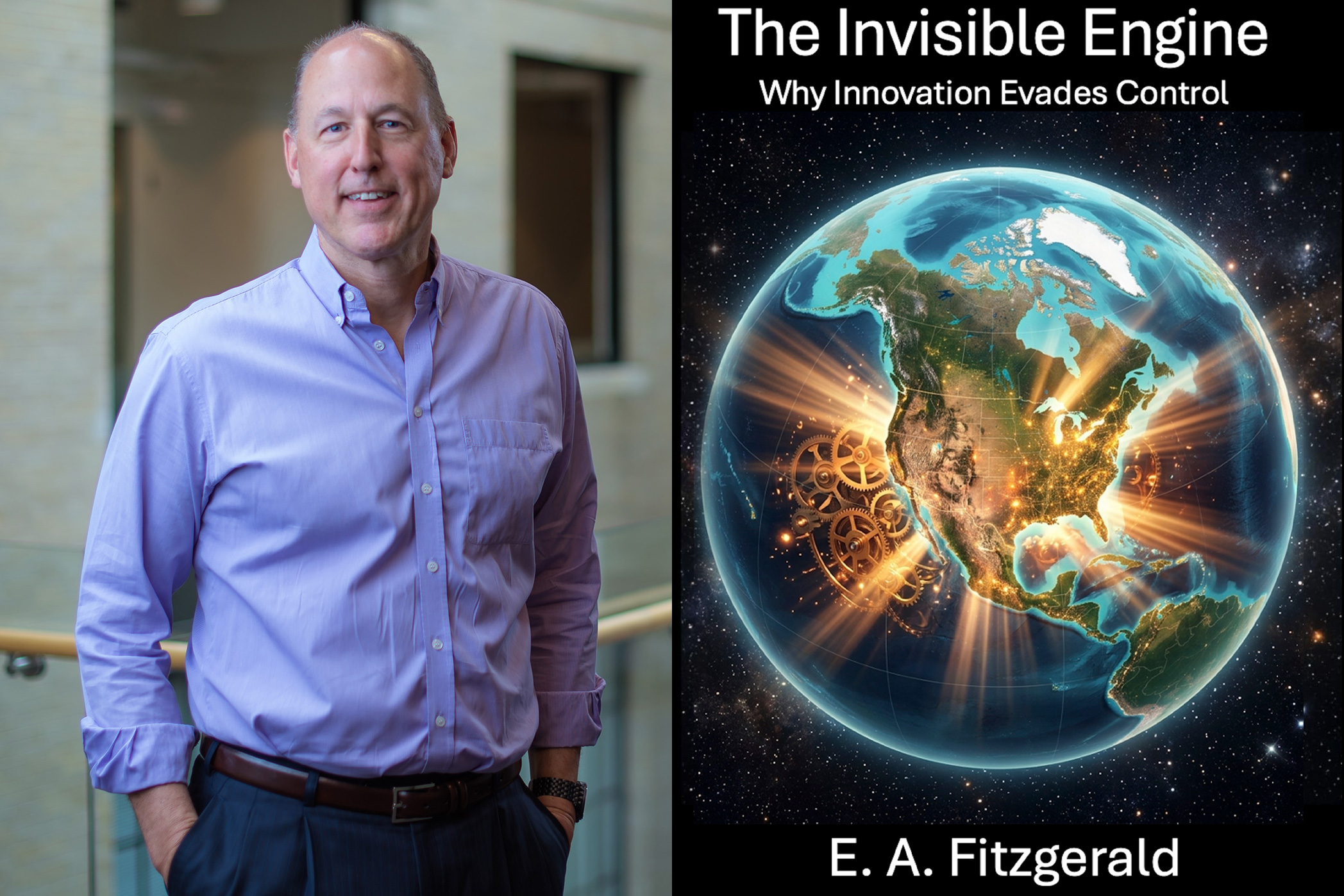
Q&A: Rethinking how innovation happens

In his latest book, Professor Eugene Fitzgerald examines the forces that turn breakthroughs into value — and why innovation resists simple formulas.

Microsoft Research Blog Aug 12, 2026

MindTopo reveals VLMs’ spatial reasoning abilities

A path, a fence, a knot. MindTopo sets a new benchmark for testing how AI understands topological relationships and highlights new opportunities to strengthen spatial reasoning and planning. The post MindTopo reveals VLMs’ spatial reasoning abilities appeared first on Microsoft Research.

We use cookies to run the site and, with your consent, for analytics and to show ads. See our Cookie Policy.