Recent advances in reinforcement learning (RL) have spurred growing interest in its application to multi-period financial planning. Existing literature broadly follows three paradigms: hybrid RL, scalable RL, and end-to-end RL. This paper develops a hybrid regime-aware RL framework for dynamic asset allocation that emb...
Yirui Luo, John M. Mulvey· The Journal of Financial Dat...· 0 citations
Reproduction material for the survey "Study-Area Boundaries in Reinforcement Learning-Based Route Guidance: A Survey of Evaluation Design and ReportingRequirements" by Donghoun Lee. The archive contains the grid, benchmark and SUMO environments, the planner, the training code, the screened corpus withthe recorded field...
GDH8808· Zenodo (CERN European Organi...· 0 citations
A flexible reinforcement learning method is introduced for flow-matching based generative models, allowing the velocity field to be refined according to a user-defined reward function, enabling dynamic fine-tuning and joint optimization of features, outperforming baseline approaches in diverse optimization scenarios.
Kun-Yu Wang, Jon Paul Janet, Alessandro Tibo· Communications Chemistry· 1 citation
ABSTRACT Students’ learning confidence at the elementary school level does not always develop through academic learning alone, particularly when they remain hesitant to ask questions, answer questions, express their opinions, or complete tasks without assistance. This condition provided the basis for examining the role...
TOPO-RLHF: Full Summary Core Contribution TOPO-RLHF presents the first integration of topological permanence with Reinforcement Learning from Human Feedback (RLHF), enabling existing models to acquire new capabilities without forgetting prior knowledge. The Problem It Solves Catastrophic Forgetting (1989-2026) AI syste...
FRANK MORALES· Zenodo (CERN European Organi...· 0 citations
This paper presents a meta-synthesis that draws together four constituent studies covering adversarial machine learning, AI-powered anomaly detection in cloud environments, automated vulnerability patching by multi-agent large language model (LLM) pipelines, and the broader landscape of securing AI systems across their...
Harsh Verma· International Journal of Sci...· 0 citations
Reinforcement learning as a decision making technique for cathode material design has been evaluated and how RL can support the composition selection, dopant, and crystal structure optimisation is analyzed.
Taimoor Muzaffar Gondal, Muhammad Qasim, Yasir Arafat· Nanomaterials· 0 citations
The polishing head is one of the most important components in the chemical mechanical polishing (CMP) process, used to achieve an ultra-smooth surface on the wafer. Due to the effect of the retaining ring and the replacement of the polishing pad, the polishing process is subjected to drift and shift interference. The C...
In recent years, enhancing physical layer security (PLS) in UAV-aided backscatter networks has received huge attention among the research community due to its various applications, such as smart farming, cognitive healthcare, and intelligent industrial automation, among others. It results in secure and reliable data tr...
Shivam Sarsawat, Korampalli Jaya Satwik, M. K. Shukla et al.· IEEE Transactions on Artific...· 0 citations
Learn how Google DeepMind and GovTech Singapore uses lightweight on-device Gemma models to intercept conversational scams in private chats with zero cloud data egress.
MIT News · Artificial Intelligence· news.mit.eduOct 13, 2026
Machine-learning networks can learn without detailed instructions from a designer. Those that do may offer insight into how the brain reorganizes itself during learning.
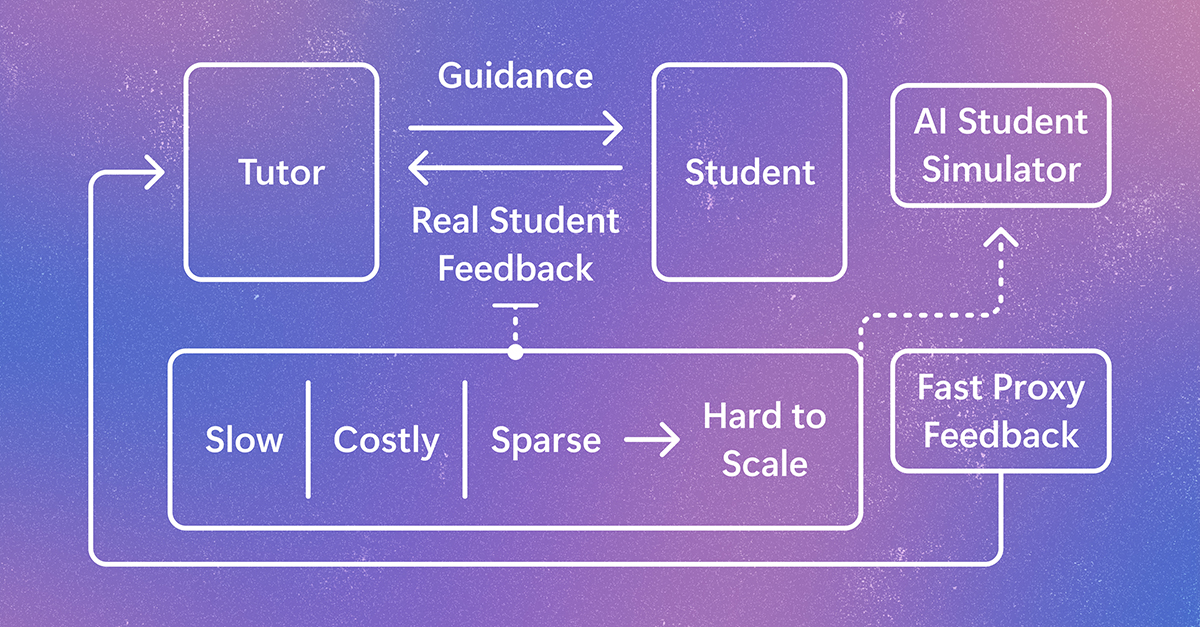
StudentSim is a research system for evaluating and improving AI tutoring tools before they are tested with learners. It models how individuals may engage with tutors, giving feedback to improve tutor performance across subjects like chess, writing, and mathematics. The post Simulating student learning for better AI tutoring appeared first on Microsoft Research.
MIT News · Artificial Intelligence· news.mit.eduOct 7, 2026
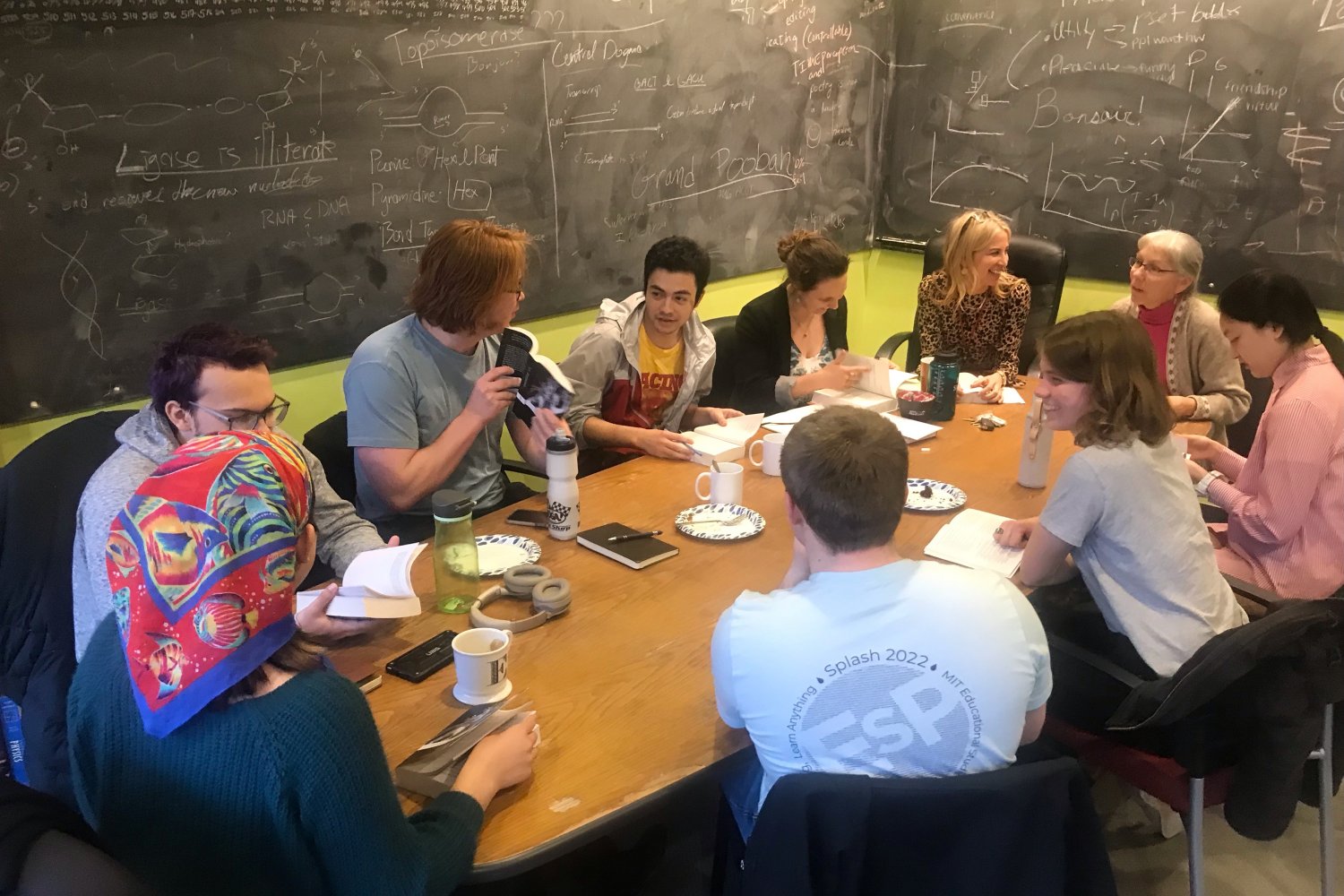
Students in MIT’s Concourse program delve deeply into the human condition, debate challenging questions, and learn to develop judgment about issues that can’t be quantified.
We use cookies to run the site and, with your consent, for analytics and to show ads.
See our Cookie Policy.