The transition toward semantic-aware communication offers a paradigm shift for next-generation mobile networks, promising to decouple information significance from raw data transmission. Despite advances in semantic extraction, the integration of semantic intelligence into the Medium Access Control (MAC) layer remains...
Hamidreza Mazandarani, Masoud Shokrnezhad, T. Taleb· IEEE Transactions on Network...· 0 citations
Adaptive Self-Design Algorithm is a novel algorithmic framework designed to automate the design and optimization of mathematical formulas, particularly within complex non-standard and nonlinear equation systems. This approach leverages a probabilistic search algorithm, incorporating reinforcement learning and genetic a...
Jincheng Zhang· Zenodo (CERN European Organi...· 0 citations
This paper presents a novel approach to symbolic artificial intelligence (AI) that addresses the limitations of traditional, manually-engineered rule-based systems. The core challenge in symbolic AI has historically been the extensive and often laborious process of crafting and maintaining a comprehensive rule set. Exi...
Jincheng Zhang· Zenodo (CERN European Organi...· 0 citations
This paper introduces Neuro-Topology Adaptive Dynamics (NTAD), a novel approach to neural network design that leverages reinforcement learning to dynamically optimize the topology of a neural network. The core claim is that by adapting the network's connectivity structure in real-time, using algorithms like Proximal Po...
Jincheng Zhang· Zenodo (CERN European Organi...· 0 citations
Reach audiences
Advertise in front of researchers, engineers, and readers.
This paper introduces the Adaptive Spatiotemporal Neural Models (ASPNM), a novel approach to time series prediction that addresses the limitations of traditional, static neural network models. The core idea is to design a neural network architecture capable of dynamically adjusting its internal parameters and behaviora...
Jincheng Zhang· Zenodo (CERN European Organi...· 0 citations
This paper explores the application of quantum self-organized networks (QSON) reinforcement learning, leveraging quantum entanglement and coherence to enhance learning strategies and improve the performance of reinforcement learning agents. Traditional reinforcement learning relies on classical computers, while this re...
Jincheng Zhang· Zenodo (CERN European Organi...· 0 citations
TOPO-RLHF: Full Summary Overview TOPO-RLHF is the first integration of topological permanence (TOPO-2026) with Reinforcement Learning from Human Feedback (RLHF), enabling existing AI models to acquire new capabilities without forgetting prior knowledge. Core Problem Solved Catastrophic forgetting (identified 1989) has...
FRANK MORALES· Zenodo (CERN European Organi...· 0 citations
This paper proposes a novel approach to deep learning model compression called Adaptive Precision Quantization (APQ). The core idea is to dynamically adjust the quantization precision of individual layers or parameters during training, guided by a reinforcement learning agent. Unlike traditional fixed-point quantizatio...
Jincheng Zhang· Zenodo (CERN European Organi...· 0 citations
Quantum error correction (QEC) is a crucial step towards fault-tolerant quantum computation. However, traditional QEC schemes often rely on fixed, pre-determined parameters, which may not be optimal for all quantum computations. This paper proposes a novel approach to QEC that leverages adaptive learning algorithms to...
Jincheng Zhang· Zenodo (CERN European Organi...· 0 citations
This paper presents a novel approach to computational graph optimization utilizing reinforcement learning (RL). Traditional static optimization methods often fail to adequately address the dynamic and evolving resource constraints encountered in modern computing environments. We propose a system where a reinforcement l...
Jincheng Zhang· Zenodo (CERN European Organi...· 0 citations
The increasing complexity of software systems poses significant challenges in managing dependencies. Traditional dependency analysis tools struggle to adapt to the dynamic changes in topology, hindering compile-time optimization and runtime performance. This paper introduces the Dynamic Topology-Dependent Graph Optimiz...
Jincheng Zhang· Zenodo (CERN European Organi...· 0 citations
This paper presents an innovative reinforcement learning algorithm designed to enhance the performance of chaotic systems through the integration of adaptive chaos algorithms. The core of this approach lies in employing reinforcement learning to train an adaptive chaos algorithm that dynamically adjusts its parameters...
Jincheng Zhang· Zenodo (CERN European Organi...· 0 citations
Learn how Google DeepMind and GovTech Singapore uses lightweight on-device Gemma models to intercept conversational scams in private chats with zero cloud data egress.
MIT News · Artificial Intelligence· news.mit.eduOct 13, 2026
Machine-learning networks can learn without detailed instructions from a designer. Those that do may offer insight into how the brain reorganizes itself during learning.
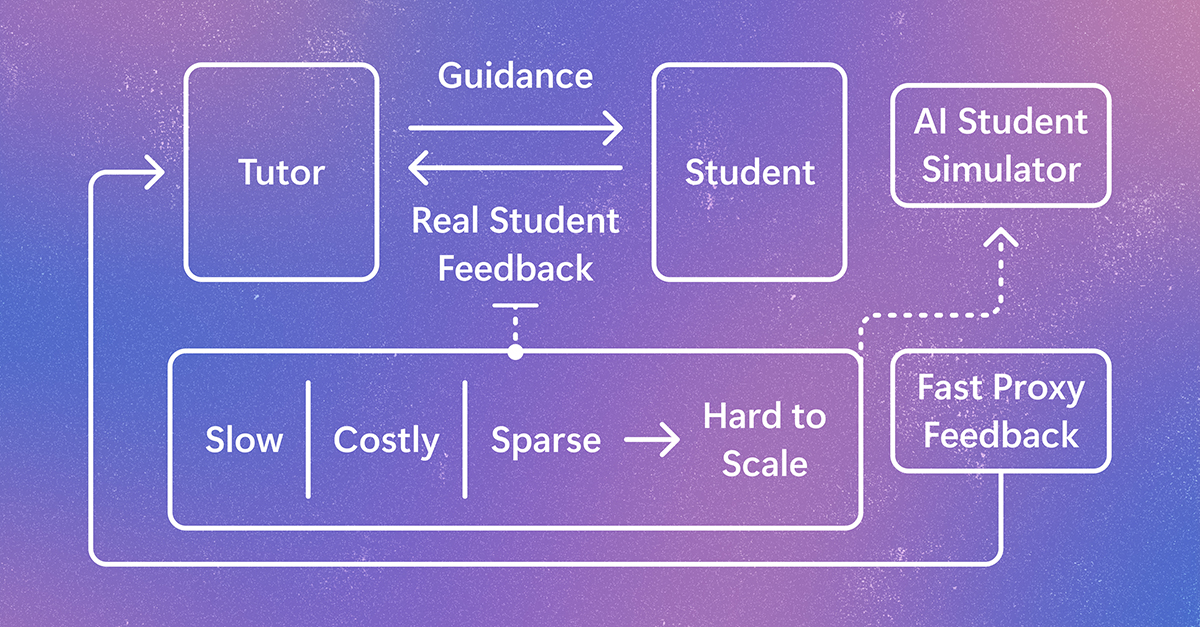
StudentSim is a research system for evaluating and improving AI tutoring tools before they are tested with learners. It models how individuals may engage with tutors, giving feedback to improve tutor performance across subjects like chess, writing, and mathematics. The post Simulating student learning for better AI tutoring appeared first on Microsoft Research.
MIT News · Artificial Intelligence· news.mit.eduOct 7, 2026
Students in MIT’s Concourse program delve deeply into the human condition, debate challenging questions, and learn to develop judgment about issues that can’t be quantified.
We use cookies to run the site and, with your consent, for analytics and to show ads.
See our Cookie Policy.