The first comprehensive benchmarking framework specifically designed to accommodate inter-dataset heterogeneity is presented, finding that well-designed small datasets can match or even surpass the performance of larger benchmarks, suggesting that different metrics are applicable to different datasets/testing scenarios...
Yingjuan Cheng, Qing Ye, Linlong Jiang et al.· Journal of Cheminformatics· 0 citations
Post-training alignment is often shallow, eroding under fine-tuning. It remains untested as to whether constitutional midtraining interventions can produce durable alignment when cleanly isolated from post-training. We build a 394M-token constitutional corpus from Anthropic's Constitution and apply constitutional midtr...
D. Cho, Cameron Tice, Bernie Hogan et al.· arXiv.org· 1 citation
Quantum measurements are the means by which we recover messages encoded into quantum states. They are at the forefront of quantum hypothesis testing, wherein the goal is to perform an optimal measurement for arriving at a correct conclusion. Mathematically, a measurement operator is Hermitian with eigenvalues in [0,1]....
A novel quantum generative model for synthesizing tabular data by proposing a quantum generative adversarial network architecture with flexible data encoding and a novel quantum circuit ansatz for effectively modeling tabular data is introduced.
P. Bhardwaj, Caitlin Jones, Lasse Dierich et al.· Scientific Reports· 2 citations
Reach audiences
Advertise in front of researchers, engineers, and readers.
Entanglement-Weighted Pruning (EWP), an unlearning procedure for quantum federated learning that scores every trainable circuit parameter with the product of two signals: the diagonal entry of the quantum Fisher information matrix estimated on the target client's data via the parameter-shift rule, and a structural enta...
Training variational quantum models requires choosing between parameter-shift gradients, which are exact but cost $O(P)$ forward evaluations, and simultaneous perturbation stochastic approximation (SPSA), which uses only two samples but produces high-variance estimates that can degrade optimisation on small supervised...
Nayan D'Souza, Christopher J. Agostino· 0 citations
Tensor networks are powerful formats for compressing large-scale data. However, their application to general data processing has been limited by the difficulty of performing nonlinear operations. Here, we introduce iterative tensor network transformations (ITNTs), a general algorithmic framework for the element-wise ev...
Xiao Wang, Tomohiro Hashizume, Pia Siegl et al.· 2 citations
This work builds an order parameter combining the predicted distribution with embedding overlap, as a density matrix, and shows sharp jumps resembling phase transitions, which characterize this near-synonym mechanism and need recalibration before extrapolation.
V. Prakash, J. Dontabhaktuni· arXiv.org· 0 citations
We introduce Bernstein-Vazirani Networks (BVNs), a non-variational quantum machine learning framework that leverages quantum interference for supervised learning, demonstrated on vision and representation learning tasks. In their standard form, BVNs follow the principle of quantum Fourier sampling: labelled data are pl...
AlphaClifford is introduced, a model-based Reinforcement Learning framework designed to efficiently synthesize Clifford circuits from the fundamental gate set composed of H, S, and CNOT, demonstrating the broad applicability of the framework on two additional tasks: hardware-constrained Clifford transpilation, where it...
A quantum-attribution audit is introduced that quantifies how much of any gain is genuinely attributable to the quantum component of quantum models, and attributes this to classical preprocessing and regularisation rather than quantum effects.
Syeda Anshrah Gillani, Mirza Samad Ahmed Baig, Shahid Munir Shah et al.· 1 citation
Jennifer Neville did not want to go into computer science—but that’s exactly where she landed. Neville discusses the starts and stops that led to her professional sweet spot and her work identifying “surprising failures” making it hard for AI to handle complexity. The post What AI gets wrong and what failure teaches us appeared first on Microsoft Research.
MIT News · Artificial Intelligence· news.mit.eduOct 2, 2026
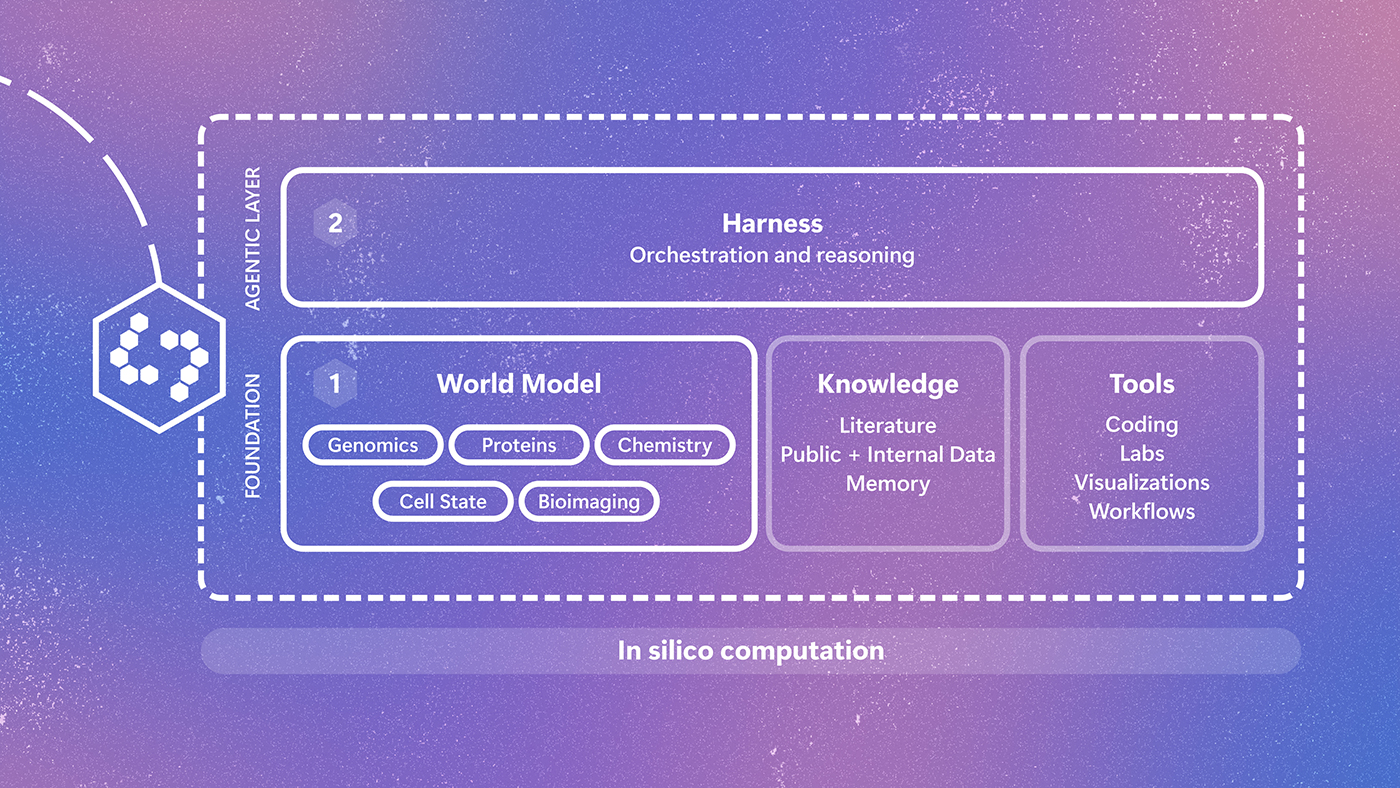
Biology doesn't operate in silos, and neither should the AI representation of it. Quine is an early-stage research effort to create a multimodal world model of biology. By connecting insights across biological scales and modalities, Quine helps scientists computationally search a space far larger than intuition allows and prioritize hypotheses before they reach the lab. Experimental results provide important feedback, helping researchers sharpen future research directions. The post Introducing Q…