Five domain-specific RAG applications developed for real-world scenarios across governance, cybersecurity, agriculture, industrial research, and medical diagnostics are presented, highlighting technical, operational, and ethical challenges affecting the reliability and usability of RAG systems in practice.
M. Hasan, Muhammad Waseem, Kai-Kristian Kemell et al.· EUROMICRO Conference on Soft...· 10 citations· ⚡1
Results highlight the ability of LLM-based multi-agent in managing refactoring tasks targeted toward functional programming paradigms and hint that LLM-based multi-agent systems integration into the refactoring of functional programming languages can enhance maintainability and support automated development workflows.
Shahbaz Siddeeq, Muhammad Waseem, Z. Rasheed et al.· International Conference on...· 5 citations
A generalized Multimodal Subspace Support Vector Data Description model with graph-embedded regularization is proposed, illustrating how relational and structural information can be systematically embedded into one-class models, enabling robust learning under complex, high-dimensional, and multimodal conditions.
Thomas Debelle, F. Sohrab, Pekka Abrahamsson et al.· Scientific Reports· 1 citation
Preliminary results indicate performance differences across LLMs, suggesting that model choice influences coverage, consistency, and hallucination rates.
Malik Abdul Sami, Gessé Evangelista, Kai-Kristian Kemell et al.· AGENT@ICSE· 0 citations
Reach audiences
Advertise in front of researchers, engineers, and readers.
LLM-based multi-agent systems can support strategic AI planning by enabling iterative refinement with human experts by supporting structured and collaborative Requirements Engineering processes for AI adoption planning.
Malik Abdul Sami, Zheying Zhang, Muhammad Waseem et al.· e-Informatica Software Engin...· 6 citations
This work introduces REFINE (Refactoring with Evidence-aware Flow for Integrated ageNtic Execution), a tool-agnostic, evidence-aware multi-agent approach for generating Java file-level refactoring candidates that achieves a higher median code-smell reduction with smaller edits and fewer public-method removals.
Muhammad Waseem, Aakash Ahmad, Pekka Abrahamsson· 0 citations
Sampling from discrete Markov random fields (MRFs) is a hard problem and amplitude-encoded i.i.d. sampling for small MRFs where $2^n$ target probabilities are precomputed classically is studied to allow a clean comparison against classical MCMC based on independent circuit samples.
This work employs the Bures metric as a local preconditioner and uses the mean Uhlmann curvature to develop an achievable-precision aggregation rule that dynamically down-weights unreliable clients and establishes theoretical guarantees by proving a convergence theorem and a variance-dominance proposition.
This work proposes Quantum SEDONet (Spectral-Embedded Deep Operator Network), which assigns each trunk coordinate a spectral basis according to its boundary condition: Fourier features for periodic coordinates and Chebyshev features for bounded, non-periodic coordinates.
Muhammad Abid, Arth Sojitra, Bipin Tiwari et al.· 0 citations
A systematic comparison of four classical machine learning architectures, support vector machines, artificial neural networks, convolutional neural networks, and long short-term memory networks against their quantum counterparts against their quantum counterparts characterize the trade-offs between classical and quantu...
Tariq Mahmood, Z. Abidin, Itzel Luviano Soto et al.· 0 citations
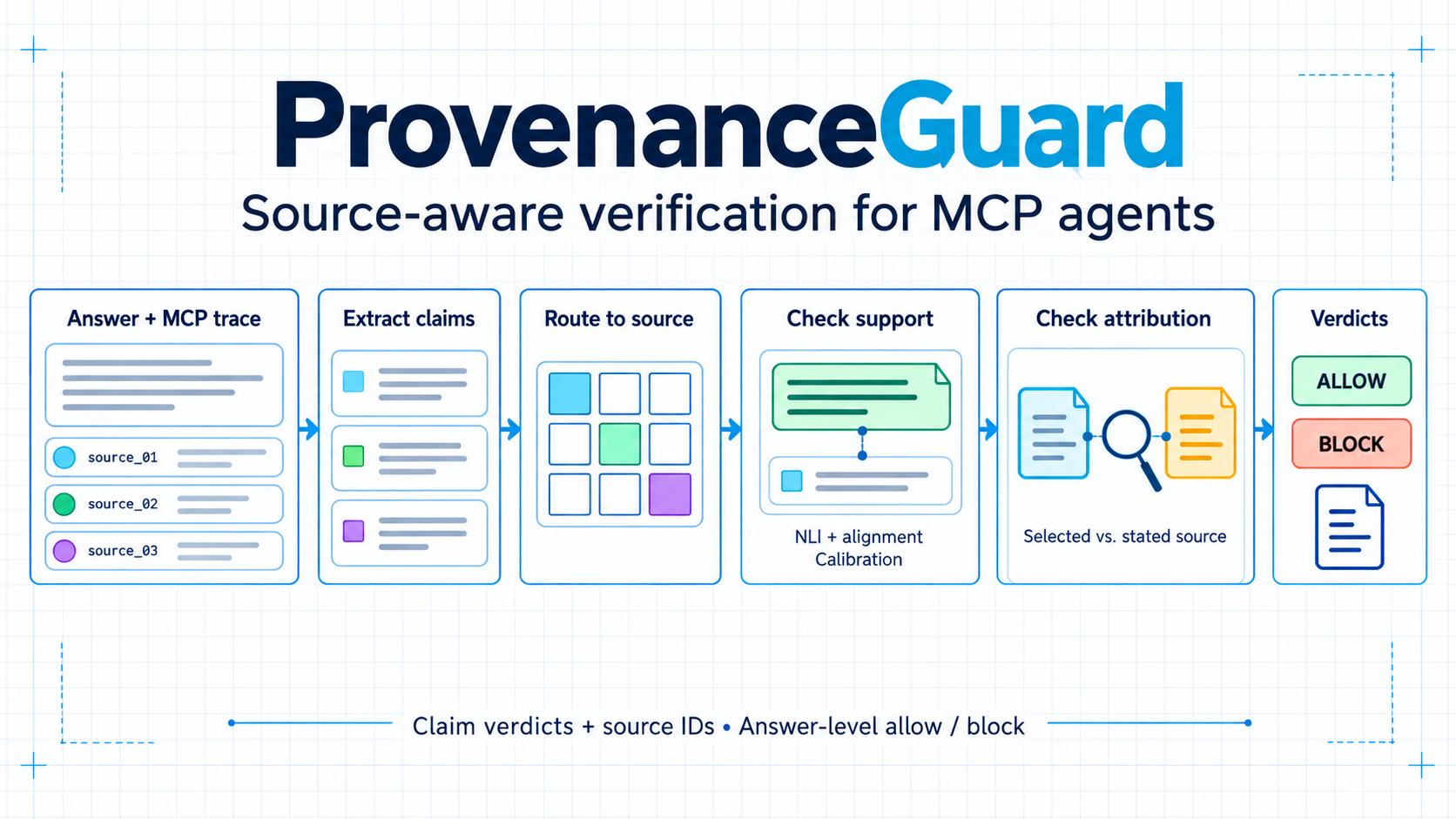
An Evaluation Agent, middleware that combines Natural Language Inference factual verification, a five-signal poison detector with relevance-weighted aggregation, and a Trust Index is proposed, which reliably blocks instruction injection of unsafe advice while contradiction and subtle semantic weakening remain hard.
Balkrishna Giri, M. Hasan, Jussi Rasku et al.· 0 citations
These findings show that reliable evaluation of LLM-generated code requires validated ground truth, protected tests, and multiple explicitly interpreted measures, and that CodeAssay provides a reproducible basis for evidence-based model evaluation in AI-augmented software development.
Shahbaz Siddeeq, Muhammad Waseem, Umar Subhan Malhi et al.· 0 citations
Jennifer Neville did not want to go into computer science—but that’s exactly where she landed. Neville discusses the starts and stops that led to her professional sweet spot and her work identifying “surprising failures” making it hard for AI to handle complexity. The post What AI gets wrong and what failure teaches us appeared first on Microsoft Research.
MIT News · Artificial Intelligence· news.mit.eduOct 2, 2026
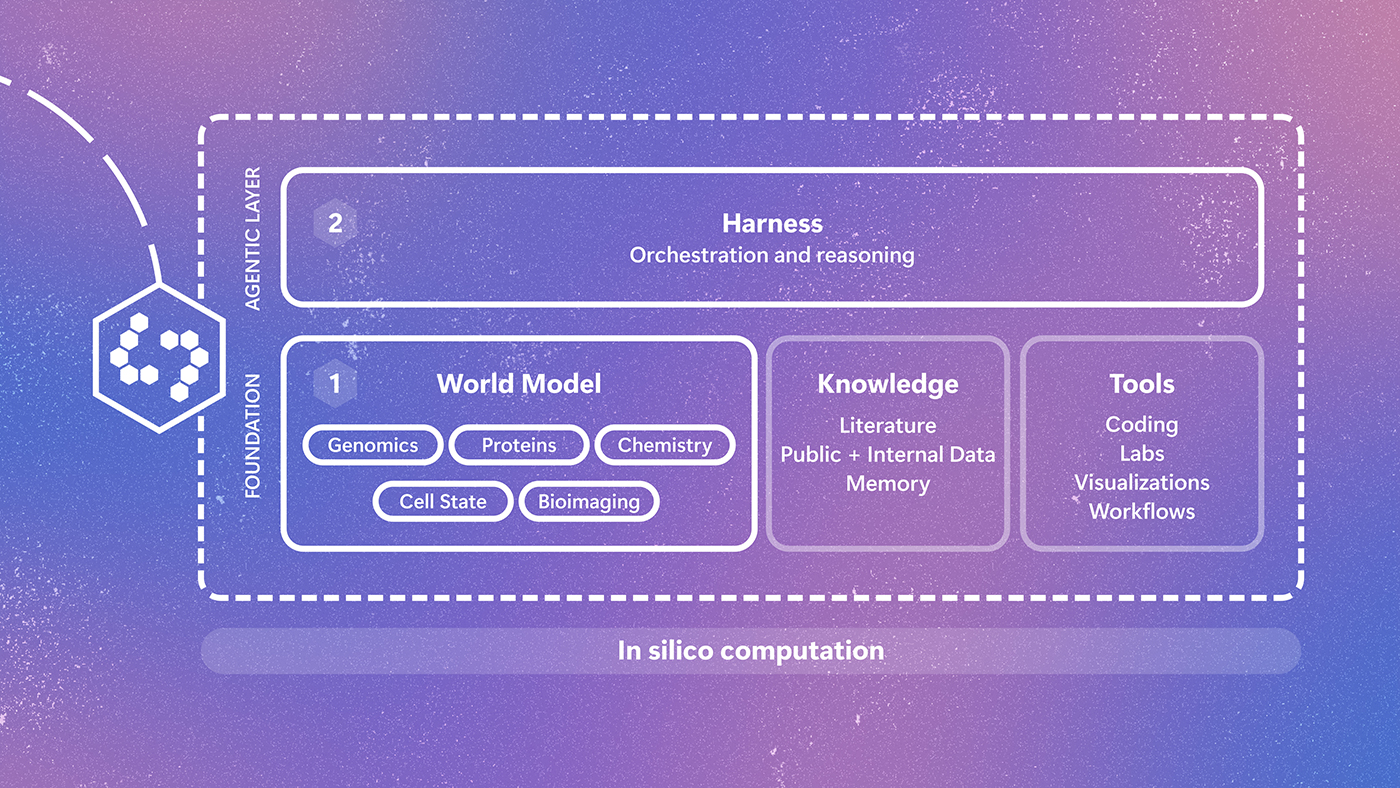
Biology doesn't operate in silos, and neither should the AI representation of it. Quine is an early-stage research effort to create a multimodal world model of biology. By connecting insights across biological scales and modalities, Quine helps scientists computationally search a space far larger than intuition allows and prioritize hypotheses before they reach the lab. Experimental results provide important feedback, helping researchers sharpen future research directions. The post Introducing Q…