These findings show that reliable evaluation of LLM-generated code requires validated ground truth, protected tests, and multiple explicitly interpreted measures, and that CodeAssay provides a reproducible basis for evidence-based model evaluation in AI-augmented software development.
Abstract
Large Language Models are increasingly evaluated for code generation using test-based benchmarks. The validity of such evaluations depends on the reliability of their references and tests, while test-based correctness captures only part of the observable properties of generated code. We present CodeAssay, a taxonomy-first benchmark of 185 Python tasks across ten software-engineering categories. It combines audited ground truth, public tests for generation and repair, hidden tests for grading, mutation-based test-suite validation, and selected code-property measures. Regrading fixed model outputs after the audit changed 170 of 1,890 correctness labels (9.0%) and increased the measured best-to-worst model spread from 11.9 to 23.7 percentage points, although aggregate correctness remained nearly unchanged. The complete and hidden test suites achieved mutation scores of 82.6% and 74.8%, respectively. Across seven proprietary LLMs, standard-prompt correctness ranged from 77.3% to 98.9%, with significant differences in 12 of 21 model pairs. On the 120 tasks solved by all 14 model-prompt configurations, no model performed best across all selected code properties. A security-focused prompt produced no significant change in correctness or consistent reduction in the selected static-analysis findings, while increasing program length and cyclomatic complexity across all models. These findings show that reliable evaluation of LLM-generated code requires validated ground truth, protected tests, and multiple explicitly interpreted measures. CodeAssay provides a reproducible basis for evidence-based model evaluation in AI-augmented software development.
Upon benchmarking against LLMs, it is found that functionality pass rate is consistently higher than vulnerability pass rate for all programming languages, highlighting the necessity of vulnerable code benchmarks with larger CWE coverage.
Samuel Osebe, Fan Yang, Junyi Li et al.· Annual Meeting of the Associ...· 0 citations
This paper introduces and empirically study the phenomenon of error propagation, where faults in generated code are systematically replicated in associated test artifacts, and examines whether LLM-generated code biases the generation of subsequent tests.
Michael Konstantinou, Florian Tambon, Mike Papadakis· 1 citation
An automated, multi-dimensional evaluation framework for C# code generation, applying it to four state-of-the-art LLMs: GPT, Gemini, Claude, and Grok is presented and a substantial gap between correctness and quality attributes is revealed.
Seyed Mohammad Mahdi Ghalandarian, Majid Bazargani, Masoumeh Taromirad· 0 citations
GateTruth, a mutation-testing engine and methodology for auditing RTL benchmark testbench rigor, is introduced and it is argued mutation-kill certification should become a standard reporting requirement for RTL-generation benchmarks generally.
This tutorial introduces a reusable, end-to-end evaluation pipeline grounded in empirical software engineering practices, focusing on post-generation validation rather than prompt design, allowing for validating AI-generated code in modern development workflows.
The results show that executable feedback can repair secure-code generation, but its benefits depend on the model, task, feedback entry point, and especially test coverage.
Yun-Hao Liang, Cheng-Guang Gan, Rui-Xuan Ying et al.· 2 citations
Jennifer Neville did not want to go into computer science—but that’s exactly where she landed. Neville discusses the starts and stops that led to her professional sweet spot and her work identifying “surprising failures” making it hard for AI to handle complexity. The post What AI gets wrong and what failure teaches us appeared first on Microsoft Research.
MIT News · Artificial Intelligence· news.mit.eduJun 3, 2026
The new ChartNet training dataset could improve the accuracy of vision-language models that help analyze business trends or interpret scientific figures.
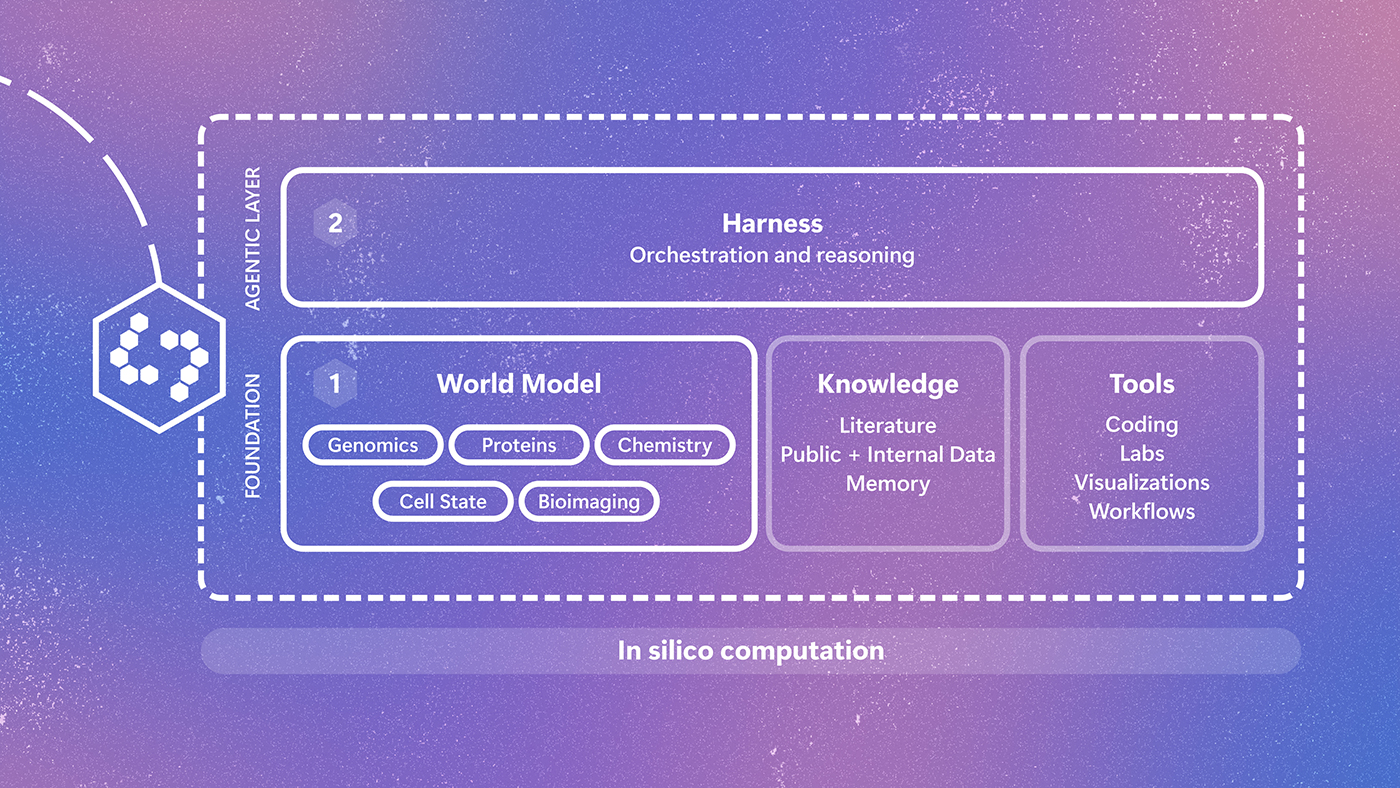
Biology doesn't operate in silos, and neither should the AI representation of it. Quine is an early-stage research effort to create a multimodal world model of biology. By connecting insights across biological scales and modalities, Quine helps scientists computationally search a space far larger than intuition allows and prioritize hypotheses before they reach the lab. Experimental results provide important feedback, helping researchers sharpen future research directions. The post Introducing Q…
We use cookies to run the site and, with your consent, for analytics and to show ads.
See our Cookie Policy.