This study investigates how employees in a energy company understand AI adoption and identifies areas where AI and LLMs-based agentic workflows could assist daily activities, including reporting work, forecasting, data handling, maintenance-related tasks, and anomaly detection.
Malik Abdul Sami, Z. Rasheed, Meri Olenius et al.· arXiv.org· 0 citations
This is one of the first reviews to integrate peer-reviewed and grey literature on vibe coding under a single documented protocol and is strongest for prototyping and user-interface work and weakest for production, data-intensive, and safety-critical use, and tool visibility does not imply effectiveness.
Shahbaz Siddeeq, Muhammad Waseem, Kai-Kristian Kemell et al.· arXiv.org· 0 citations
A variability-preserving imputation method is introduced that augments linear interpolation with locally adaptive stochastic noise, retaining physiological dynamics essential for accurate forecasting in short-term Heart Rate Variability forecasting.
Luukas Peräkylä, F. Sohrab, Ville Hautamäki et al.· arXiv.org· 0 citations
Reach audiences
Advertise in front of researchers, engineers, and readers.
An experience report from a small full-stack team that applied contextual prompting and explicit architectural constraints to build a multi-project agent learning platform designed for sustained, production-oriented use and an academic retrieval-augmented generation system is presented.
Md Nasir Uddin Shuvo, M. Islam, Mahade Hasan et al.· arXiv.org· 0 citations
Overall, the results suggest that epic-organized generation can improve perceived Gherkin quality while maintaining comparable semantic coverage, although broader replication is needed before generalizing this finding.
Shahbaz Siddeeq, M. Abbasi, Jussi Rasku et al.· arXiv.org· 0 citations
This study investigates how employees in a energy company understand AI adoption and identifies areas where AI and LLMs-based agentic workflows could assist daily activities, including reporting work, forecasting, data handling, maintenance-related tasks, and anomaly detection.
Malik Abdul Sami, Z. Rasheed, Meri Olenius et al.· 0 citations
The use of large language models to automatically improve the user story quality in Austrian Post Group IT agile teams is explored, with a reference model for an Autonomous LLM-based Agent System developed and implemented at the company.
Zheying Zhang, M. Rayhan, Tomas Herda et al.· International Conference on...· 48 citations· ⚡4
The workshop culminated in the collaborative development of a research roadmap that pinpoints actionable directions for future work, including both immediate solutions and ambitious long-term goals.
Tomas Herda, Victoria Pichler, Zheying Zhang et al.· XP Workshops· 3 citations
Jennifer Neville did not want to go into computer science—but that’s exactly where she landed. Neville discusses the starts and stops that led to her professional sweet spot and her work identifying “surprising failures” making it hard for AI to handle complexity. The post What AI gets wrong and what failure teaches us appeared first on Microsoft Research.
MIT News · Artificial Intelligence· news.mit.eduOct 2, 2026
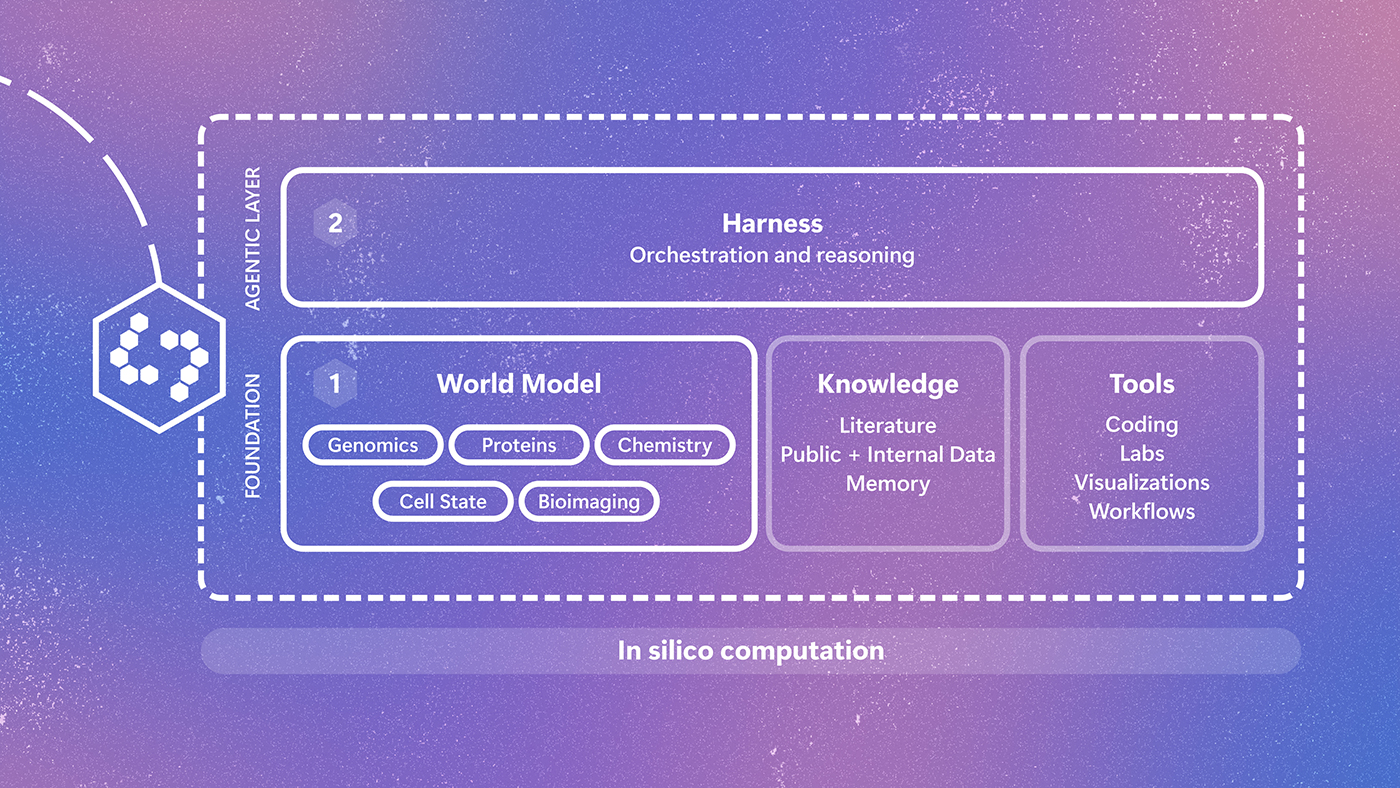
Biology doesn't operate in silos, and neither should the AI representation of it. Quine is an early-stage research effort to create a multimodal world model of biology. By connecting insights across biological scales and modalities, Quine helps scientists computationally search a space far larger than intuition allows and prioritize hypotheses before they reach the lab. Experimental results provide important feedback, helping researchers sharpen future research directions. The post Introducing Q…