We ask whether a neural network can learn a structure-preserving map from a compressed latent space to a Hilbert-space representation. Using an 8-dimensional autoencoder bottleneck on MNIST and $n$-qubit product-state targets from PCA-based angle encoding, we report four findings. Although the target angles are generat...
Optimization in machine learning is usually expressed through iterative rules that update model parameters using information from the loss landscape. In this work, we study an alternative viewpoint in which parameter optimization is treated as the evolution of a dissipative dynamical system. The model parameters are re...
Sparsho Chakraborty, Mohammad Alamgir, Nishanth M et al.· 0 citations
Building on our earlier program-evolution workflow guided by large language models (LLMs), we study weight-five bivariate bicycle (BB) and perturbed bivariate bicycle (PBB) codes. The resulting catalogue contains 1,142 distinct code proposals, including 1,081 nonbaseline proposals attributable to LLM-generated programs...
Magic-state distillation is a major resource cost in fault-tolerant quantum computing. The cost of a magic-state factory depends strongly on its failure rate, which grows with the number of input magic states. Although symmetry-restricted methods have recently made distance two searches tractable, distance three and ab...
Shubham P. Jain, Adam Wills, Shraddha Singh· 0 citations
Reach audiences
Advertise in front of researchers, engineers, and readers.
The Lindblad master equation is the standard framework for describing the non-unitary evolution of open quantum systems, where environmental interactions induce dissipation and decoherence. When both the system Hamiltonian and the dissipation rates are partially unknown or explicitly time-dependent, traditional analyti...
Molecular property prediction is central to computational drug discovery, where graph neural networks learn to weight neighboring atomic environments during message passing. Yet it remains unclear how variational quantum circuits alter learned attention behavior in molecular graphs. We introduce an edge-aware variation...
Yu-Cheng Lin, Yu-Chao Hsu, Tai-Yue Li et al.· 0 citations
We design an algorithm for learning the coefficients of an $n$-qubit constant-local Lindbladian to $\varepsilon$ error with $O(g d^2 \log(n) / \varepsilon^2)$ total evolution time, where $g$ is the single-site energy and $d$ is the (approximate) degree of the interaction graph. Though Lindbladians present new challenge...
We present the first analytical study of ECD, focusing on the one-dimensional setting for this first installment. We formalize a stochastic ECD dynamics (sECD) with energy-preserving noise, as well as a quantum analog of the ECD Hamiltonian (qECD), providing the foundation for a quantum algorithm through Hamiltonian si...
Yihang Sun, Huaijin Wang, Patrick Hayden et al.· 0 citations
In certain classes of physical quantum systems, the exponentially large state space "fragments" into many low-dimensional, dynamically disconnected subspaces. We introduce a learning problem known as fragment classification, where given a quantum state input, one is interested in classifying to which subspace the state...
We show that ensembles of deep neural networks, called deep ensembles, can be used to perform quantum parameter estimation while also providing a means for quantifying uncertainty in parameter estimates, which is a key advantage of using Bayesian inference for parameter estimation that is lost when using existing machi...
Neural quantum states based on modern deep learning architectures have emerged as powerful representations for quantum many-body systems. In particular, Transformer-based neural quantum states provide expressive models capable of capturing long-range correlations, and their empirical generalization performance has rece...
Zhen Qin, Qing Qu, Alfred O. Hero III· 0 citations
We establish lower bounds for Hamiltonian property testing with access to the time-evolution operator but not its inverse. Each experiment may query the time-evolution operator multiple times, and distances between Hamiltonians are measured in the normalized Frobenius norm.
In this model, we show that testing whether...
Francisco Escudero Guti\'errez, Junseo Lee, Sebastian Zur· 0 citations
Jennifer Neville did not want to go into computer science—but that’s exactly where she landed. Neville discusses the starts and stops that led to her professional sweet spot and her work identifying “surprising failures” making it hard for AI to handle complexity. The post What AI gets wrong and what failure teaches us appeared first on Microsoft Research.
MIT News · Artificial Intelligence· news.mit.eduOct 2, 2026
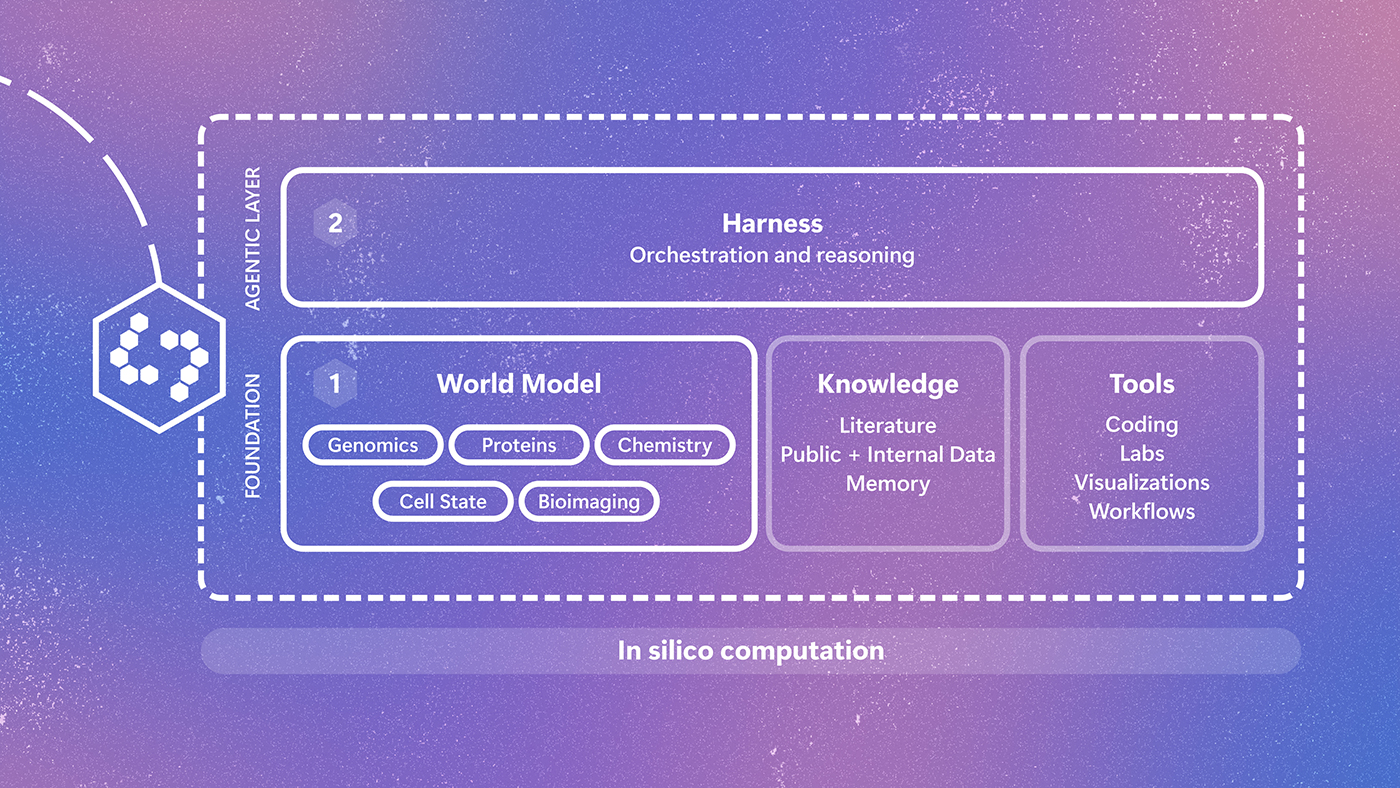
Biology doesn't operate in silos, and neither should the AI representation of it. Quine is an early-stage research effort to create a multimodal world model of biology. By connecting insights across biological scales and modalities, Quine helps scientists computationally search a space far larger than intuition allows and prioritize hypotheses before they reach the lab. Experimental results provide important feedback, helping researchers sharpen future research directions. The post Introducing Q…