Quantum Fourier sampling may help audit the spectral learnability of delay-based physical unclonable functions (PUFs). We ask whether that promise survives access matching, a strong classical comparator, and oracle synthesis. Three gates structure the evaluation. Structure: low degree is not small support at reachable challenge lengths; for 4-XOR at $n=14$, degree $\le d_f(0.1)$ admits $91\%$ of all $2^n$ characters and the median $90\%$-mass set spans a third of the spectrum. Algorithmics: constructing the phase oracle logically implies classical membership access, making Kushilevitz--Mansour the correct baseline; across 45 tasks it exhausts each finite domain, and no 4-XOR ideal-sampling case reaches $90\%$ mass within $2^n$ calls. A quantum-kernel diagnostic appears more favorable, with geometric difference rising to $2.151$ at $N=512$ challenges, but it correlates $0.991$ with $1/\sqrt{\lambda_{\min}(K_C)}$ for the classical Gram matrix $K_C$, and the 4-XOR label-complexity ratio does not exceed a balance-preserving permutation null ($p=0.930$). Trace-normalized geometric difference can therefore grow through classical ill-conditioning alone, without task-label alignment. Implementation: a simulator-validated fixed-point phase oracle based on the quantum Fourier transform admits an $18.9\%$ routed-depth reduction, yet the least certified precisions have estimated durations of $1.18$--$1.55\times$ the median dephasing time $T_2$ of the mapped qubits on a static backend snapshot, without hardware execution. We find no end-to-end advantage in the evaluated regime, although ideal sampling does use fewer coherent calls on the thresholded task. The contribution is the Three-Gate Quantum Audit Protocol: a reproducible procedure separating an ideal query advantage from a realizable security benefit. This is not a claim about deployed silicon and not an impossibility result.
This publication proposes a definition and a classification of agile software development approaches and analyses ten software development methods that can be characterized as being "agile" against the defined criterion.
P. Abrahamsson, O. Salo, Jussi Ronkainen et al.· arXiv.org· 727 citations· ⚡54
The study shows that agile practices improve both informal and formal communication, but indicates that, in larger development situations involving multiple external stakeholders, a mismatch of adequate communication mechanisms can sometimes even hinder the communication.
M. Pikkarainen, Jukka Haikara, O. Salo et al.· Empirical Software Engineeri...· 401 citations· ⚡48
The results indicate that software engineering work practices are chosen opportunistically, adapted and configured to provide value under the constrains imposed by the startup context.
Nicolò Paternoster, Carmine Giardino, M. Unterkalmsteiner et al.· Information and Software Tec...· 394 citations· ⚡54
The possibility of inferring high-dimensional data inference in a model that consists of a prior and an auxiliary differentiable constraint given some additional information is considered, thereby allowing a range of potential applications in adapting models to new domains and tasks.
Alexandros Graikos, Esmeralda S. Whitammer, N. Jojic et al.· Neural Information Processin...· 316 citations· ⚡15
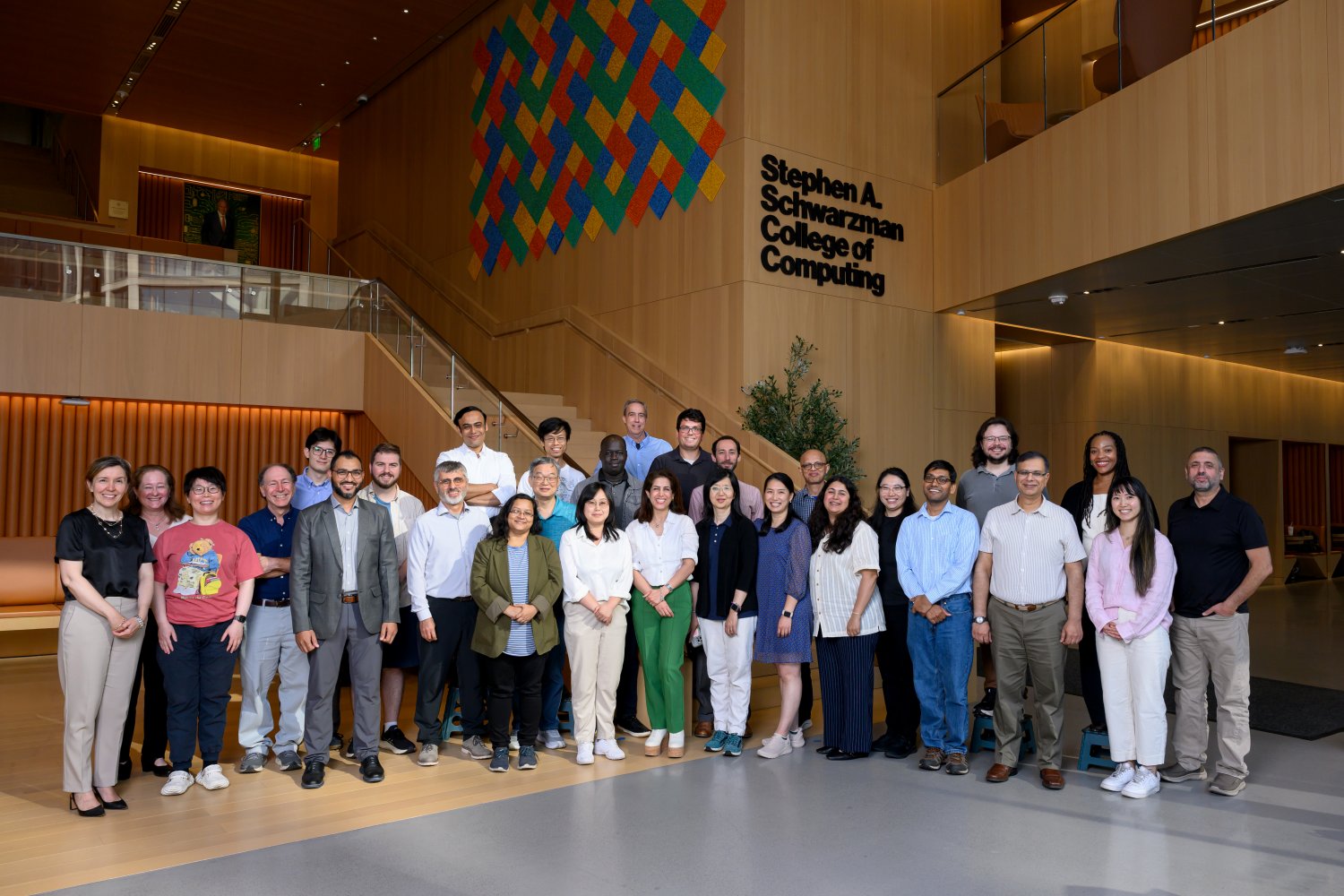
A weeklong summer workshop brought higher education faculty to campus to explore how AI and machine learning materials can be adapted for their classrooms.
MIT News · Artificial Intelligence· news.mit.eduAug 27, 2026
A new machine-learning framework aims to improve the success rate of computational protein design while moving away from results that reproduce sequences found in nature.
Microsoft Research Blog· microsoft.comAug 20, 2026
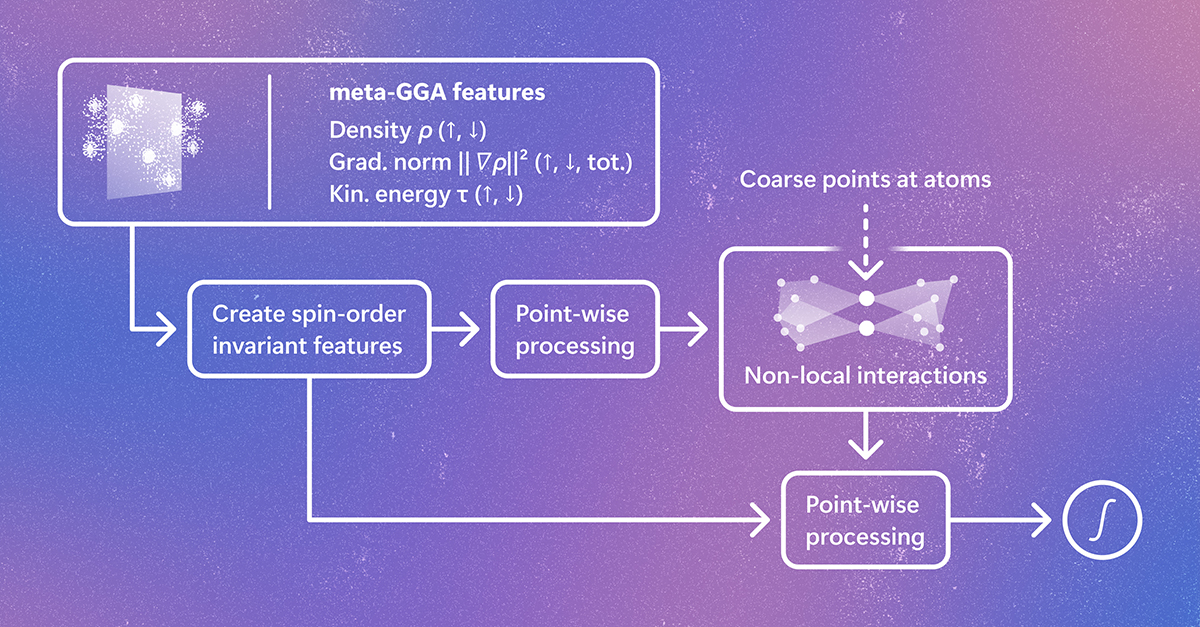
Skala 1.1, the updated deep-learning exchange-correlation functional from Microsoft Research, provides greater accuracy, expanded accessibility across the computational chemistry ecosystem, and a living benchmark to track computational performance. The post Broadening access to Skala creates a faster path to predictive DFT appeared first on Microsoft Research.
We use cookies to run the site and, with your consent, for analytics and to show ads.
See our Cookie Policy.