This work presents the design and implementation of a governance-aware, multi-tenant AI sandbox for structured experimentation and the generation of reusable evaluation evidence across projects and stakeholder groups.
Muhammad Waseem, M. Islam, Md Nasir Uddin Shuvo et al.· 0 citations
A Multi-Vocal Literature Review is conducted, combining insights from both academia and industry, including peer-reviewed studies and grey literature to systematically synthesize and analyze existing knowledge on LLM-based multi-agent systems for code generation.
Z. Rasheed, Muhammad Waseem, Kai-Kristian Kemell et al.· arXiv.org· 2 citations
This study provides the first large-scale empirical comparison of agentic frameworks for reasoning-intensive software engineering tasks and shows that framework selection should prioritize orchestration quality, especially memory control, failure handling, and cost management.
Z. Rasheed, Malik Abdul Sami, Muhammad Waseem et al.· arXiv.org· 1 citation
Reach audiences
Advertise in front of researchers, engineers, and readers.
The vision is to leverage the capabilities of multiple GPT agents to contribute to SE tasks and to propose an initial road map for future work, arguing that multiple G PT agents can perform creative and demanding tasks far beyond coding and debugging.
Z. Rasheed, Muhammad Waseem, Kai-Kristian Kemell et al.· XP Workshops· 34 citations· ⚡2
This research highlights the heightened threats to data integrity and stakeholder trust in these evolving ecosystems through an intensive examination of the literature, initiating a pioneering discourse emphasizing fostering a foundation for developing secure and trustworthy Liquid AI environments.
M. Agbese, Niko Mäkitalo, Muhammad Waseem et al.· IoT· 6 citations· ⚡1
Carbon-Aware Governance Gates (CAGG), an architectural extension that embeds carbon budgets, energy provenance, and sustainability-aware validation orchestration into human-AI governance layers, is proposed.
M. Abbasi, T. Mikkonen, Petri Ihantola et al.· 2026 IEEE 23rd International...· 0 citations
A scheme to train a better transformation for a given image dataset is developed, using isometric tensor networks, inspired by quantum many-body theory, to parameterize the basis, and train it with Riemannian optimization.
Shiwen An, Zhongyi Ni, Huanhai Zhou et al.· 0 citations
This work introduces a hybrid quantum graph learning architecture designed explicitly for unsupervised learning in the noisy intermediate-scale quantum (NISQ) regime that combines a variational quantum feature extraction layer with an edge-local and qubit-efficient quantum message-passing mechanism inspired by the Quan...
It is discovered that the energy benefits of quantum computing economies are contingent on large-scale computation, and quantum computing may represent a more sustainable pathway for the computing industry.
Junyu Liu, Hansheng Jiang, Zuo‐Jun Max Shen· 2 citations
The results indicate that a converged moment-matching loss is not a reliable measure of generalization, and that train-classical, deploy-quantum workflows will need approaches that target generalization directly, leaving open whether better training objectives suffice or whether the model architectures themselves must...
S. Raj, Natansh Mathur, A. Perdomo-Ortiz· 0 citations
This work establishes quantum signal processing (QSP) as a solvable quantum model of the representation-learning regime, and proves a sparse-data guarantee for the full nonlinear gradient flow without freezing or ensemble-averaging the kernel.
Jennifer Neville did not want to go into computer science—but that’s exactly where she landed. Neville discusses the starts and stops that led to her professional sweet spot and her work identifying “surprising failures” making it hard for AI to handle complexity. The post What AI gets wrong and what failure teaches us appeared first on Microsoft Research.
MIT News · Artificial Intelligence· news.mit.eduOct 2, 2026
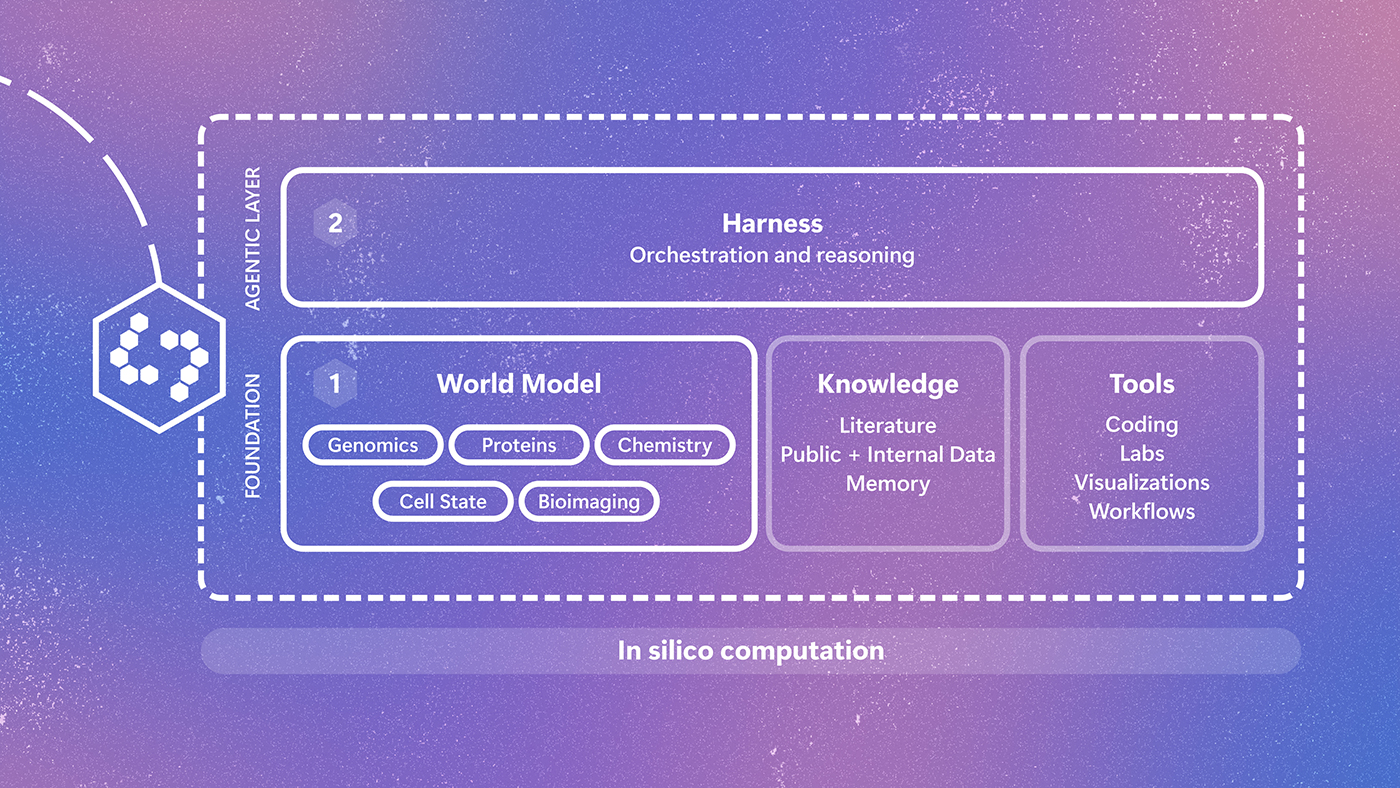
Biology doesn't operate in silos, and neither should the AI representation of it. Quine is an early-stage research effort to create a multimodal world model of biology. By connecting insights across biological scales and modalities, Quine helps scientists computationally search a space far larger than intuition allows and prioritize hypotheses before they reach the lab. Experimental results provide important feedback, helping researchers sharpen future research directions. The post Introducing Q…