This work proposes a novel algorithm structured on Lie algebras for the approximate quantum state preparation problem, achieving high accuracy of up to 4 qubits in simulation, but also its current limitations with an increasing number of qubits.
Marco Mordacci, Giacomo Belli, Michele Amoretti· 4 citations
For two causal structures with the same set of visible variables, one is said to observationally dominate the other if the set of distributions over the visible variables realizable by the first contains the set of distributions over the visible variables realizable by the second. Knowing such dominance relations is us...
Marina Maciel Ansanelli, Elie Wolfe, Robert W. Spekkens· 0 citations
The problem of reconstructing a quantum channel from a sample of classical data is considered. When the total fidelity can be represented as a ratio of two quadratic forms (e.g., in the case of mapping a mixed state to a pure state, projective operators, unitary learning, and others), Semidefinite Programming (SDP) can...
Mikhail Gennadievich Belov, Victor Victorovich Dubov, Vadim Konstantinovich Ivanov et al.· 0 citations
We develop a quantum approach to spectral feature extraction from the density of states (DOS) of a problem-dependent Hamiltonian, and apply it to machine learning on signed graphs. We propose to embed a signed graph as an Ising model instance with positive and negative interactions, and use the standardized moments of...
Stefano Scali, Oleksandr Kyriienko· 0 citations
Reach audiences
Advertise in front of researchers, engineers, and readers.
GenQAS is introduced, a tensor network-guided RL framework that combines a fixed matrix product state warm-start with prioritized generative replay and can mitigate sample starvation in quantum architecture search and support more resource efficient circuit discovery.
Akash Kundu, Amit Kumar Jaiswal, Sebastian Feld et al.· 0 citations
Quantum reservoir computing (QRC) uses quantum dynamics to represent input histories for prediction through a trained classical readout. Discrete time crystals (DTCs) exhibit robust subharmonic responses under periodic driving, and previous work has used their dynamics to construct DTC-QRC. Here we construct a DTC-base...
Luo-Fei Wang, Da Zhang, Cong-Ren Wang et al.· 0 citations
The results show that the factorization underlying a quantum block encoding can itself provide sufficient classical structure even when sampling-and-query access to the composite matrix is unavailable, suggesting a classical sampler with prescribed accuracy and polynomially related runtime.
Natsuto Isogai, M. Murao, Hayata Yamasaki· 0 citations
Logical operations are essential for quantum computation within quantum error-correcting codes. However, discovering their physical realizations is challenging, especially for non-additive codes that lack a stabilizer description. We present a general learning-based framework that, given only an encoding circuit, const...
Nico Meyer, Christopher Mutschler, Dominik Seu{\ss} et al.· 0 citations
We determine the optimal sample complexity of low-rank quantum state tomography when each measurement may act jointly on at most $t$ samples. For sufficiently small $\varepsilon$, estimating an unknown state on $\mathbb{C}^d$ of rank at most $r$ to trace norm error $\varepsilon$ with constant success probability requir...
How many past requests are needed to decide which qubits should share entanglement? We show that the answer depends on the allocation choices created by the queries: a larger memory can require no more data. The memory stores a classical bit and answers requests through a fixed detector that preserves coherence within...
Quantum state tomography is a fundamental technique for estimating the state of a quantum system from measured data and plays a crucial role in evaluating the performance of quantum devices. However, standard estimation methods become computationally prohibitive as the system size increases due to the exponential growt...
Shakir Showkat Sofi, Charlotte Vermeylen, Fatemeh Mohammadi et al.· 0 citations
We present a method for recovering the moral graph of a causal DAG from a probability distribution over discrete variables, using fully connected tensor networks (FCTNs) with nuclear-norm-regularized bond corrections. Each bond matrix is parameterized as a baseline all-ones matrix plus a low-rank correction $C_{ij} = U...
\'A. Troyano Olivas, Chi-Hang Fred Fung, Hans H. Brunner et al.· 0 citations
Jennifer Neville did not want to go into computer science—but that’s exactly where she landed. Neville discusses the starts and stops that led to her professional sweet spot and her work identifying “surprising failures” making it hard for AI to handle complexity. The post What AI gets wrong and what failure teaches us appeared first on Microsoft Research.
MIT News · Artificial Intelligence· news.mit.eduOct 2, 2026
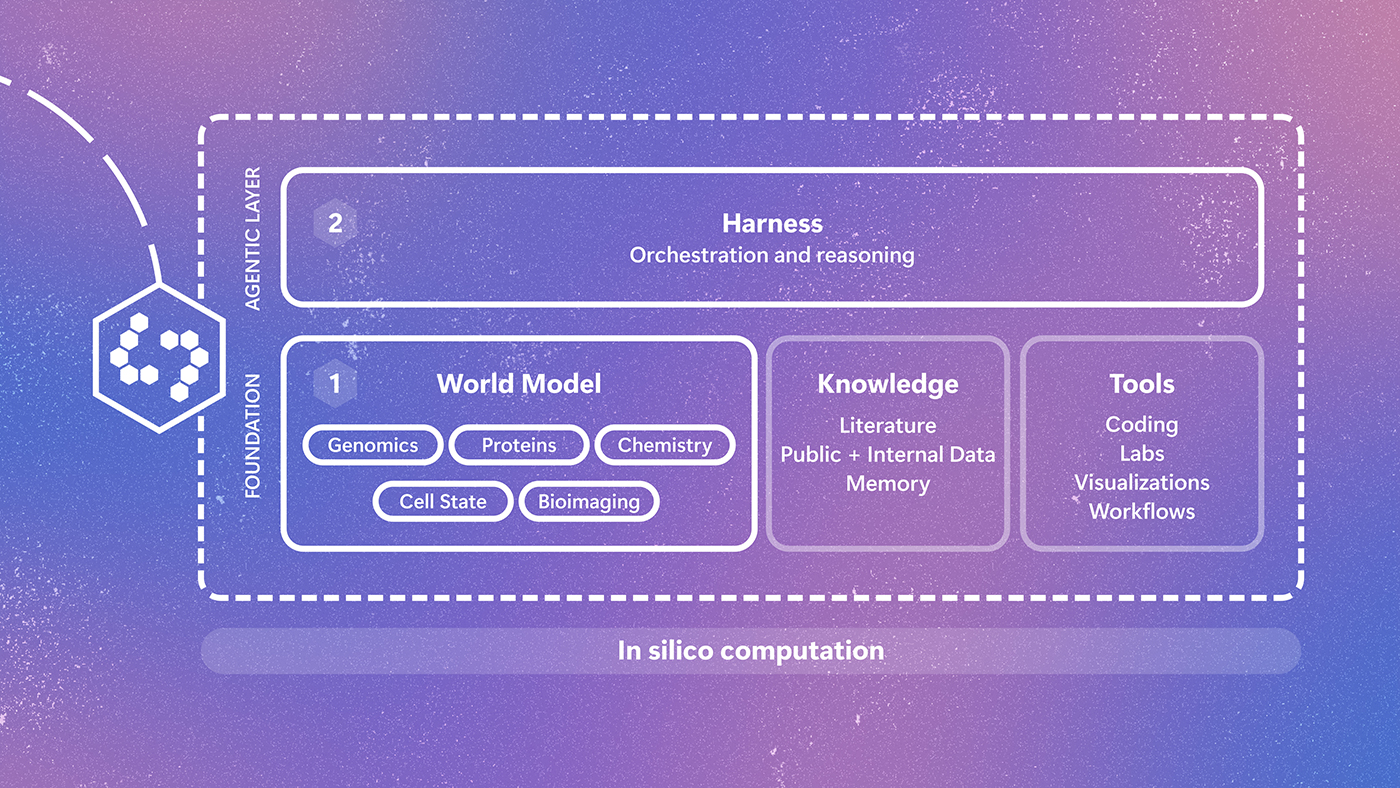
Biology doesn't operate in silos, and neither should the AI representation of it. Quine is an early-stage research effort to create a multimodal world model of biology. By connecting insights across biological scales and modalities, Quine helps scientists computationally search a space far larger than intuition allows and prioritize hypotheses before they reach the lab. Experimental results provide important feedback, helping researchers sharpen future research directions. The post Introducing Q…