Quantum Machine Learning (QML) has shown rapid advances by utilizing quantum computing for machine learning tasks. Meanwhile, the privacy risks accompanying QML is also starting to be studied, which inherit privacy leakage channels from"classical"ML and also quantum-unique risks. Existing work on privacy-preserving QML largely focuses on a QML-as-a-service scenario, which generally assumes that the QML model owner provides only classical bit outputs to queries, while users (and adversaries) have only classical computing abilities. However, this view is increasingly challenged in a quantum-native world of quantum-capable users/adversaries, which may have access to both quantum computing abilities and access to quantum information output from service providers. In this paper, we aim to bridge this gap by examining membership inference attacks against QML models by demonstrating that increasing quantum access and quantum computing abilities provides provable theoretical privacy leakage and empirical adversarial gain. However, the probabilistic nature of QML introduces a gap between theoretical and empirical adversarial advantage. These results show that existing research on privacy leakage in QML models underestimates privacy leakage in emergent quantum-native access regimes, and we hope to establish a first step in examining potential privacy leakages for QML in the quantum-native world.

It is found that Llama 3 delivers comparable quality to leading language models such as GPT-4 on a plethora of tasks, and performs competitively with the state-of-the-art on image, video, and speech recognition tasks.
This paper investigates developing real-world perception for active agents, proposes Gibson Environment for this purpose, and showcases a set of perceptual tasks learned therein.
F. Xia, Amir Zamir, Zhi-Yang He et al.· 2018 IEEE/CVF Conference on...· 1,069 citations· ⚡112
This publication proposes a definition and a classification of agile software development approaches and analyses ten software development methods that can be characterized as being "agile" against the defined criterion.
P. Abrahamsson, O. Salo, Jussi Ronkainen et al.· arXiv.org· 727 citations· ⚡54
The study shows that agile practices improve both informal and formal communication, but indicates that, in larger development situations involving multiple external stakeholders, a mismatch of adequate communication mechanisms can sometimes even hinder the communication.
M. Pikkarainen, Jukka Haikara, O. Salo et al.· Empirical Software Engineeri...· 401 citations· ⚡48
The results indicate that software engineering work practices are chosen opportunistically, adapted and configured to provide value under the constrains imposed by the startup context.
Nicolò Paternoster, Carmine Giardino, M. Unterkalmsteiner et al.· Information and Software Tec...· 394 citations· ⚡54
Related blog posts
MIT News · Artificial Intelligence· news.mit.eduNov 17, 2026
By studying the computational foundations of language learning, Associate Professor Jacob Andreas builds intelligent systems that can communicate effectively with humans.
MIT News · Artificial Intelligence· news.mit.eduOct 28, 2026
Professor Paris Smaragdis develops computers with superhuman hearing for applications like speech recognition, music understanding, and environmental monitoring.
MIT News · Artificial Intelligence· news.mit.eduOct 2, 2026
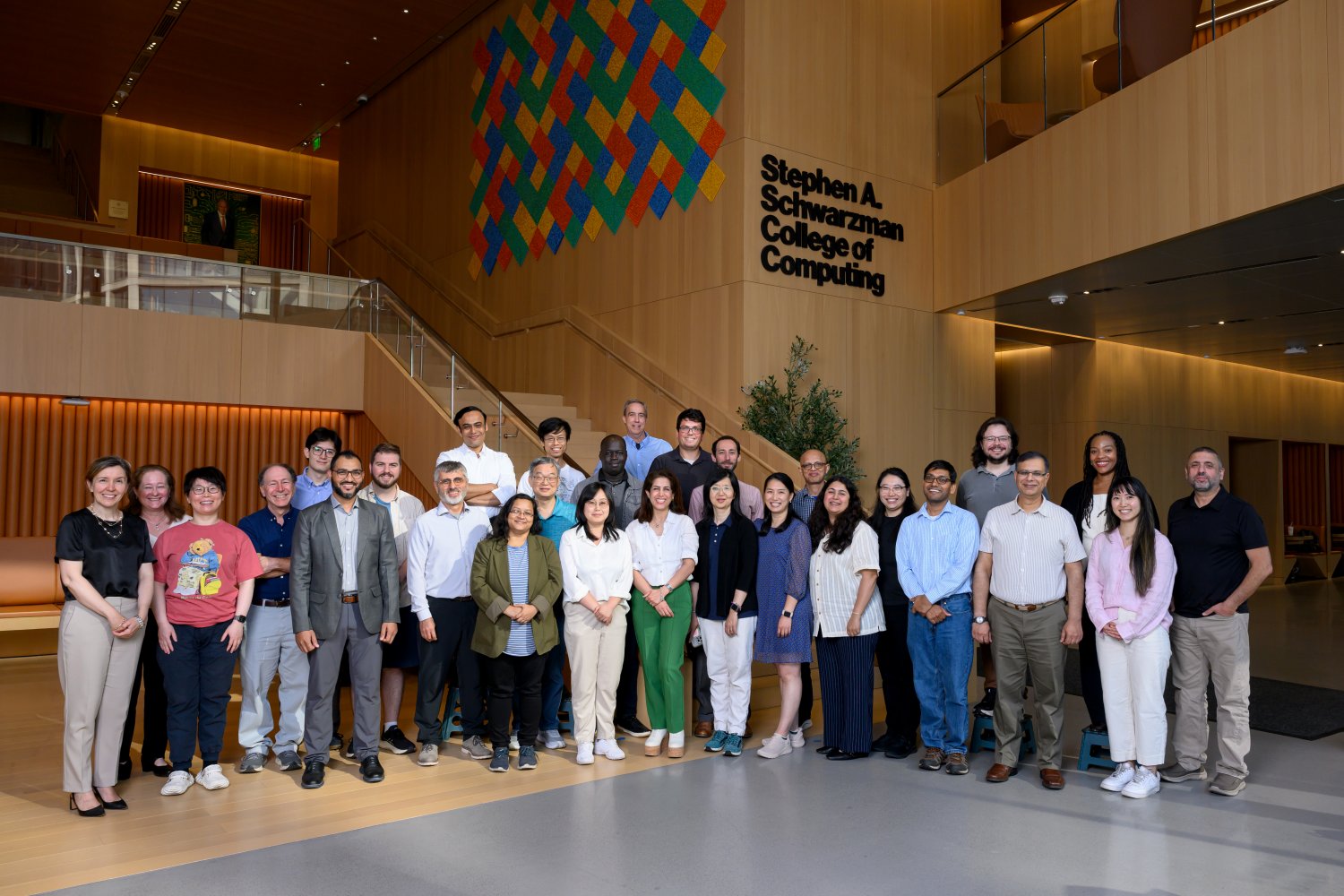
A weeklong summer workshop brought higher education faculty to campus to explore how AI and machine learning materials can be adapted for their classrooms.
We use cookies to run the site and, with your consent, for analytics and to show ads.
See our Cookie Policy.