A hypothetical test which can be effective even for small datasets, based on the theoretical foundation of kernel-based tests using maximum mean discrepancy, is constructed, called MMD-FUSE, and a novel hybrid testing strategy that fuses classical and quantum kernels is proposed.
Abstract
Two-sample tests have been extensively employed in various scientific fields and machine learning to discriminate whether two sets of samples come from the same distribution or not. Kernel-based procedures for hypothetical testing have been proposed to efficiently disentangle high-dimensional complex structures in data to obtain accurate results in a model-free way by embedding the data into the reproducing kernel Hilbert space (RKHS). While the choice of kernels plays a crucial role for their performance, little is understood about how to choose kernel especially for small datasets. Here we construct a hypothetical test which can be effective even for small datasets, based on the theoretical foundation of kernel-based tests using maximum mean discrepancy, which is called MMD-FUSE. We enhance the MMD-FUSE framework by incorporating quantum kernels and propose a novel hybrid testing strategy that fuses classical and quantum kernels. This approach creates a powerful and adaptive test by combining the domain-specific inductive biases of classical kernels with the unique expressive power of quantum kernels. We evaluate our method on various synthetic and real-world clinical datasets, and our experiments reveal two key findings: 1) With appropriate hyperparameter tuning, MMD-FUSE with quantum kernels consistently improves test power over classical counterparts, especially for small and high-dimensional data. 2) The proposed hybrid framework demonstrates remarkable robustness, adapting to different data characteristics and achieving high test power across diverse scenarios. These results highlight the potential of quantum-inspired and hybrid kernel strategies to build more effective statistical tests, offering versatile tools for data analysis where sample sizes are limited.

This publication proposes a definition and a classification of agile software development approaches and analyses ten software development methods that can be characterized as being "agile" against the defined criterion.
P. Abrahamsson, O. Salo, Jussi Ronkainen et al.· arXiv.org· 727 citations· ⚡54
The study shows that agile practices improve both informal and formal communication, but indicates that, in larger development situations involving multiple external stakeholders, a mismatch of adequate communication mechanisms can sometimes even hinder the communication.
M. Pikkarainen, Jukka Haikara, O. Salo et al.· Empirical Software Engineeri...· 401 citations· ⚡48
The results indicate that software engineering work practices are chosen opportunistically, adapted and configured to provide value under the constrains imposed by the startup context.
Nicolò Paternoster, Carmine Giardino, M. Unterkalmsteiner et al.· Information and Software Tec...· 394 citations· ⚡54
The possibility of inferring high-dimensional data inference in a model that consists of a prior and an auxiliary differentiable constraint given some additional information is considered, thereby allowing a range of potential applications in adapting models to new domains and tasks.
Alexandros Graikos, Esmeralda S. Whitammer, N. Jojic et al.· Neural Information Processin...· 316 citations· ⚡15
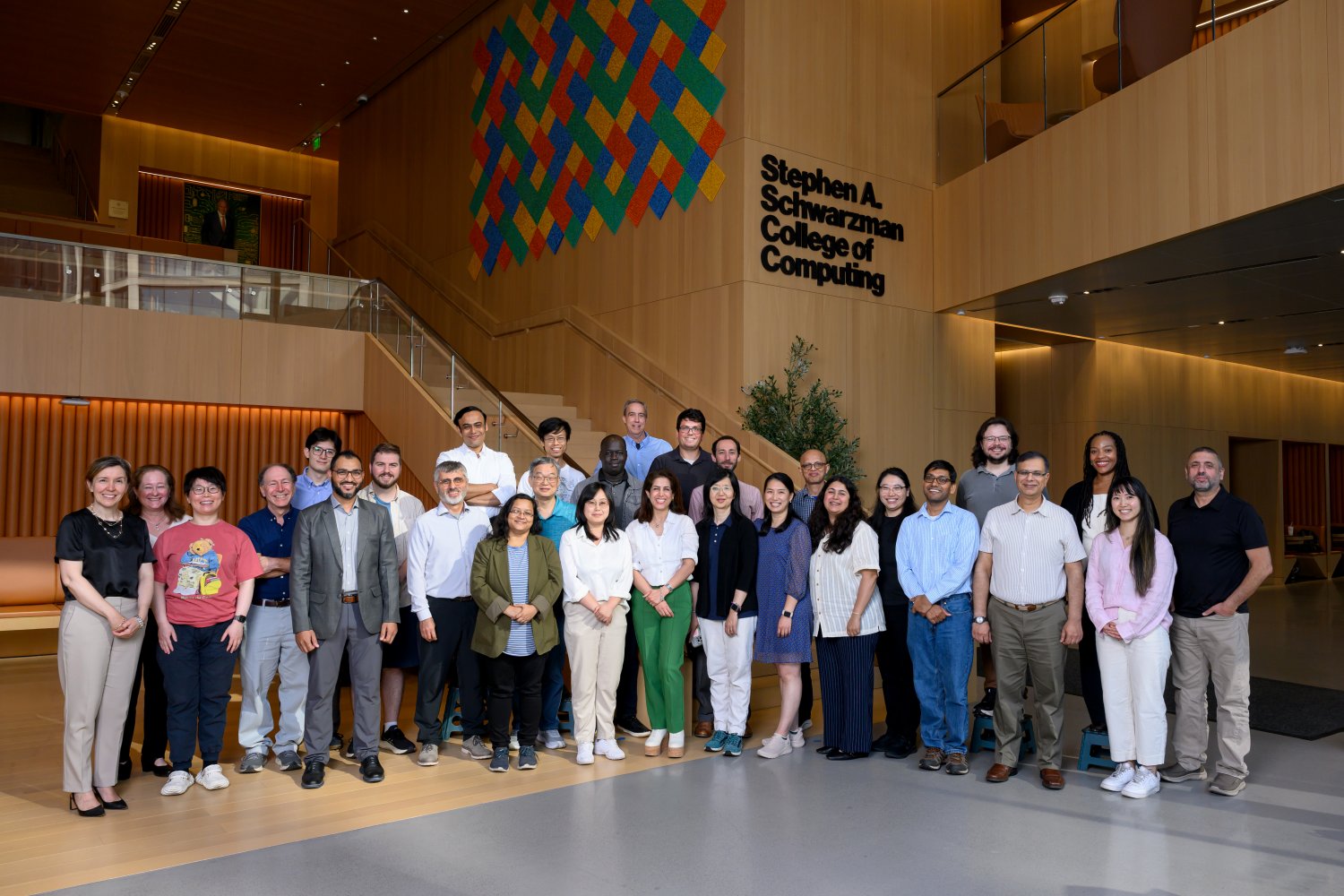
A weeklong summer workshop brought higher education faculty to campus to explore how AI and machine learning materials can be adapted for their classrooms.
MIT News · Artificial Intelligence· news.mit.eduAug 27, 2026
A new machine-learning framework aims to improve the success rate of computational protein design while moving away from results that reproduce sequences found in nature.
Microsoft Research Blog· microsoft.comAug 20, 2026
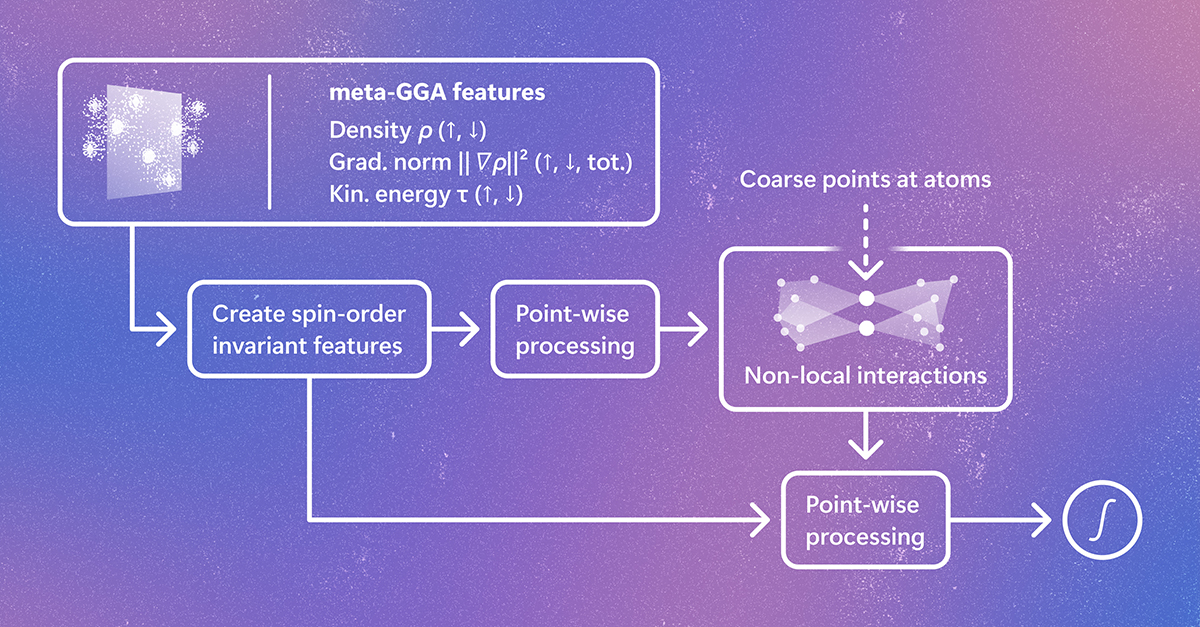
Skala 1.1, the updated deep-learning exchange-correlation functional from Microsoft Research, provides greater accuracy, expanded accessibility across the computational chemistry ecosystem, and a living benchmark to track computational performance. The post Broadening access to Skala creates a faster path to predictive DFT appeared first on Microsoft Research.
We use cookies to run the site and, with your consent, for analytics and to show ads.
See our Cookie Policy.