We audit frequency and decoder-depth claims for AdvWave-P, an additive audio jailbreak, on Qwen2-Audio. The protocol masks frequency components of the perturbation in the short-time Fourier transform (STFT) domain and measures attack success and audio-span representations. On 520 AdvBench prompts, the primary judge lab...
Boyuan Chen, Minseok Kim, Sohaila Abdulsattar et al.· 0 citations
Gaussian Belief Propagation (GBP) is a distributed inference algorithm that passes messages in graphical models, making it attractive for scalable spatial intelligence. However, we find GBP most effective locally: it rapidly smooths message errors that vary sharply between neighbor variables, but corrects global errors...
Yuzhou Cheng, Tom Yates, Ignacio Alzugaray et al.· 0 citations
Large language model (LLM) agents have demonstrated strong capabilities in interactive environments, yet their ability to continually evolve from experience remains limited. Although fine-tuning enables adaptation, its dependence on parameter access and high computational costs restrict its flexibility, especially for...
Bo-Wen Ye, Yong-Chao Xu, Jun-Kai Ma et al.· 0 citations
Large audio language models answer questions about speech, sound, and music, yet their accuracy drops sharply on tasks that need fine-grained acoustic analysis. Judging which of two speakers has the higher pitch demands iterative signal-level reasoning that a content question does not. Current models spend the same com...
Seung-Woo Lee, Bo-Wen Qi· 0 citations
Reach audiences
Advertise in front of researchers, engineers, and readers.
Factor mining seeks to discover signals from financial data that predict future asset returns and guide portfolio construction. Automated factor mining now spans genetic programming, reinforcement learning, generative models, and large language model agents. Yet it remains unclear whether advances across these paradigm...
Multivariate functional data arise in many modern manufacturing systems, where multiple sensors record densely sampled process trajectories. Monitoring such data is challenging because nominal variation is strongly correlated across samples, sensors, and time, while faults may appear either as isolated deviations or as...
Mohammad N. Bisheh, Che-Yi Liao, Kamran Paynabar· 0 citations
Automatic music annotation is typically tackled under the assumption of a fixed annotation schema. In practice, commercial music catalogs often need to accommodate new musical attributes as needs evolve. Given that expert music annotation is expensive, it is not evident which methodological approach is most effective a...
Christos Plachouras, Emmanouil Benetos, Johan Pauwels· 0 citations
This paper concerns how semantic context determines geometry in learned vector representations. Similarity is typically measured using cosine similarity, which provides a single fixed geometry. Semantic similarity, however, is inherently context dependent: two images may be similar because they depict the same object,...
Akash Kannan, Kiho Park, Victor Veitch· 0 citations
We develop a sparse graph method for transporting probability mass toward multimodal target distributions through damped nonlocal Hamiltonian dynamics. The formulation combines logarithmic-mean mobility with symmetric L\'evy-type interaction weights, coupling the evolving density to an edge momentum field. A graph cons...
Together these findings show that refusal is not diffusely encoded across a transformer but assembled by a structured, identifiable mechanism, providing a foundation for mechanistic understanding of how refusal behaviors are represented and steered.
Vincent Siu, Glenn Grant-Richards, Vlad Pavlovich et al.· 0 citations
A central question in the prediction of stochastic processes is the extent to which past information can improve the probability of correctly predicting the next state. We introduce the Memory Prediction Excess (MPE) to address this question quantitatively. The MPE measures the average improvement in prediction accurac...
Learning from human preference data is the dominant route to aligning language models with human values. In linear social choice, where rewards are linear in a fixed feature representation of prompt-response pairs, Ge et al.[2024] show that fitting such a reward by minimizing any non-decreasing convex loss, including B...
Soumya Nasipuri, Sayak Ray Chowdhury, Sanjukta Roy· 0 citations
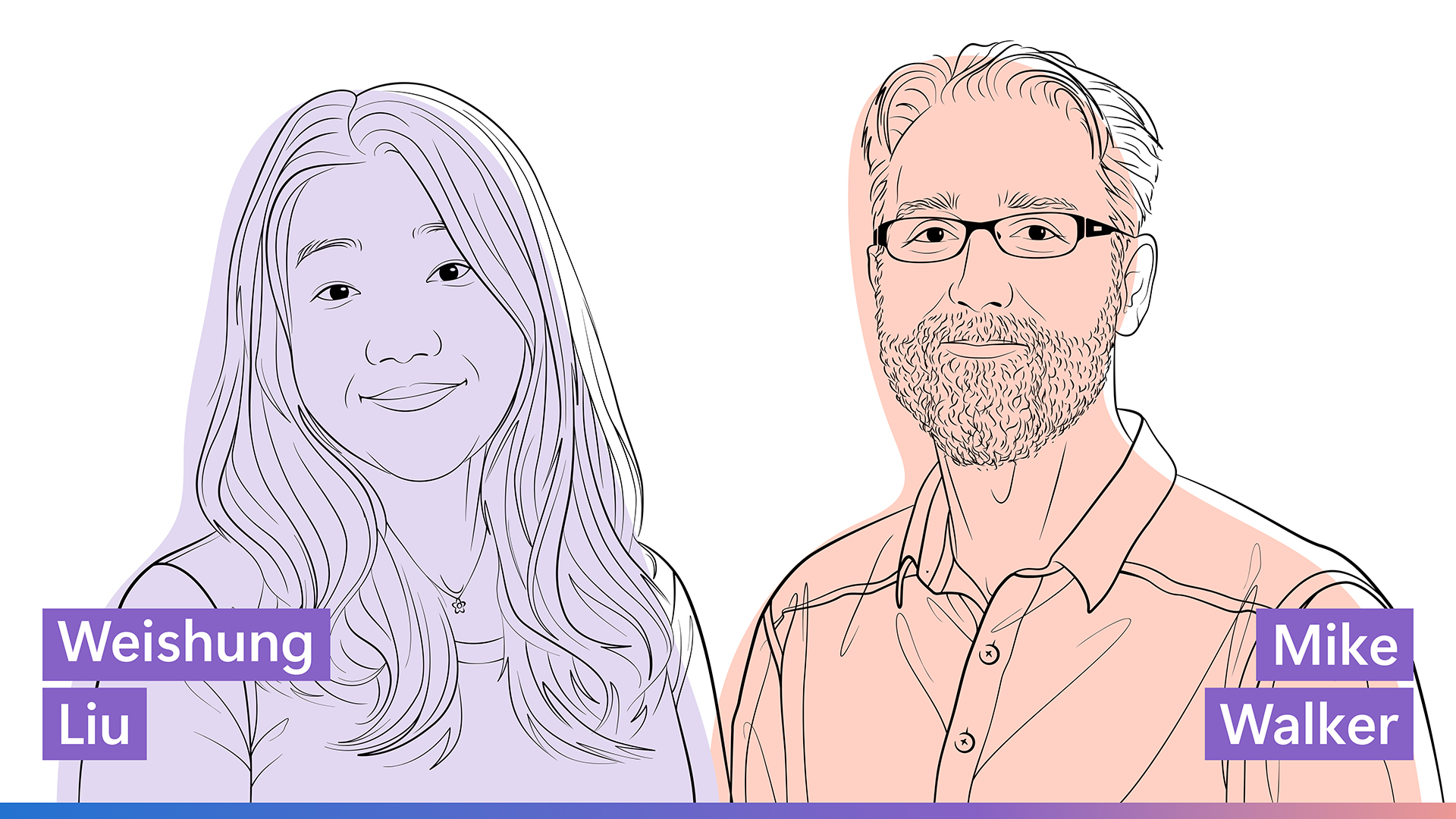
Research Manager Mike Walker reflects on a career spanning hacker culture, cybersecurity, and AI, sharing lessons about trust, teamwork, leadership, and why solving difficult problems requires curiosity, judgment, agility—and an understanding of the rules. The post Learn the rules: The hacker mindset appeared first on Microsoft Research.
Learn how Google Antigravity and our Cheminformatics Skills accelerate drug discovery workflows, search compounds, and propose novel rigidified macrocycles.
MIT News · Artificial Intelligence· news.mit.eduOct 28, 2026
Professor Paris Smaragdis develops computers with superhuman hearing for applications like speech recognition, music understanding, and environmental monitoring.
MIT News · Artificial Intelligence· news.mit.eduOct 27, 2026
Prabha Jha used her experience with MIT Open Learning’s program for senior executives to develop AI solutions for her employer, Verizon, and to write a book.