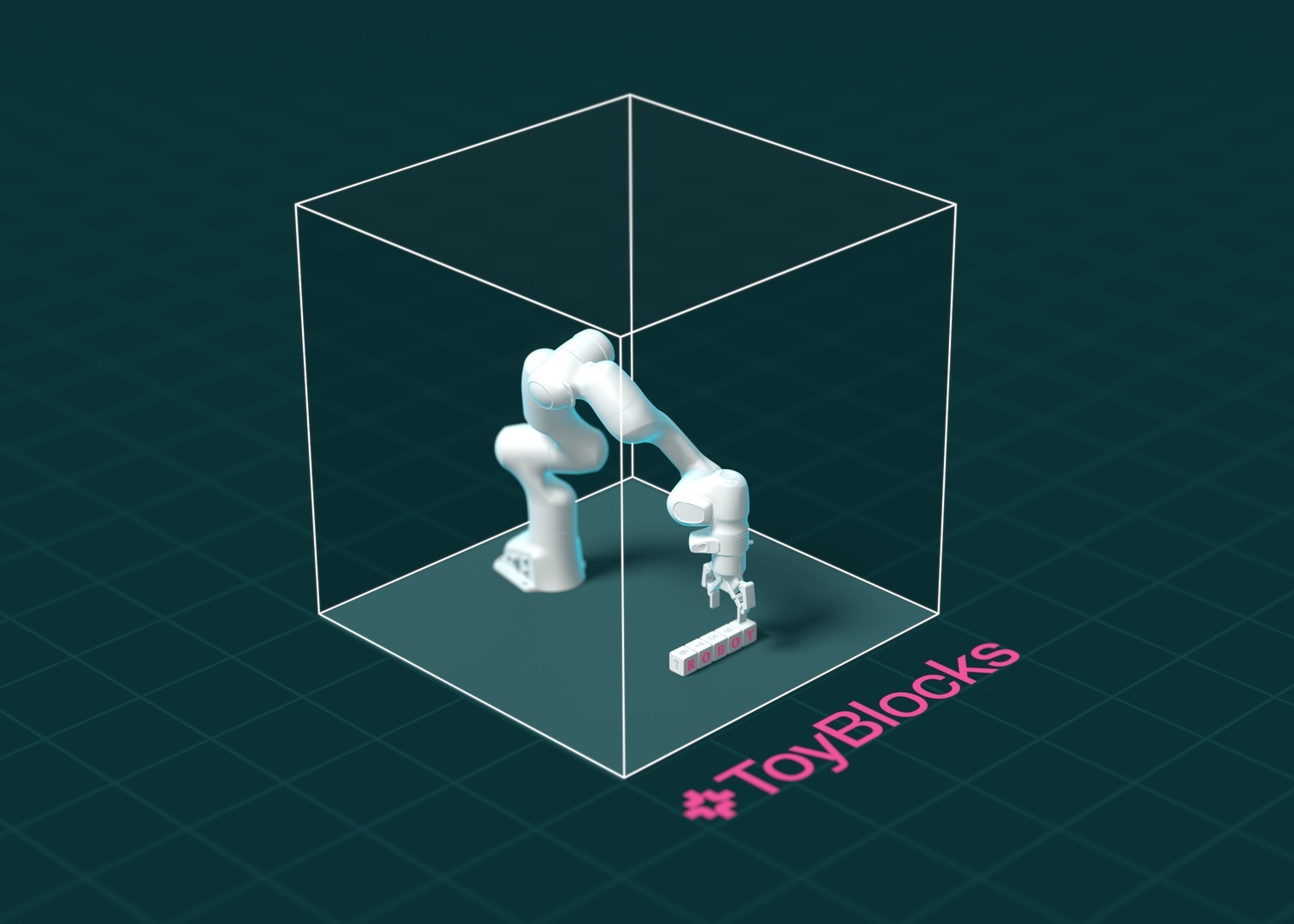
An inaccurate expert can still provide useful information after correction. We study online learning to defer in which the learner chooses an expert and fixes a correction function before purchasing its answer, then applies that function to the answer received. The difficulty is that observed losses reflect both expert...
Yannis Montreuil, Axel Carlier, Lai Xing Ng et al.· 0 citations
Estimating a decision threshold requires locating observations near an unknown boundary. We study how gradient-based pretraining learns this statistical rule in a two-parameter softmax-attention model with a fixed feature and inequality direction. Pretraining uses labeled contexts and their true thresholds; a fresh thr...
H. Lệ, Jackie Lok, Atsushi Nitanda et al.· 0 citations
Variational autoencoders (VAEs) are a key part of modern text-to-image models, which generate images within their latent space. VAEs are known to disentangle the main factors of variation in the data, and color is known to be one of the most structured of these in natural images: decorrelating it yields one luminance a...
Julian D. Santamaria, Kai Wang, Jes\'us Malo et al.· 0 citations
Impact sound rendering synthesizes the sound produced when a 3D object is struck, but practical renderers often rely on fixed material presets such as wood, plastic, or steel. These presets limit the range of impact sounds a renderer can express, while manually adjusting the underlying material parameters remains diffi...
Hyebin Cho, Bumsoo Kim, Joon son Chung· 0 citations
Reach audiences
Advertise in front of researchers, engineers, and readers.
We introduce sHAIL-Causal, the causal specialization of the Saturated Hierarchical Atomic Incremental Learning (sHAIL) paradigm: a sequential staircase procedure that ascends a nested hierarchy of hypothesis classes H_0 < H_1 < ... < H_K once a saturation signal indicates that mastery of the current stage has plateaued...
Behavioral cloning (BC), despite its simplicity, exhibits many counterintuitive phenomena in the real world. For example, the performance of BC often keeps increasing as the model overfits more to the dataset, and fully closed-loop policies often completely fail without action chunking. Unfortunately, properly studying...
We study errors-in-variables problems in which a target study contains only a single error-prone surrogate of an unobserved exposure, while an external source study provides repeated surrogate measurements from a different population. The measurement error distribution is allowed to depend on the observed error-free va...
This work treats physical validity as a constrained inference problem and introduces two closed-form projection operators applied to the diffusion model's denoised clean-coordinate estimate, an inter-chain van der Waals projection that pushes apart the most severely clashing atom pairs, and a ligand distance-geometry p...
Qurat-ul-ain, Yee Whye Teh, Charlotte M. Deane et al.· 0 citations
Parameter-efficient fine-tuning adapts pretrained models at a fraction of the cost of full fine-tuning, yet most low-rank adapters are single-task and represent each weight update multiplicatively, leaving no explicit account of what is shared across tasks and what is task-specific. We introduce JIVEAdapter, a multi-ta...
Large-scale pretrained transformer models have achieved state-of-the-art performance across diverse machine translation tasks, including multilingual settings. Knowledge distillation has emerged as a sustainable approach for model compression, transferring knowledge from large teacher models to smaller, more efficient...
Maria Zafar, Souhail Bakkali, Rejwanul Haque· 0 citations
Systematic reviewers who use a model to read randomized trials need each answer and a measure of how far to trust it. If the model is calibrated, so that its stated probabilities match how often it is right, a reviewer can accept its confident answers and check the rest by hand. This paper fine-tunes Qwen3-4B-Base with...
Image-to-text jailbreaks place harmful intent in text, image content, or the relationship between them. We examine image-side factors across four published attack families on a 313-prompt StrongREJECT slice, using five multimodal models and an additional appendix evaluation of InternVL3.5-8B. The harmful instruction is...
Bo-Yuan Chen, Yehia Dawoud, Hailemariam Mersha et al.· 0 citations
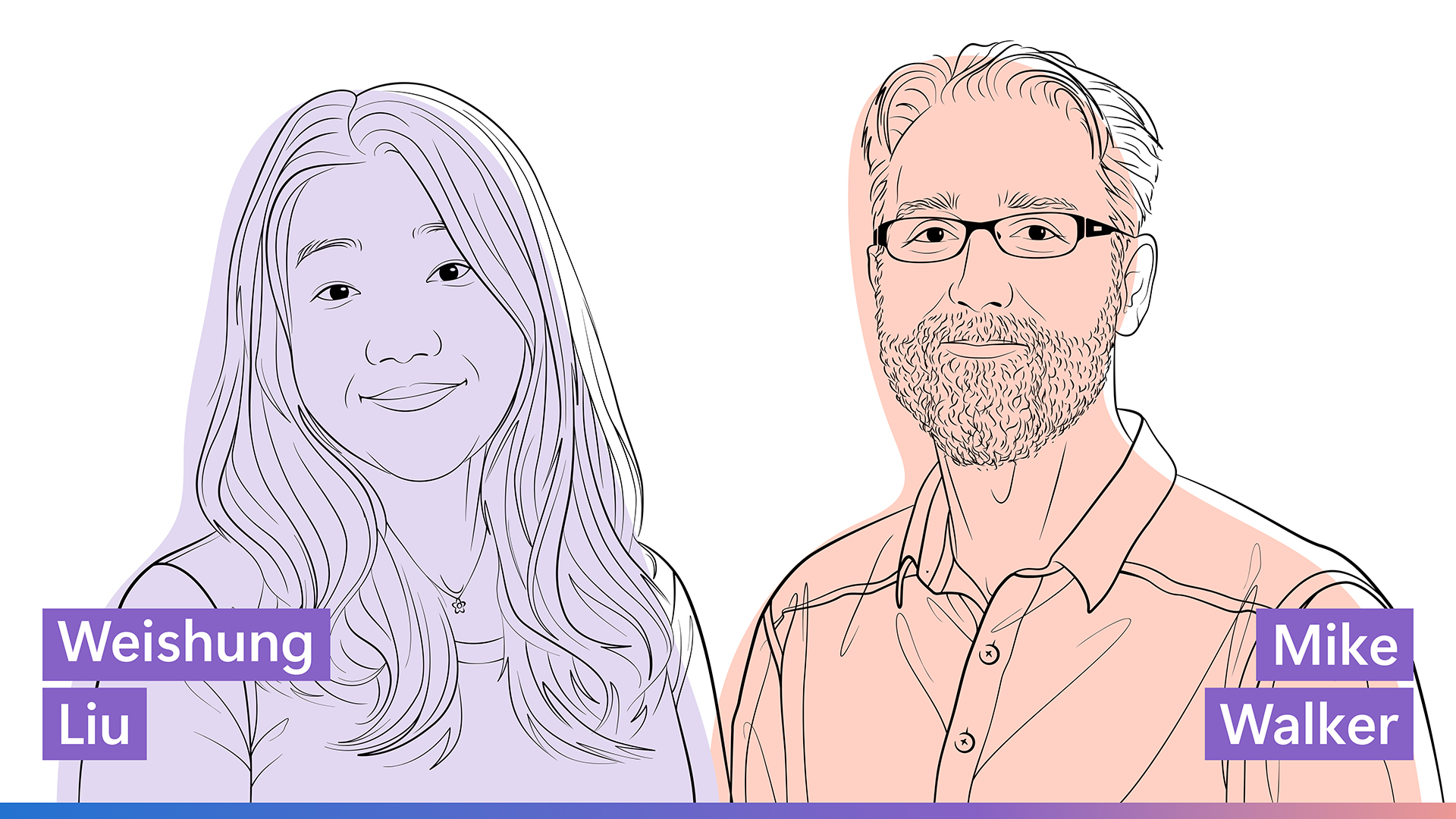
Research Manager Mike Walker reflects on a career spanning hacker culture, cybersecurity, and AI, sharing lessons about trust, teamwork, leadership, and why solving difficult problems requires curiosity, judgment, agility—and an understanding of the rules. The post Learn the rules: The hacker mindset appeared first on Microsoft Research.
Learn how Google Antigravity and our Cheminformatics Skills accelerate drug discovery workflows, search compounds, and propose novel rigidified macrocycles.
MIT News · Artificial Intelligence· news.mit.eduOct 28, 2026
Professor Paris Smaragdis develops computers with superhuman hearing for applications like speech recognition, music understanding, and environmental monitoring.
MIT News · Artificial Intelligence· news.mit.eduOct 27, 2026
Prabha Jha used her experience with MIT Open Learning’s program for senior executives to develop AI solutions for her employer, Verizon, and to write a book.