Hierarchy-GBP: Accelerating Factor Graph Inference via Abstraction and Recovery
Yuzhou ChengTom YatesIgnacio AlzugarayDanyal AkarcaPedro A. M. MedianoAndrew J. Davison
Oct 2026
Machine LearningComputer VisionRobotics
Abstract
Gaussian Belief Propagation (GBP) is a distributed inference algorithm that passes messages in graphical models, making it attractive for scalable spatial intelligence. However, we find GBP most effective locally: it rapidly smooths message errors that vary sharply between neighbor variables, but corrects global errors across distant graph regions incrementally through long-range message propagations. We propose Hierarchy-GBP (H-GBP), an iterative, two-stage framework that accelerates GBP by first solving these global errors with a coarse graph approximation (abstraction) and projecting the results back to the original graph (recovery), then refining the remaining local errors with GBP. We prove H-GBP convergence to the optimum by deriving the combined matrix operator of our abstraction and recovery steps and analyzing its spectral radius. Experiments on linear sparse graphs show that H-GBP converges fundamentally faster than standard GBP. Moreover, we validate H-GBP on two important spatial problems: Pose Graph Optimization (PGO) and Bundle Adjustment (BA). H-GBP markedly accelerates large-scale PGO and achieves state-of-the-art runtime across all tested BA scales.
This publication proposes a definition and a classification of agile software development approaches and analyses ten software development methods that can be characterized as being "agile" against the defined criterion.
P. Abrahamsson, O. Salo, Jussi Ronkainen et al.· arXiv.org· 727 citations· ⚡54
The study shows that agile practices improve both informal and formal communication, but indicates that, in larger development situations involving multiple external stakeholders, a mismatch of adequate communication mechanisms can sometimes even hinder the communication.
M. Pikkarainen, Jukka Haikara, O. Salo et al.· Empirical Software Engineeri...· 401 citations· ⚡48
The results indicate that software engineering work practices are chosen opportunistically, adapted and configured to provide value under the constrains imposed by the startup context.
Nicolò Paternoster, Carmine Giardino, M. Unterkalmsteiner et al.· Information and Software Tec...· 394 citations· ⚡54
The possibility of inferring high-dimensional data inference in a model that consists of a prior and an auxiliary differentiable constraint given some additional information is considered, thereby allowing a range of potential applications in adapting models to new domains and tasks.
Alexandros Graikos, Esmeralda S. Whitammer, N. Jojic et al.· Neural Information Processin...· 316 citations· ⚡15
Exploring how generative AI could make machine vision more accessible to businesses. The post GenEye in a Box: Making Machine Vision Something You Can Just Ask For appeared first on GPT-Lab.
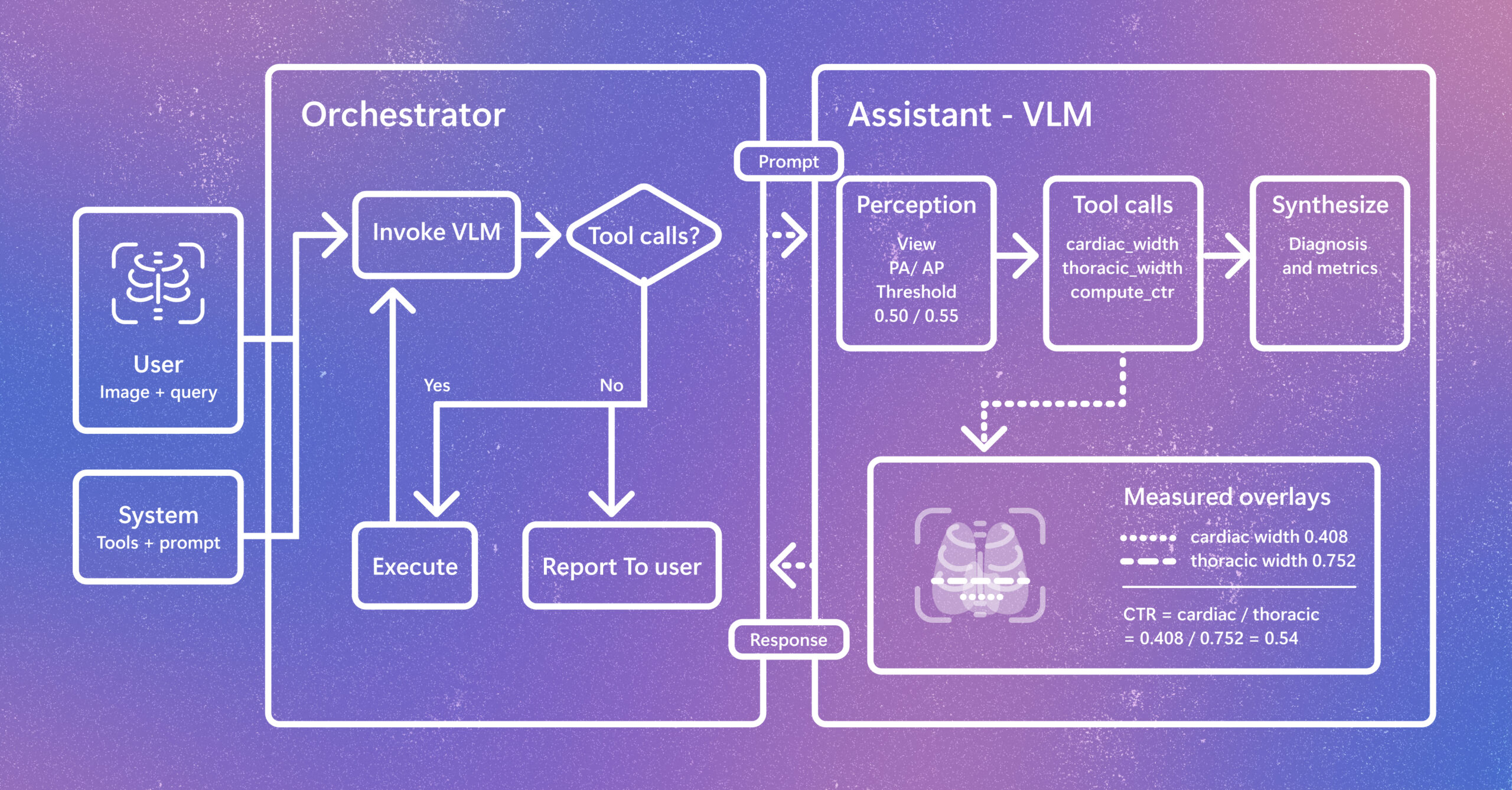
Radiology AI is evolving beyond report generation. CARE-X explores a unified approach that combines flexible reasoning, calibrated predictions, and measurement-based tools for chest X-ray interpretation. The post Introducing CARE-X: Towards Clinically Useful Radiology VLMs with Auxiliary Supervision, Reward-Aligned Learning, and Tool-Augmented Measurement appeared first on Microsoft Research.