Enterprise AI agents that share a memory store face two unaddressed risks: sensitive data can leak through legitimately computed results the requester could not derive, and departments can silently compute a same-named key performance indicator (KPI) through conflicting logic. Existing agent-memory systems (e.g., MemGP...
Breast cancer is the leading cause of cancer-related mortality among women in Sub-Saharan Africa, where delayed diagnosis results from limited radiology expertise and fragmented clinical data systems. Although deep learning models have demonstrated strong performance in mammographic analysis, most rely solely on imagin...
Simon Hadush Nrea, Filimon Gidey Gebremichael, Gebrekirstos Hagos Gebrekirstos et al.· 0 citations
Natural gradient descent requires asymptotically at least \(R\) times as many steps as an optimizer following the Fisher--Rao geodesic, a practical computational cost under a per-step Fisher-chord budget.
Systems of equations arise in a wide range of scientific and engineering applications. The present work focuses on solvers for general systems of equations, including but not limited to those arising from partial differential equations. These systems can be broadly categorized into linear and nonlinear problems. For la...
Yue-Heng Meng, Jing Zhao, Alexander Heinlein· 0 citations
Reach audiences
Advertise in front of researchers, engineers, and readers.
Variational autoencoders are powerful representation learning models that map complex data into low-dimensional latent spaces, enabling the discovery of interpretable and disentangled factors. Such representations can facilitate the interpretation and controllable generation of data describing complex scientific system...
Gao-Yuan Wang, Jerry Tan, M. Gerstein· 0 citations
We propose an imitation-learning design for neural-network control policies under state and input constraints. Training alternates a standard imitation gradient step with a block of $k$ safety steps that pull the network's actions toward their projection onto the safe set; at run time, the controller is the trained net...
Croissant has emerged as a standard for machine-readable dataset metadata, yet populating its fields remains labor-intensive and requires careful reading of accompanying dataset documentation. We present the first benchmark enabling end-to-end evaluation of metadata extraction aligned with a community-standard schema....
Berke Arda, Ahmetcan Yavuz, Paul Gerry et al.· 0 citations
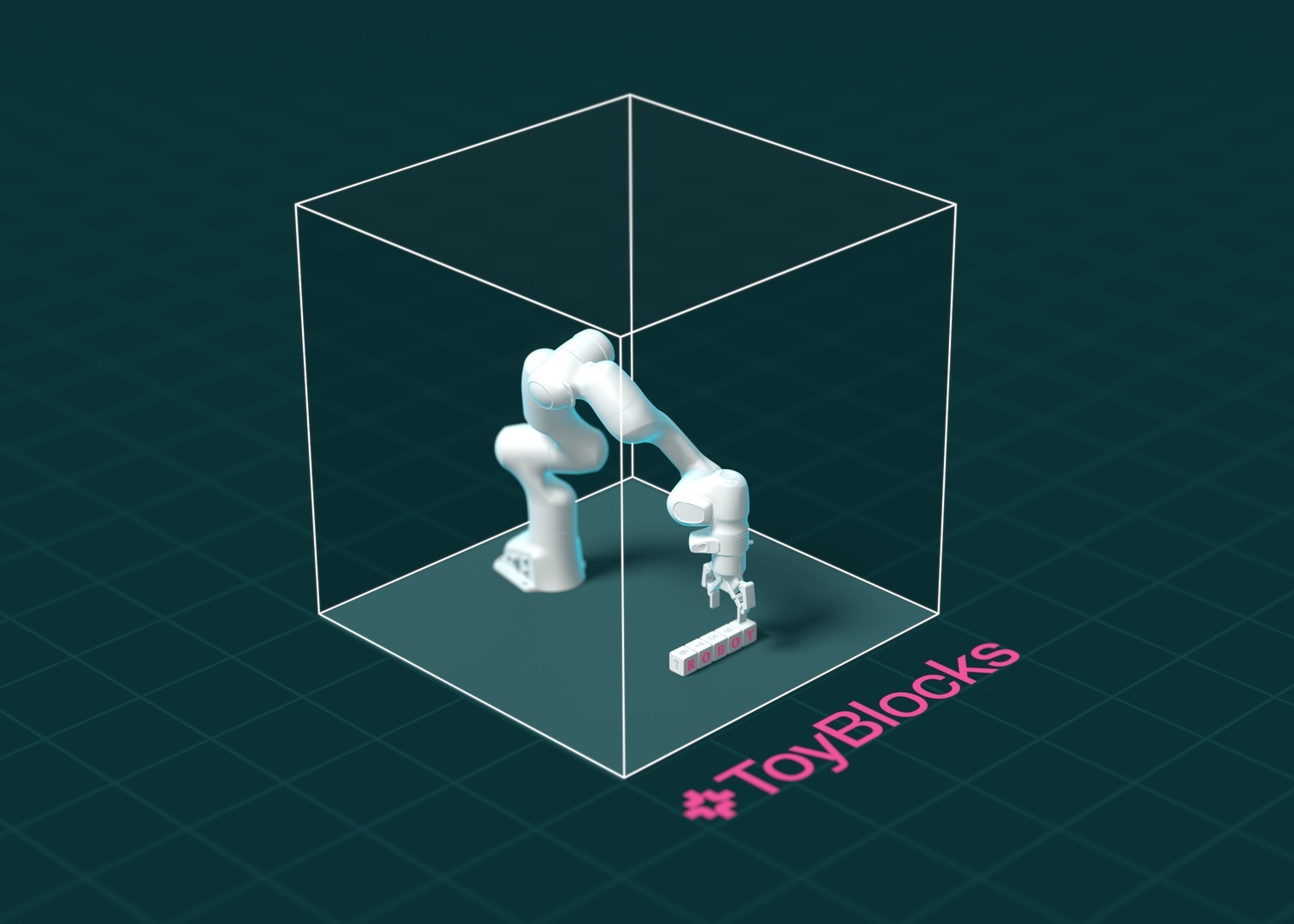
We placed a modern AI coding assistant in an unintended role: as the mind of a body on an unknown digital island. With only a minimal instruction mentioning no specific task, reward, or activity, the machine started animating its virtual body. Across thirty-hour runs, the embodied AI agent climbed hills, stacked blocks...
Nathan Cloos, Antonio Norelli, Daniel Durbin et al.· 0 citations
While open-weight models have enjoyed steady progress in capabilities and wide adoption across multiple domains, their safety remains an important concern. One key feature is the ability to refuse or deflect harmful, malicious, or insensitive prompts. In this paper, we expose safety vulnerabilities across six common op...
A. Dubey, Scott Sirri, Vaggos Chatziafratis et al.· 0 citations
Modern language-model agents increasingly interact with external environments over long-horizon, multi-step trajectories, where the accumulated interaction history can quickly exceed practical context budgets. To ensure reliability, agents must maintain factual information over long horizons, remember execution errors...
Chinmay Savadikar, Zhao-Yu Zhang, Ming-Yu Zhao et al.· 0 citations
LLM deployment is shifting from single-turn completion to agentic trajectories in which a model plans, calls tools, reads results and reasons at test time before acting. This inverts the economics of inference hardware: chat serving amortises weight reads across large batches, whereas agent trajectories are sequentiall...
Abbas Ali, Muhammad Ajmal Siddiqui, Moona Zahid· 0 citations
LLM agents increasingly act in multi-actor environments, exposing them to misuse from multiple sources: decomposition attacks, where a harmful request is split into innocuous sub-requests, and prompt injection attacks, where a compromised tool delivers a malicious instruction. Existing evaluations treat these threats s...
Aniruddh Pramod, James Oldfield, Adel Bibi· 0 citations
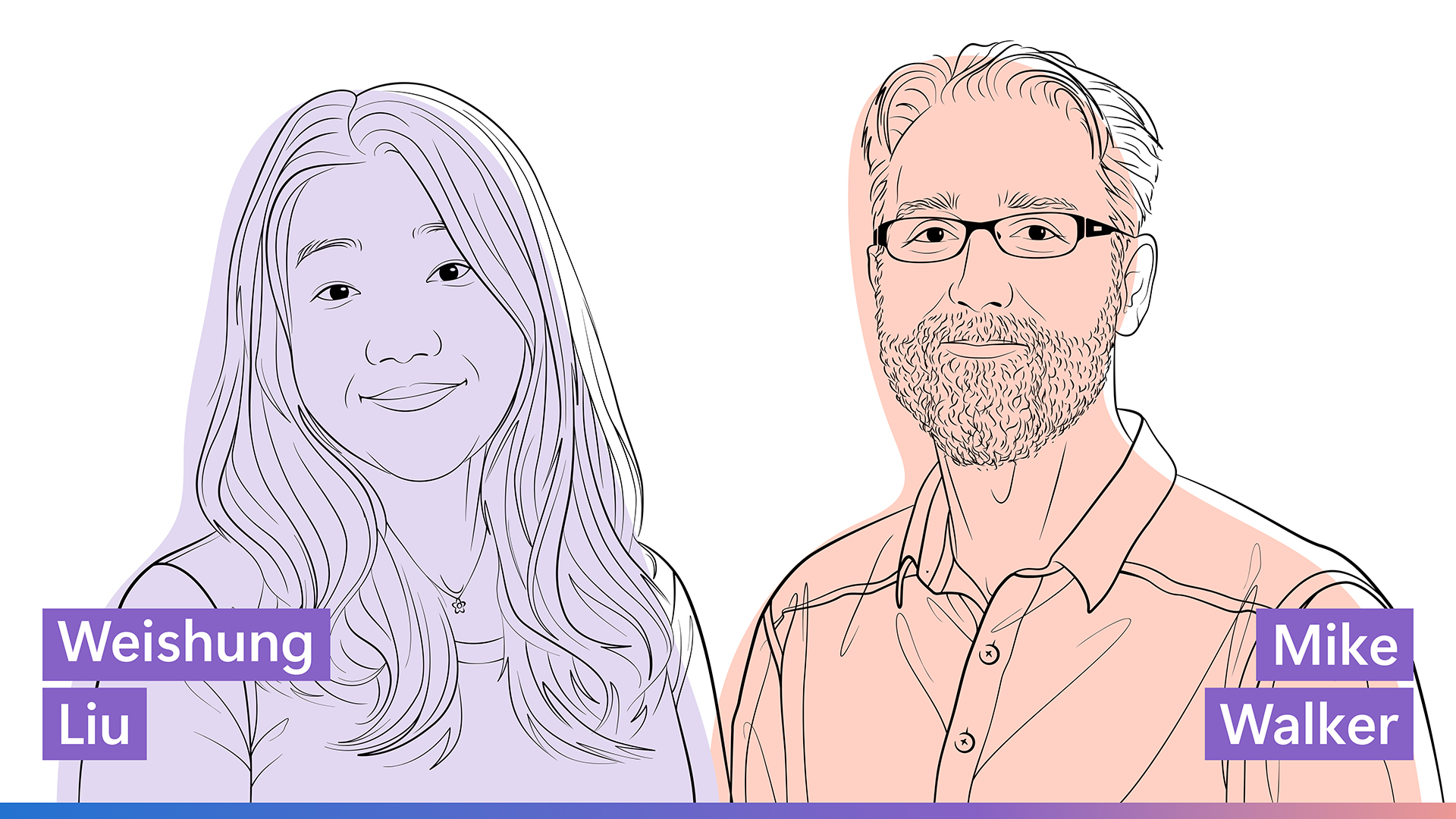
Research Manager Mike Walker reflects on a career spanning hacker culture, cybersecurity, and AI, sharing lessons about trust, teamwork, leadership, and why solving difficult problems requires curiosity, judgment, agility—and an understanding of the rules. The post Learn the rules: The hacker mindset appeared first on Microsoft Research.
Learn how Google Antigravity and our Cheminformatics Skills accelerate drug discovery workflows, search compounds, and propose novel rigidified macrocycles.
MIT News · Artificial Intelligence· news.mit.eduOct 28, 2026
Professor Paris Smaragdis develops computers with superhuman hearing for applications like speech recognition, music understanding, and environmental monitoring.
MIT News · Artificial Intelligence· news.mit.eduOct 27, 2026
Prabha Jha used her experience with MIT Open Learning’s program for senior executives to develop AI solutions for her employer, Verizon, and to write a book.