An interpretable temporal-logic rule miner is used to recover a portable Fragment-EH rule that the protocol reveals to be a within-packet, near-definitional co-occurrence rather than a temporal pattern, so the temporal-logic machinery does no work for this dominant rule.
Priyankar Sinha, Nikolaos Kekatos, Stylianos Basagiannis et al.· 1 citation
Standard causal identification methods often assume no unmeasured confounding and can fail when relevant confounders are unobserved. Proximal causal inference instead uses proxy variables to identify effects under hidden confounding. However, nonparametric proximal estimation can be challenging in practice: recovering...
Christoph Müller, Ayub Kharel, Alex Luedtke et al.· 0 citations
Reinforcement learning with verifiable rewards (RLVR) turns agent experience into learning signals primarily through scalar outcome rewards after interaction. For group-relative objectives, however, this signal vanishes when all rollouts receive the same reward, even though their trajectories may reveal useful informat...
Haoxiang Zhang, Qing-Lin Chen, Hiroaki Hayashi et al.· 1 citation
Automatic assessment of communication quality in dyadic counseling conversations is bottlenecked by data: expert-rated corpora are small and expensive to grow. We study cross-domain transfer of expert overall-impression prediction across three German corpora of simulated counseling (two general-practice medical, one sc...
Tobias Hallmen, Elisabeth André· 0 citations
Reach audiences
Advertise in front of researchers, engineers, and readers.
DAEDALUS is presented, a method for bootstrapping reusable agent memory from self-generated practice without existing tasks or oracle verifiers, and it is shown that performance gains already emerge with a small exploration budget, and that its heuristics also benefit agents from other model families.
Antoine Edy, Max Conti, Victor Xing et al.· 0 citations
Classical force fields (FFs) remain the workhorse for large-scale simulations even as machine-learned interatomic potentials (MLIPs) approach ab initio accuracy. They decompose total configuration energies into simple effective interactions whose parameters are traditionally assigned based on atom or bond types, enabli...
Berkay Gunes, Leif Seute, Jigyasa Nigam et al.· 0 citations
We construct neural approximation classes native to the graph spaces H(div) and H(curl), in two and three dimensions and, for H(div), in any dimension. Every realization lies in the space for all parameter values, and with kinked potentials, such as ReLU networks, the admissible jumps appear at finite width. The classe...
Neural audio synthesis models like the Realtime Audio Variational autoEncoder (RAVE) achieve impressive genera tion quality, yet how their internal representations encode musical features remains poorly understood. We present a systematic layer-wise and cross-layer cluster analysis of RAVE decoder activations across th...
Louis McCallum, M. Grierson· IEEE Transactions on Audio,...· 0 citations
We study sequential content sufficiency by investigating whether a representation retains the ordered target information available in its input. An information-theoretic decomposition separates input ambiguity, representation loss, and readout mismatch. We construct recoverable views where perfect agreement and joint i...
K. Santoso, N. Z. Fadil, F. P. Harsanti et al.· 0 citations
Large language models (LLMs) are expected to answer questions faithfully based on the provided context, abstaining when the context information is insufficient to answer the questions. Existing faithfulness evaluations typically assess each question-context instance in isolation; however, such instance-level evaluation...
Zi-Zhuo Zhang, Xiong Peng, Jing-Wei Sun et al.· 0 citations
Adaptive multiresolution methods reduce representation cost by concentrating fine-scale degrees of freedom where needed, but their tree updates are usually governed by fixed local criteria. We introduce Learned Adaptive Multiresolution Diffusion Imaging (Learned AMDI), which preserves the AMDI fixed-tree propagator and...
Christian Tantardini, Stig Rune Jensen, Roberto Di Remigio Eikås et al.· 0 citations
Long-horizon LLM agents act on an append-only interaction history that is re-sent to the model at every step, so the context and its cost grow with steps until the sessions exceed the context window. Existing methods manage the context through context requirement prediction, relying on additional model calls, heuristic...
Yupeng Su, Jiayi Tian, Zheng Zhang et al.· 0 citations
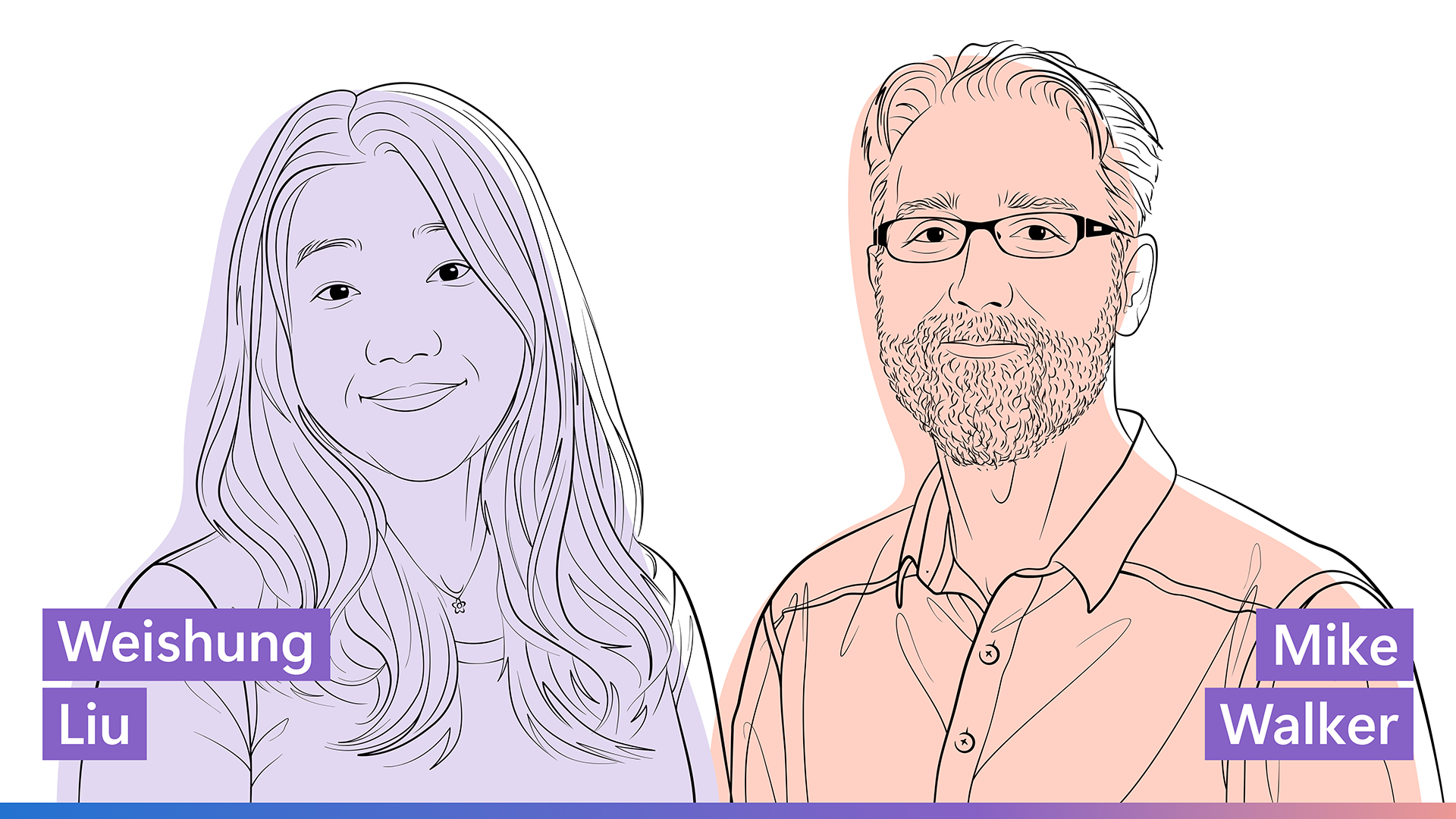
Research Manager Mike Walker reflects on a career spanning hacker culture, cybersecurity, and AI, sharing lessons about trust, teamwork, leadership, and why solving difficult problems requires curiosity, judgment, agility—and an understanding of the rules. The post Learn the rules: The hacker mindset appeared first on Microsoft Research.
Learn how Google Antigravity and our Cheminformatics Skills accelerate drug discovery workflows, search compounds, and propose novel rigidified macrocycles.
MIT News · Artificial Intelligence· news.mit.eduOct 28, 2026
Professor Paris Smaragdis develops computers with superhuman hearing for applications like speech recognition, music understanding, and environmental monitoring.
MIT News · Artificial Intelligence· news.mit.eduOct 27, 2026
Prabha Jha used her experience with MIT Open Learning’s program for senior executives to develop AI solutions for her employer, Verizon, and to write a book.