FOSLS-deRhaNN: native de Rham neural classes for H(div) and H(curl) with applications to first-order system least-squares neural network methods for partial differential equations
We construct neural approximation classes native to the graph spaces H(div) and H(curl), in two and three dimensions and, for H(div), in any dimension. Every realization lies in the space for all parameter values, and with kinked potentials, such as ReLU networks, the admissible jumps appear at finite width. The classes are images of scalar and componentwise networks under fixed operators of the de Rham complex, and do not involve a mesh or finite element emulation. For H(div) in R^n two native classes are given on an equal footing, with a skew-symmetric potential $A$: $\mathrm{Div}\,A+R_nq+\mathbf{h}$, with the divergence $q$ as an explicit unknown, and $\mathrm{Div}\,A+\mathbf{z}$ with an $H^1$ field $\mathbf{z}$; for H(curl) the analogous classes are $\mathrm{grad}\,\phi+Sr+\mathbf{h}$ in two dimensions and $\mathrm{grad}\,\phi+\mathbf{z}$ in two and three dimensions. In all of them every interface jump of the field is carried by the potential term, $\mathrm{Div}\,A$ or $\mathrm{grad}\,\phi$, while the remaining part has no interface jump (it is an $H^1$ field in the regular-decomposition classes); the classes with $\mathbf{z}$ are the componentwise approach enriched by this term. Known or learned interface geometry enters the potential through factors with trainable amplitudes, and the remaining part if the divergence jumps. The classes lead to the FOSLS-deRhaNN method, first-order system least squares with de Rham neural networks, whose loss is the least-squares functional posed in the natural spaces of the weak formulation; for elliptic equations this includes $H^{-1}$ right-hand sides and $H^{1/2}$ Dirichlet data. Elliptic equations with discontinuous coefficients and curl-curl problems are treated as instances, with the functional equivalent to the error; linear transport with discontinuous solutions and conservation laws with shocks use the same flux classes.
The results indicate that software engineering work practices are chosen opportunistically, adapted and configured to provide value under the constrains imposed by the startup context.
Nicolò Paternoster, Carmine Giardino, M. Unterkalmsteiner et al.· Information and Software Tec...· 394 citations· ⚡54
The possibility of inferring high-dimensional data inference in a model that consists of a prior and an auxiliary differentiable constraint given some additional information is considered, thereby allowing a range of potential applications in adapting models to new domains and tasks.
Alexandros Graikos, Esmeralda S. Whitammer, N. Jojic et al.· Neural Information Processin...· 316 citations· ⚡15
It is proved that any global minimizer of the trajectory balance objective can define a policy that samples exactly from the target distribution, and empirically demonstrate the benefits of the trajectories balance objective for GFlowNet convergence, diversity of generated samples, and robustness to long action sequenc...
Esmeralda S. Whitammer, Moksh Jain, Emmanuel Bengio et al.· Neural Information Processin...· 302 citations· ⚡60
This state-of-practice investigation was performed using a literature review followed by a multiple-case study approach and presents how inconsistency between managerial strategies and execution can lead to failure by means of a behavioral framework.
Carmine Giardino, Xiaofeng Wang, P. Abrahamsson· International Conference on...· 175 citations· ⚡19
This work investigates the possibilities of using LLMs in a resume screening setting via a document retrieval framework that simulates job candidate selection and finds that the MTEs are biased, significantly favoring White-associated names in 85% of cases and female-associated names in only 11.1% of cases.
This study conducts a case survey study based on the secondary data of the major pivots happened in 49 software startups, and demonstrates that customer need pivot is the most common among all pivot types.
Sohaib Shahid Bajwa, Xiaofeng Wang, Anh Nguyen-Duc et al.· Empirical Software Engineeri...· 127 citations· ⚡15
Related blog posts
Microsoft Research Blog· microsoft.comJul 13, 2026
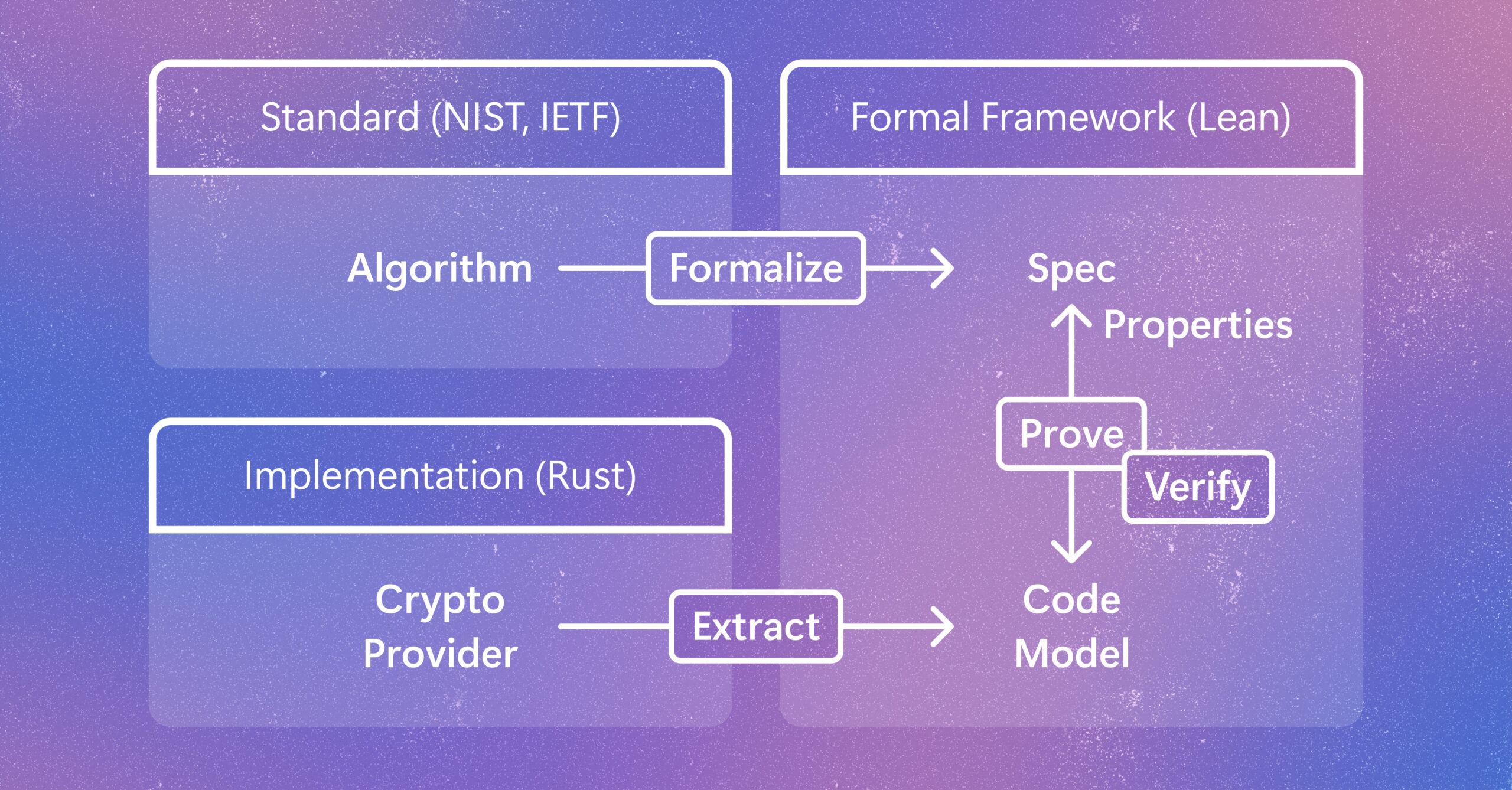
Cryptographic code supports vital protections in modern computing systems. Learn how a new method helps verify code as developers write it while preserving speed and adaptability as it gets implemented and evolves. The post Verifying Rust cryptography in SymCrypt, from standards to code appeared first on Microsoft Research.
Exploring how generative AI could make machine vision more accessible to businesses. The post GenEye in a Box: Making Machine Vision Something You Can Just Ask For appeared first on GPT-Lab.
MIT News · Artificial Intelligence· news.mit.eduOct 7, 2026
Students in MIT’s Concourse program delve deeply into the human condition, debate challenging questions, and learn to develop judgment about issues that can’t be quantified.
We use cookies to run the site and, with your consent, for analytics and to show ads.
See our Cookie Policy.