Several published comparisons of variational quantum optimizers time only runs that reach a target loss, or read the verdict at a single target. Either convention could decide whether an optimizer's costlier steps pay off. We measure how much each convention changes verdicts among Adam, simultaneous perturbation stocha...
Generative models are increasingly trained in self-consuming iterative loops, where users curate preferred samples from model-generated candidates and the curated samples are used to train future generations of the model. Prior work has largely assumed fixed user preferences, but in practice exposure to model outputs g...
Xiu-Kun Wei, Tian Xie, Ding Zhu et al.· 1 citation
The widespread deployment of generative AI has made it increasingly difficult to distinguish synthetic content from real data. Consequently, synthetic data is inevitably incorporated into the training pipelines of future model generations, forming a self-consuming training loop. Prior work has studied the effects of su...
Pretrained diffusion models are powerful priors for inverse problems, but posterior sampling under nonlinear, non-differentiable forward models remain hard. We introduce diffusion waltz, an MCMC method using SDEdit-style noising-denoising as a proposal, corrected via Metropolis-Hastings for exact posterior sampling wit...
So Takao, Gregory D. Bellchambers, Lu-Ke Ye et al.· 0 citations
Reach audiences
Advertise in front of researchers, engineers, and readers.
Organizations increasingly use frontier language models to analyze customer feedback, but answer quality also depends on how that feedback is organized and made available. We define a \emph{customer context graph} as a unified model of customer and business context. Typed relationships connect customer objects (feedbac...
G. Raviraja, Viraj Bagal, Prabhath Chellingi· 0 citations
We prove global exponential (linear) convergence with an explicit rate in the rich scaling for wide two-layer linear networks trained with smooth Polyak-Lojasiewicz predictor losses. Gradient flow in the factors closes exactly in terms of a finite-dimensional Bures flow of the neuron law covariance, in which the predic...
Benign overfitting is extensively studied when learning from a single high-dimensional input, but its behavior under heterogeneous input fusion remains largely unexplored. We study this question for minimum-norm linear interpolation under a heterogeneous Gaussian design, comparing two statistically dependent input bloc...
Naturalistic movie-fMRI provides a shared, temporally structured probe of brain dynamics, yet predictive models commonly rely on whole-run functional connectivity (FC) or temporally generic representations that are not aligned with narrative events. We introduce MovieSTAGE (Scene, Transition, and Global Encoding), a mu...
Common-image gathers (CIGs) contain physically meaningful information about velocity-model errors through reflector focusing and residual moveout, but in conventional imaging workflows they are typically used only as diagnostic tools. In this work, we propose a multiscale self-attention summary network that maps high-d...
In Bayesian inverse problems, posterior sampling requires generating samples that are consistent with given observations while capturing the range of plausible solutions. Direct conditional generative models introduce latent noise to model this ambiguity, but paired inverse-problem training can still encourage an almos...
Shi-Qin Zeng, Zi-Jun Deng, Felix J. Herrmann· 0 citations
Neural PDE surrogates are trained on numerical solver outputs that contain both physical evolution and solver-specific discretization errors. Because surrogates are also evaluated against held-out trajectories from the same solver, standard benchmarks cannot distinguish fidelity to the exact evolution from imitation of...
Partial identification (PI) entails estimating bounds on causal effects by encoding different assumptions on data generation as a constrained optimization problem. Such bounds can suffice to inform policy decisions even if the causal effect itself is not identifiable. Often vacuous in practice, practitioners seek to ex...
Uzair Akbar, Z. Zaidi, Niki Kilbertus et al.· 0 citations
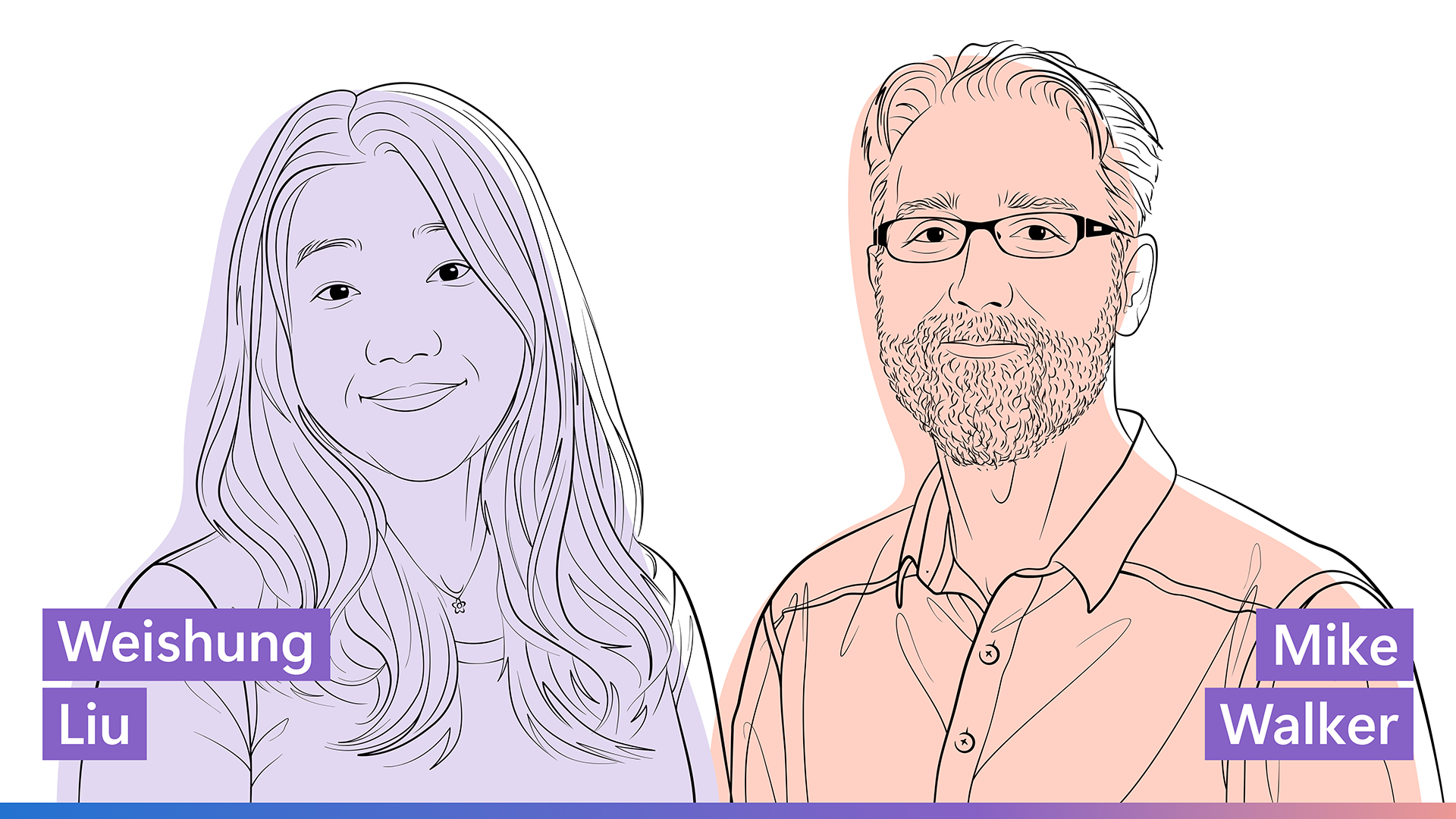
Research Manager Mike Walker reflects on a career spanning hacker culture, cybersecurity, and AI, sharing lessons about trust, teamwork, leadership, and why solving difficult problems requires curiosity, judgment, agility—and an understanding of the rules. The post Learn the rules: The hacker mindset appeared first on Microsoft Research.
Learn how Google Antigravity and our Cheminformatics Skills accelerate drug discovery workflows, search compounds, and propose novel rigidified macrocycles.
MIT News · Artificial Intelligence· news.mit.eduOct 28, 2026
Professor Paris Smaragdis develops computers with superhuman hearing for applications like speech recognition, music understanding, and environmental monitoring.
MIT News · Artificial Intelligence· news.mit.eduOct 27, 2026
Prabha Jha used her experience with MIT Open Learning’s program for senior executives to develop AI solutions for her employer, Verizon, and to write a book.