Loss-difference conditional mutual information (ld-CMI) uses the smallest of the standard observations in the supersample hierarchy of generalization bounds: it measures what a learner's loss differences reveal about which candidate of each pair it was trained on. Accuracy is known to force information into the model;...
Recursive feature machines (RFMs) learn representations of data by alternating between fitting a predictor to a dataset and updating features of that predictor using the average gradient outer product (AGOP). Connections between AGOPs and feature learning in neural networks motivate linear RFMs as a simple setting for...
Andrew Cheng, B. Kiani, Yue M. Lu et al.· 0 citations
We argue that pattern recognition and step-by-step reasoning are two ends of a spectrum. A large language model (LLM) learns to reason step-by-step when data is structured such that the next token depends on a small amount of preceding context. Inference in LLMs resembles pattern recognition when the next token depends...
A new approach, called Q-PACE, consisting of a second-order sensitivity model that predicts the loss increase as a sum of quantization noise MSE weighted by per-layer curvature coefficients, and its stability during training allows for infrequent, cheap recalibration.
Alexandra Volkova, Matin Ansaripour, Erik Schultheis et al.· 0 citations
Reach audiences
Advertise in front of researchers, engineers, and readers.
Comprehensive evaluations on the nuScenes and Argoverse 2 datasets demonstrate that CAA-GMM achieves competitive or superior accuracy compared with state-of-the-art raster-based baselines, while maintaining low computational complexity.
Arash Raftari, Babak Ebrahimi Soorchaei, Yaser P. Fallah· 0 citations
We revisit a standard accepted practice in the continuous diffusion language model
literature of fixing conditioning prompt tokens clean during training.
We make a very simple modification: also noise the conditioning prompt tokens during training.
We demonstrate that under this modified training objective, we ac...
We present a hybrid quantum-classical framework that detects affinity and romance-investment fraud by modelling the cognitive biases in a manipulative conversation. In our proposed framework, cognitive biases central to this fraud class are carried by dedicated qubits in a structured parameterized quantum circuit, toge...
Learning a directed acyclic graph (DAG) from observational data is a challenging combinatorial problem due to the exponential growth in the number of candidate parent-set configurations. Existing exact score-based methods often require computationally intensive combinatorial search, whereas constraint-based methods can...
Accurate thermal modeling is essential in metal additive manufacturing (AM) for understanding the process-structure-property chain. Physics-informed neural networks (PINNs) offer effective surrogate thermal modeling by minimizing physics-based residual losses at collocation points. However, prior works typically rely o...
Parameter-efficient fine-tuning (PEFT) offers many parameterizations, yet their methodological and functional differences remain unclear. We compare six methods in language and diffusion models to examine how their parameterizations relate to task performance, forgetting, and changes in pretrained weight geometry. Moti...
Randomized exploration is central to bandit learning, multi-agent reinforcement learning, and zeroth-order policy search, yet its independence and privacy are usually only treated as technical assumptions. We show that these properties are critical for security purposes and demonstrate how an adversarial agent can expl...
Michael Tang, Mahmoud Abdelgalil, J. Poveda· 0 citations
Many organizations fine-tune publicly available pretrained Automatic Speech Recognition (ASR) models and deploy them in black-box settings, assuming limited access provides protection. We show this assumption is fragile: adversarial perturbations crafted on the public base model transfer effectively to fine-tuned targe...
Mojtaba Nafez, Aref Mousavi, Mohammad Ebrahim Mahdavi et al.· 0 citations
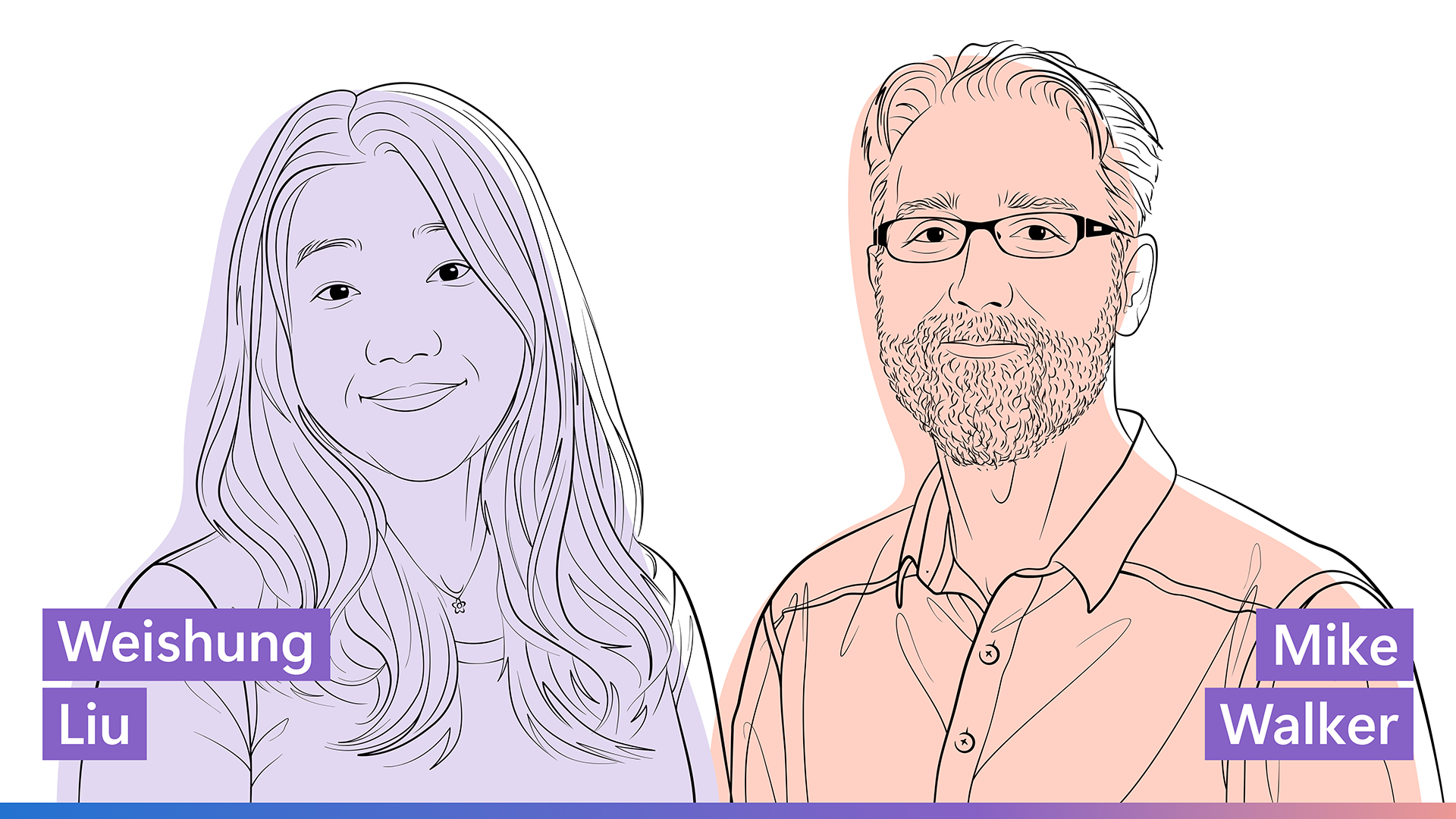
Research Manager Mike Walker reflects on a career spanning hacker culture, cybersecurity, and AI, sharing lessons about trust, teamwork, leadership, and why solving difficult problems requires curiosity, judgment, agility—and an understanding of the rules. The post Learn the rules: The hacker mindset appeared first on Microsoft Research.
Learn how Google Antigravity and our Cheminformatics Skills accelerate drug discovery workflows, search compounds, and propose novel rigidified macrocycles.
MIT News · Artificial Intelligence· news.mit.eduOct 28, 2026
Professor Paris Smaragdis develops computers with superhuman hearing for applications like speech recognition, music understanding, and environmental monitoring.
MIT News · Artificial Intelligence· news.mit.eduOct 27, 2026
Prabha Jha used her experience with MIT Open Learning’s program for senior executives to develop AI solutions for her employer, Verizon, and to write a book.