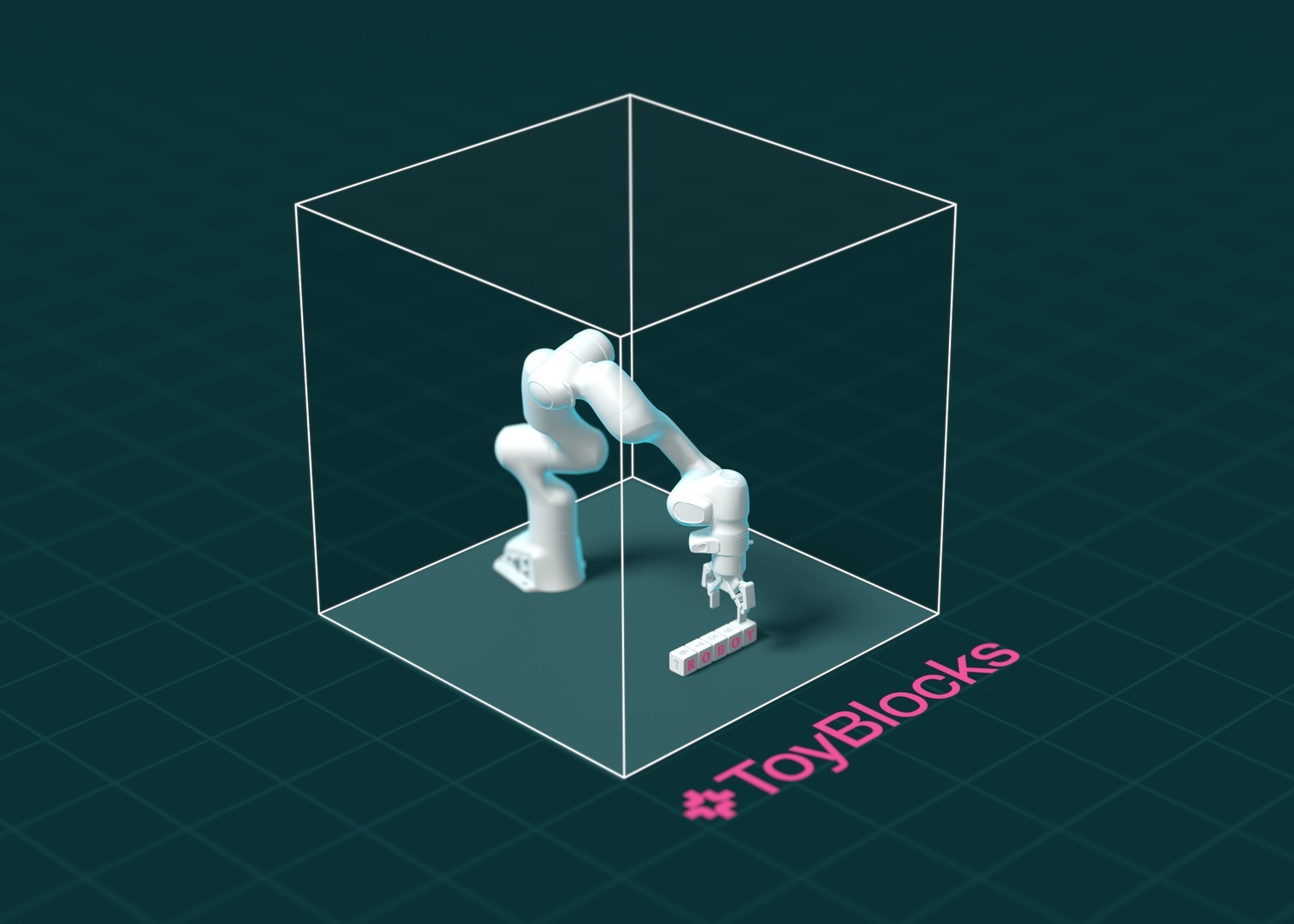
Scientific dynamics forecasting is often framed as an architecture choice, although deployment is also determined by observed history, rollout feedback, compute budget, physical objective, and test distribution. We formulate protocol-dependent model selection and introduce ProtocolMatch, a compute-matched, validation-s...
Differentially private time-series generators commonly produce fixed-length synthetic windows, whereas downstream forecasting models often require long continuous training sequences. How these windows are assembled after generation can therefore alter the effective synthetic data presented to a forecaster, even when th...
Guoxiong Long, Huizhen Huang, Qikun Cai et al.· 0 citations
Wasserstein gradient flow extends gradient descent to probability measures. Its Hessian-guided perturbed variant (PWGF) adds Gaussian perturbations to escape saddle points in nonconvex problems. We investigate when its approximation by finitely many interacting particles remains accurate over growing time horizons. Our...
It is proved that approximate structure provides estimation-error benefits whenever the edge error satisfies $\Delta<n^2 - kn$, reducing sample complexity from $O(n^2)$ to $O(kn+\Delta)$.
N. Jerome, Fang-Nian Wang· 0 citations
Reach audiences
Advertise in front of researchers, engineers, and readers.
Estimating conditional distributional potential outcomes (CDPOs) over time is important in medicine (e.g., to estimate patient-specific risks under different treatment sequences). However, this task is challenging because of time-varying confounding, yet existing adjustment strategies for this task are limited. In this...
Tom\`as Garriga, Valentyn Melnychuk, Konstantin Hess et al.· 0 citations
Model organisms of alignment-relevant behaviors (e.g., backdoors, sycophancy, spurious correlations) have emerged as a key tool for evaluating whitebox interpretability techniques. We argue that the prevailing practice of training model organisms to a single objective of installing the target behavior is insufficient a...
Xilin Wang, David Bau, Byron C. Wallace· 0 citations
Emerging legislation requires large language models (LLMs) to be audited for compliance with regulatory standards, particularly fairness. Such black-box audits typically assume a single auditor with access to a large, representative set of queries. In practice, it can be difficult for an auditor to obtain such a query...
A framework for optimizing parameters using sample paths drawn from a Gaussian process inferred from the information available at the start of BO, which can effectively select parameter configurations that achieve strong performance among a range of candidate configurations.
Satoshi Katayama, Shoyo Hunt, Shintaro Masuda et al.· 0 citations
Bayesian optimization often involves multiple objectives, constraints, and fidelity levels. We address the challenge of jointly selecting where and at which fidelity to evaluate to identify the highest-fidelity feasible Pareto frontier in this combined setting. From a unified information-theoretic perspective, we measu...
We show upper and lower bounds on the regret of $m$-set adversarial bandits for different utilities (winner reward or sum of rewards) and feedback models (winner index, winner reward, sum of rewards, and their combinations). By comparing to standard bounds for combinatorial and MNL bandits, our results reveal how subtl...
A Gaussian process (GP) model can agree with the data for two reasons: its assumptions are right, or the chosen inputs could never have shown that they are wrong. The distinction can be checked from the design before any responses are observed. Every model implies relations that its noiseless responses must satisfy at...
Long-horizon reasoning demands access to earlier information at a manageable generation cost. Full-history attention incurs growing storage and computation, while recurrent compression can lose precise details. Therefore, we present YANchor-4B, a general-purpose recurrent model that preserves crucial memory as ANchors...
Huishan Ji, Hua Xu, Weiming Zhang et al.· 0 citations
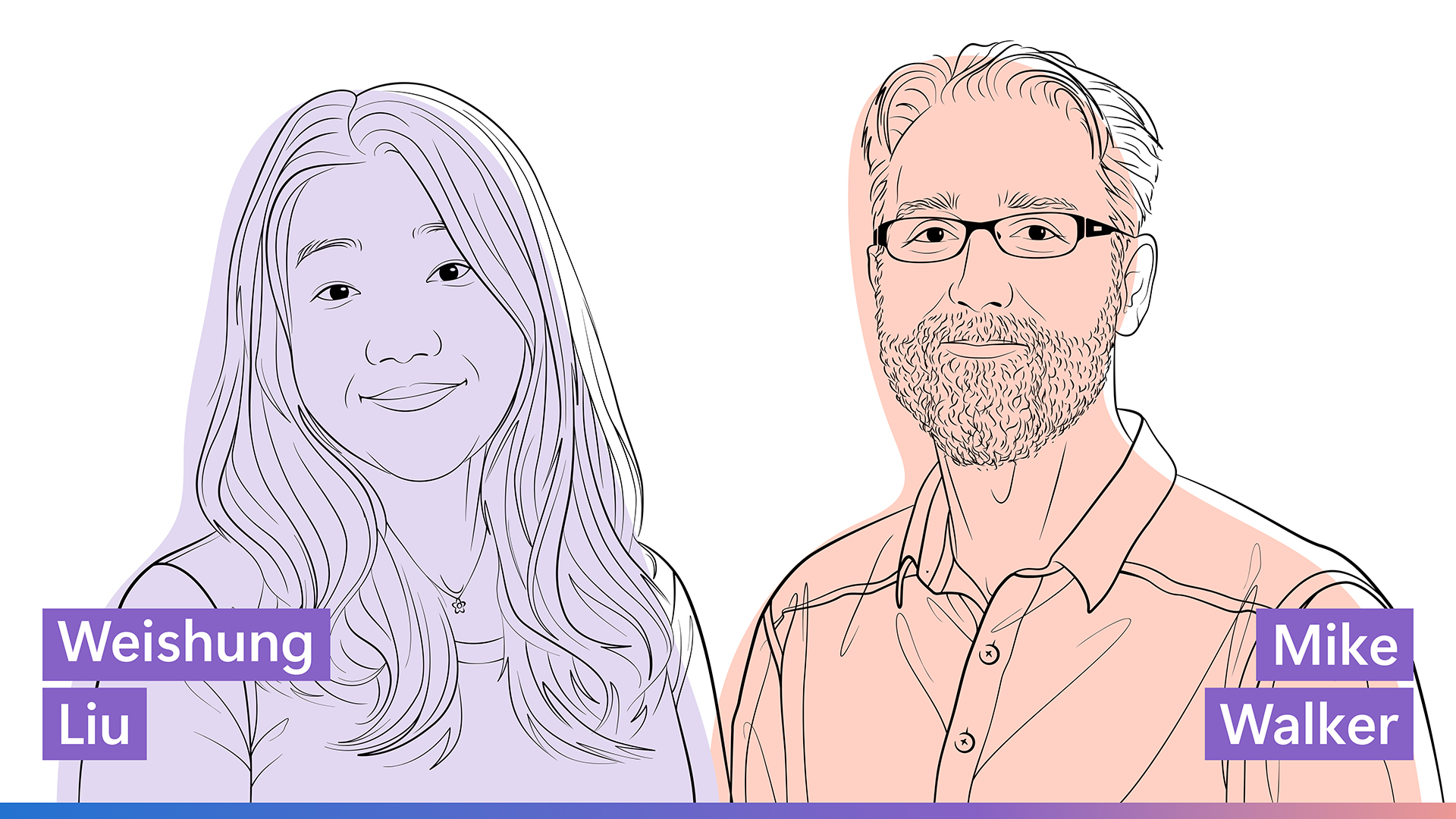
Research Manager Mike Walker reflects on a career spanning hacker culture, cybersecurity, and AI, sharing lessons about trust, teamwork, leadership, and why solving difficult problems requires curiosity, judgment, agility—and an understanding of the rules. The post Learn the rules: The hacker mindset appeared first on Microsoft Research.
Learn how Google Antigravity and our Cheminformatics Skills accelerate drug discovery workflows, search compounds, and propose novel rigidified macrocycles.
MIT News · Artificial Intelligence· news.mit.eduOct 28, 2026
Professor Paris Smaragdis develops computers with superhuman hearing for applications like speech recognition, music understanding, and environmental monitoring.
MIT News · Artificial Intelligence· news.mit.eduOct 27, 2026
Prabha Jha used her experience with MIT Open Learning’s program for senior executives to develop AI solutions for her employer, Verizon, and to write a book.