Multiphase flow in porous microstructures is central to CO$_2$ storage, fuel-cell operation, and flip-chip packaging. Predicting these flows remains challenging because wettability and complex pore geometry govern the nonlinear evolution of fluid interfaces. Machine learning holds substantial promise for advancing the...
Chun-Yang Wang, Ming-Rui Zhang, Yu-Yan Zhang et al.· 0 citations
Recursive self-improvement requires carrying accepted changes into later improvement cycles, while studying agent-proposed changes also requires substantial research infrastructure. Existing settings often leave agents to rebuild routine infrastructure or restrict exploration to individual components. We introduce RSIG...
Fan-Qing Meng, Ling-Xiao Du, Hao-Cheng Lu et al.· 3 citations
Training Transformer-based architectures with finite data augmentation has become an increasingly popular approach in geometric machine learning. Despite its empirical success, the interplay between the Transformer architecture, invariance to different symmetries, and augmentation budgets remains underexplored. In this...
Eduardo Santos-Escriche, Valerie Engelmayer, Y. Lin et al.· 0 citations
In Continual Multi-Agent Reinforcement Learning (CMARL), agents learn cooperative policies across sequences of tasks, aiming to adapt effectively to new tasks while preserving the ability to solve previously encountered ones. In many applications, tasks differ in their underlying structure, which can represent, for exa...
Tommaso Marzi, Ahmed Hendawy, Jan Peters et al.· 0 citations
Reach audiences
Advertise in front of researchers, engineers, and readers.
Modern applications of AI rely on increasingly complex models. Explainable AI (XAI) has emerged as a set of techniques aimed at improving model transparency. However, existing XAI methods typically assume input features to be inherently interpretable, or they rely on intermediate internal abstractions that are difficul...
T. Schnake, Doreen Schöppenthau, Alexander Meyer et al.· 0 citations
What can a distribution-matching regularizer such as SIGReg in LeJEPA certify about contrastive learning? We study shared Gaussianization (SG), a characteristic-function Gaussianity test on the average of two normalized views, scaled by an independent $\chi_d$ radius. Because disagreeing views shorten the average, one...
Ruo-Yu Zhao, Yu-Ting Chen, Jin-He Zhang et al.· 0 citations
Machine-learned interatomic potentials (MLIPs) excel at in-distribution tasks, accelerating drug and material development, yet they struggle to generalize out-of-distribution. We propose to push the cost-accuracy Pareto frontier by designing observable-agnostic electronic ground-state descriptor models (GSMs) with comp...
Eike S. Eberhard, Xaver Kainz, Viktor Kotsev et al.· 0 citations
PatchBench, a benchmark of empirically observed model-specific jailbreak failures inducing actionable harmful answers, and PatchBench-Local, an evaluation protocol testing whether a patch is behaviourally precise, provide a more precise basis for developing and comparing jailbreak repair methods.
Alexi Canesse, Mathis Le Bail, Maël Jenny et al.· 0 citations
Token-based world models enable fine-grained latent planning, but repeatedly processing large spatial token grids makes action search expensive. We introduce COSTGRAD, a training-free, goal-conditioned selector that ranks spatial tokens by the gradient norm of the planning cost with respect to each input token. By deri...
Despite its widespread use, Proximal Policy Optimization with clipping (PPO-Clip) remains difficult to tune, and the interactions among critic learning, clipping, and rollout reuse remain incompletely understood. We develop a \emph{non-asymptotic} analysis of PPO-Clip as a \emph{closed-loop actor--critic} system. It ca...
Junwei Su, Mengfan Liu, Yanyong Zhang et al.· 0 citations
Intrusion detectors can confidently misclassify attacks that were not seen during training. Human review can correct these errors, but only a limited number of cases can be checked. Uncertainty-based review may overlook confident errors, while anomaly scores alone do not show whether changing the review plan will corre...
Despite the ubiquity of sensors in wearable and mobile devices and the abundance of human movement data they generate, translating unlabeled recordings into foundational motion models remains an open challenge. Self-supervised learning (SSL) has alleviated the need for costly annotations, yet existing approaches leave...
Marius Bock, Yu-Wei Zhang, Juergen Gall et al.· 0 citations
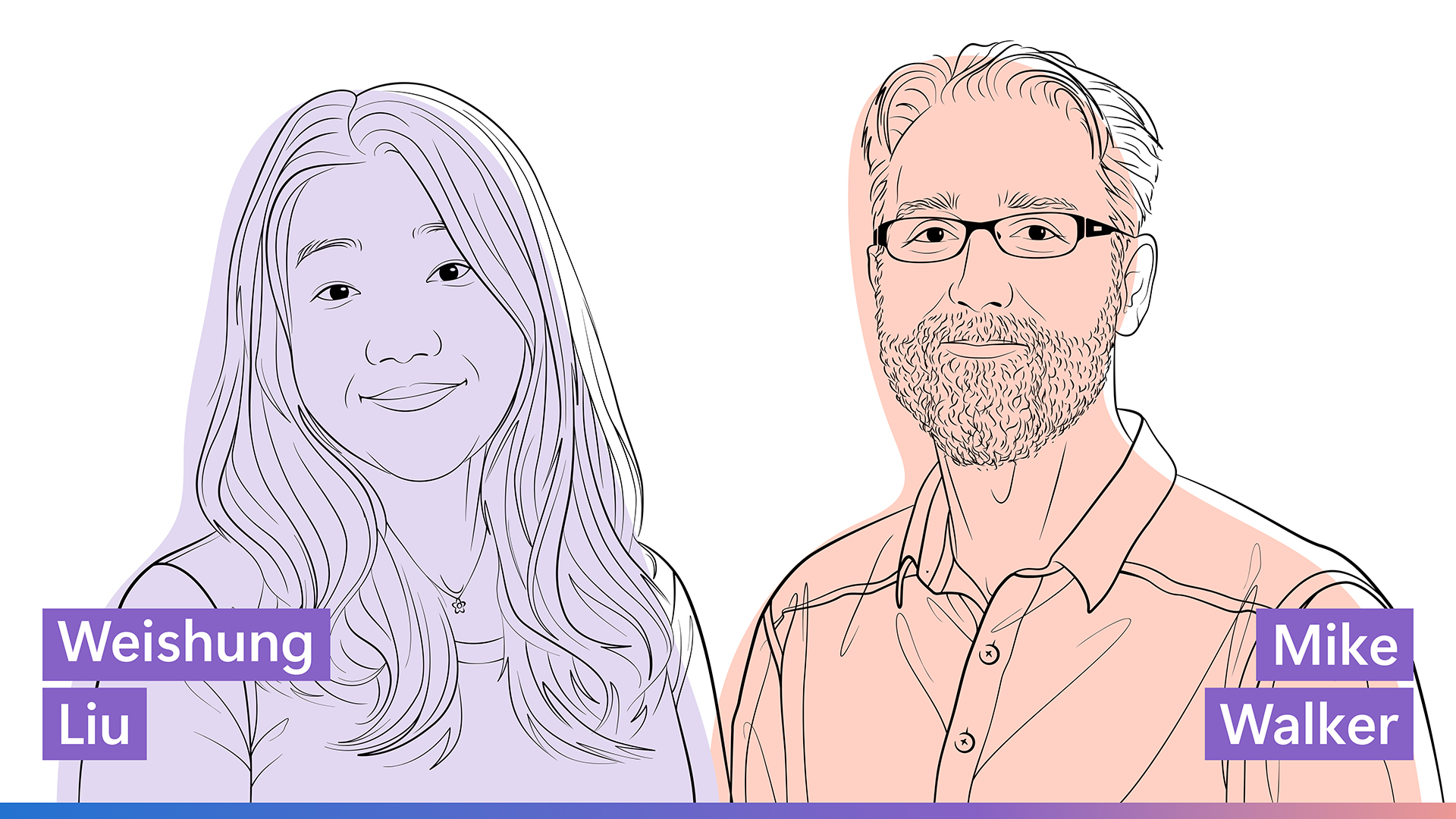
Research Manager Mike Walker reflects on a career spanning hacker culture, cybersecurity, and AI, sharing lessons about trust, teamwork, leadership, and why solving difficult problems requires curiosity, judgment, agility—and an understanding of the rules. The post Learn the rules: The hacker mindset appeared first on Microsoft Research.
Learn how Google Antigravity and our Cheminformatics Skills accelerate drug discovery workflows, search compounds, and propose novel rigidified macrocycles.
MIT News · Artificial Intelligence· news.mit.eduOct 28, 2026
Professor Paris Smaragdis develops computers with superhuman hearing for applications like speech recognition, music understanding, and environmental monitoring.
MIT News · Artificial Intelligence· news.mit.eduOct 27, 2026
Prabha Jha used her experience with MIT Open Learning’s program for senior executives to develop AI solutions for her employer, Verizon, and to write a book.