The amount of quality data in many machine learning tasks is limited to what is available locally to data owners. The set of quality data can be expanded through trading or sharing with external data agents. However, external data may be contaminated or introduce undesirable sample diversity which can degrade performan...
Martin V. Vejling, Shashi Raj Pandey, Christophe A. N. Biscio et al.· 0 citations
We introduce Delphos, a deep reinforcement learning framework for assisting discrete choice model specification process. Delphos aims to support the modeller by providing automated, data-driven suggestions for model specifications, thereby reducing the effort required to develop and refine utility functions. Delphos co...
Gabriel Nova, Stephane Hess, Sander van Cranenburgh· 0 citations
We study the large-sample variational problem for t-distributed stochastic neighbor embedding with a class of input and output kernels. The input law has compact support and a density continuous on that support. An entropy equation determines the scale parameter in the input kernel, and we prove that this parameter exi...
Archetypal analysis (AA) was originally proposed in 1994 by Adele Cutler and Leo Breiman as a computational procedure for extracting distinct aspects, so-called archetypes, from observations, with each observational record approximated as a mixture (i.e., convex combination) of these archetypes. AA thereby provides str...
Aleix Alcacer, Irene Epifanio, Sebastian Mair et al.· 0 citations
Reach audiences
Advertise in front of researchers, engineers, and readers.
Approximation and learning of classifiers of large data sets by neural networks in terms of high-dimensional geometry and statistical learning theory are investigated. The influence of the VC dimension of sets of input-output functions of networks on approximation capabilities is compared with its influence on consiste...
We consider the problem of estimating graph limits, known as graphons, from observations of sequences of sparse finite graphs. In this paper we show a simple method that can shed light on a subset of sparse graphs. The method involves mapping the original graphs to their line graphs. We show that graphs satisfying a pa...
We study quantum multi-armed bandits (QMAB) and quantum linear bandits (QLB), where the learner queries each arm or action through a quantum reward oracle or its inverse. Prior work gives algorithms over horizon $T$ with regret $O(K\log T)$ for QMAB with $K$ arms and $O(d^2\operatorname{polylog} T)$ for $d$-dimensional...
Maoli Liu, Zhuohua Li, John C. S. Lui· 0 citations
Geometric architectures are often motivated by internal mechanisms, but accuracy alone does not show whether predictions use them. In Sheaf Neural Networks (SNNs), edge transports form a connection whose cycle products define holonomy. We ask whether training changes triangle holonomy, whether predictions rely on the l...
Versions 1 and 2 of this preprint reported that an identity-specifying system prompt leaves a geometric fingerprint in the final-layer hidden-state trajectories of four open-weight language models, and that instruction tuning moves this fingerprint from the direction to the magnitude of the hidden-state vector. An audi...
Jorge Castillo Sep\'ulveda, Marco Torres Y\'evenes, Juan Carlos Lanas· 0 citations
Decision-focused learning (DFL) trains predictive models by optimizing downstream decision quality rather than standalone prediction accuracy. For contextual linear optimization, most existing DFL methods assume offline data and full observations of the objective cost vector. We develop an on-policy learning method for...
Wyame Benslimane, Tinghan Ye, Pascal Van Hentenryck et al.· 0 citations
When a coordinator compares answers from heterogeneous foundation models, self-reported confidence may have different meanings across responders and changing workloads. This paper presents MARGIN (Multi-Agent Runtime Grading via Incremental Normalisation), a runtime calibration method that learns model-specific confide...
A family of attacks is introduced that eliminates the backward pass by predicting the input gradient from forward-pass hidden states via a lightweight linear regression, and exact affine conditional gradient means are derived.
Kamil Ciosek, Aleksandr V. Petrov, Nicolò Felicioni et al.· arXiv.org· 1 citation
Learn how Google DeepMind and GovTech Singapore uses lightweight on-device Gemma models to intercept conversational scams in private chats with zero cloud data egress.
MIT News · Artificial Intelligence· news.mit.eduOct 13, 2026
Machine-learning networks can learn without detailed instructions from a designer. Those that do may offer insight into how the brain reorganizes itself during learning.
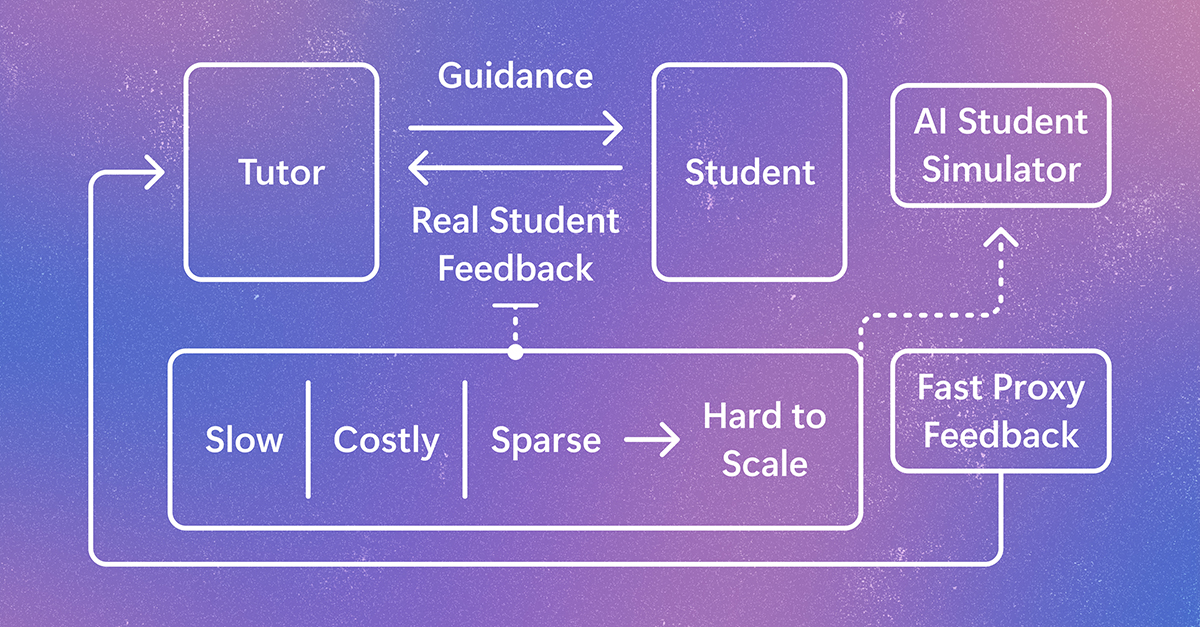
StudentSim is a research system for evaluating and improving AI tutoring tools before they are tested with learners. It models how individuals may engage with tutors, giving feedback to improve tutor performance across subjects like chess, writing, and mathematics. The post Simulating student learning for better AI tutoring appeared first on Microsoft Research.
Exploring how generative AI could make machine vision more accessible to businesses. The post GenEye in a Box: Making Machine Vision Something You Can Just Ask For appeared first on GPT-Lab.
We use cookies to run the site and, with your consent, for analytics and to show ads.
See our Cookie Policy.