AI systems are making rapid progress in mathematics, but this progress is hard to measure. Benchmarks of solved problems saturate, and in benchmarks of open problems each problem can be resolved for the first time only once. We present SqueezeBench, a benchmark that is resilient to saturation: a success raises the bar...
Pablo Manrique, Hai Xia, Stefan Szeider· 0 citations
Designing tool-integrated reasoning agent systems for complex chemical tasks remains a fundamental challenge. Although recent chemical agents have demonstrated promising performance through the integration of external tools, they are still built on the autoregressive paradigm, which is inherently constrained by causal...
Mengdi Liu, Chenghao Jia, Hong Chang et al.· 0 citations
Trajectory generation underpins urban applications such as traffic management and urban planning. Within road networks, vehicle movement along road segments is largely deterministic, whereas transitions at intersections are critical--multiple outgoing paths may appear equally plausible, yet they can lead to substantial...
Large audio-language models (LALMs) frequently exhibit object hallucination, affirming absent sounds. The dominant mitigation, Audio-Aware Decoding (AAD), contrasts logits under real audio against an all-zero "blank" waveform, flagged by prior review as out-of-distribution. We introduce a black-box causal test that iso...
Mohammad Khalooei, Mohammad Sabokrou· 0 citations
Reach audiences
Advertise in front of researchers, engineers, and readers.
Empowerment measures the capacity of an agent to actively control its environment. In this work, we explain the connection between skill learning and empowerment. While skill learning is not empowerment, we introduce a simple scalable recipe for empowerment maximization: empowerment corresponds to the number of executa...
Catherine Ji, Vivek Myers, Joshua Lin et al.· 0 citations
LLM agents increasingly operate over sensitive resources, such as private documents and mutable system states, which can create serious safety and security risks. Runtime guardrails should therefore make inspectable, reproducible, and deterministic allow or refuse decisions before potentially irreversible agent actions...
Duy Nguyen, Lesly Miculicich, Bhavana Dalvi et al.· 0 citations
Data-centric scaling of RLVR has focused on collecting or generating verifiable training problems. However, corpus size alone does not determine whether the dataset provides a useful learning signal for a target policy. To guide the synthesis of effective RLVR data, we experimentally characterize dataset effectiveness...
Ximing Lu, Aviral Kumar, Jan Kautz et al.· 0 citations
Agentic large language models now tackle complex tasks, yet strategic reasoning over long horizons is under-studied: most agentic benchmarks are short and episodic, and performance on long tasks is hard to dissect into stored knowledge, reasoning and luck. We introduce SpireBench, in which models play the complete comm...
Monte Carlo Tree Search (MCTS) is often proposed for scheduling directed-acyclic-graph (DAG) workflows, yet most studies never run the comparison that could refute it - giving a much simpler method the same search effort. We run that comparison under a controlled protocol. All arms receive an identical budget - the sam...
Explainable Artificial Intelligence (XAI) tools have often been presented as methods to increase trust in machine learning models by making aspects of their algorithms more human-understandable. However, evidence accumulated over the last decade points to an overall failure of this objective, instead promoting overreli...
Marco Zullich, Emily Schiller, Ivan Gentile et al.· 0 citations
The increasing complexity of state-of-the-art machine learning models has made their behavior progressively harder to interpret, spurring rapid advancements in the field of eXplainable Artificial Intelligence (XAI). Among many methods proposed, perturbation-based approaches play a major role. By systematically altering...
Josef Lindl, Mariana Chaves, Damien Garreau· Lecture notes in computer sc...· 0 citations
In this paper, we develop a fractional stochastic neural network with residual dynamics driven by fractional Brownian motion. By introducing a discrete stochastic maximum principle for the network, we construct the corresponding adjoint recursion. For deterministic network parameters, we prove mean square convergence o...
Learn how Google DeepMind and GovTech Singapore uses lightweight on-device Gemma models to intercept conversational scams in private chats with zero cloud data egress.
MIT News · Artificial Intelligence· news.mit.eduOct 13, 2026
Machine-learning networks can learn without detailed instructions from a designer. Those that do may offer insight into how the brain reorganizes itself during learning.
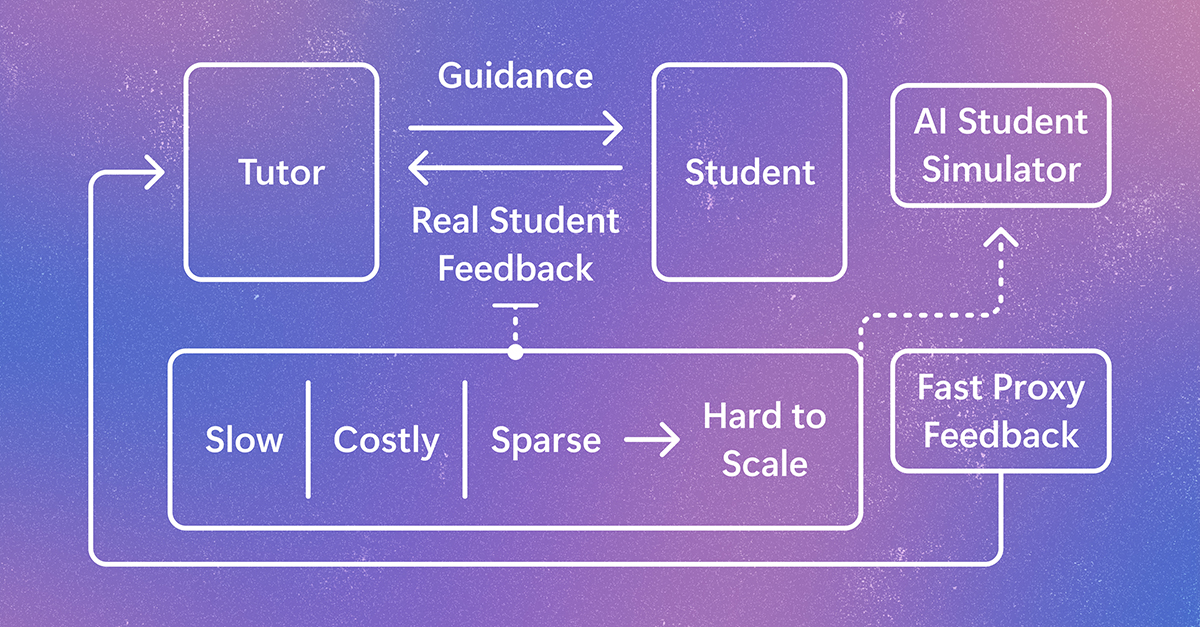
StudentSim is a research system for evaluating and improving AI tutoring tools before they are tested with learners. It models how individuals may engage with tutors, giving feedback to improve tutor performance across subjects like chess, writing, and mathematics. The post Simulating student learning for better AI tutoring appeared first on Microsoft Research.
Exploring how generative AI could make machine vision more accessible to businesses. The post GenEye in a Box: Making Machine Vision Something You Can Just Ask For appeared first on GPT-Lab.
We use cookies to run the site and, with your consent, for analytics and to show ads.
See our Cookie Policy.