Generative modeling for discrete data has been significantly advanced by learning continuous vector fields on the statistical manifolds to transport simple priors to target discrete distributions. However, because these continuous-time flows are not constrained to follow geodesics on the statistical manifold, thereby r...
Xiao-Huan Jia, Renzhe Xu, Xiao Wang et al.· 0 citations
Reinforcement learning (RL) under partial observability typically re- lies on recurrent networks to encode temporal information, with the recurrent module trained jointly with the policy or value function. This raises a natural question: is learning the recurrent network actually necessary? In this paper, we investigat...
Continual post-training faces a dual challenge of acquisition and retention: models must learn new capabilities while preserving prior knowledge. While Self-Distillation Fine-Tuning (SDFT) mitigates this using self-supervision with in-context demonstrations, it relies on strong in-context learning and instruction-follo...
Woosung Koh, Hyunsoo Lee, Kyungjae Lee et al.· 0 citations
Counterfactual text editing is the ability to revise a given text in light of a hypothetical change while preserving facts not causally affected by that change. When asked what would have happened if a doctor had not recommended surgery, the model output should retain the patient's medical history and modify only the c...
Arvind Raghavan, Inwoo Hwang, Shreyas Havaldar et al.· 0 citations
Reach audiences
Advertise in front of researchers, engineers, and readers.
Reinforcement learning has become the foundational paradigm for enhancing the reasoning capabilities of LLMs. Yet the dominant approach, Proximal Policy Optimization (PPO), relies on a geometrically degenerate clipping proxy that cannot adapt its resistance to policy shifts, leading to premature clipping and degraded e...
Zhicheng Cai, Xinyuan Guo, Hanlin Wu et al.· 0 citations
Supervised fine-tuning (SFT) remains a widely used approach for post-training large language models, because fixed demonstrations can directly introduce desired reasoning strategies and behavioral patterns. Yet forcing a model to imitate externally provided trajectories may also interfere with behaviors already support...
Yuxuan Gu, Ke-Quan Niu, Xiao-Cheng Feng et al.· 0 citations
Embodied agents must translate multimodal observations and user requests into executable actions while adapting to product constraints, changing goals, and execution feedback. We present JoyInside-VLM-Agent, a ReAct-style multimodal agent developed through product-conditioned trajectory construction and staged policy l...
Gangyi Li, LuYao Wang, Jingfu Sun et al.· 0 citations
A simulator summarizes an environment in a state that users can read and change. Generative models learn representations of the world without explicit specification, but offer no built-in way to edit that world's state. We investigate the conditions under which a generative model can act as a simulator through $\textit...
Sevan Brodjian, Michael Hobley, Pietro Perona· 0 citations
Knowledge distillation aims to train a smaller student model to mimic a larger teacher model for resource-constrained environments. However, the process of distillation is typically data-intensive and computationally expensive, particularly for generative tasks. Few-shot distillation offers an alternative by transferri...
Large Language Model (LLM)-guided evolutionary optimization has successfully improved prompts, programs, and even entire AI systems. Most optimization methods select a candidate from the search frontier, then mutate it in one LLM pass based only on its failures. This focus on the frontier can stall on production AI sys...
Seung Won Wilson Yoo, Chang Zeng, Aditi Somayajula et al.· 0 citations
Unlearning in large reasoning models (LRMs) requires removing forget-set information from both the reasoning trace and the final answer. Existing approaches achieve this objective at the cost of reasoning collapse, where the model fails to produce a coherent chain-of-thought (CoT) and does not properly terminate its re...
Ego-trajectory prediction in urban roadway work zones remains an underexplored topic in autonomous-driving research, with limited dedicated data and systematic evaluation. Roadway work zones involve temporary changes in the lane layouts and connectivity of the roads, complicating interactions with surrounding vehicles...
Shuo Zhang, Aman Sunesh, S. Ergan et al.· 0 citations
Learn how Google DeepMind and GovTech Singapore uses lightweight on-device Gemma models to intercept conversational scams in private chats with zero cloud data egress.
MIT News · Artificial Intelligence· news.mit.eduOct 13, 2026
Machine-learning networks can learn without detailed instructions from a designer. Those that do may offer insight into how the brain reorganizes itself during learning.
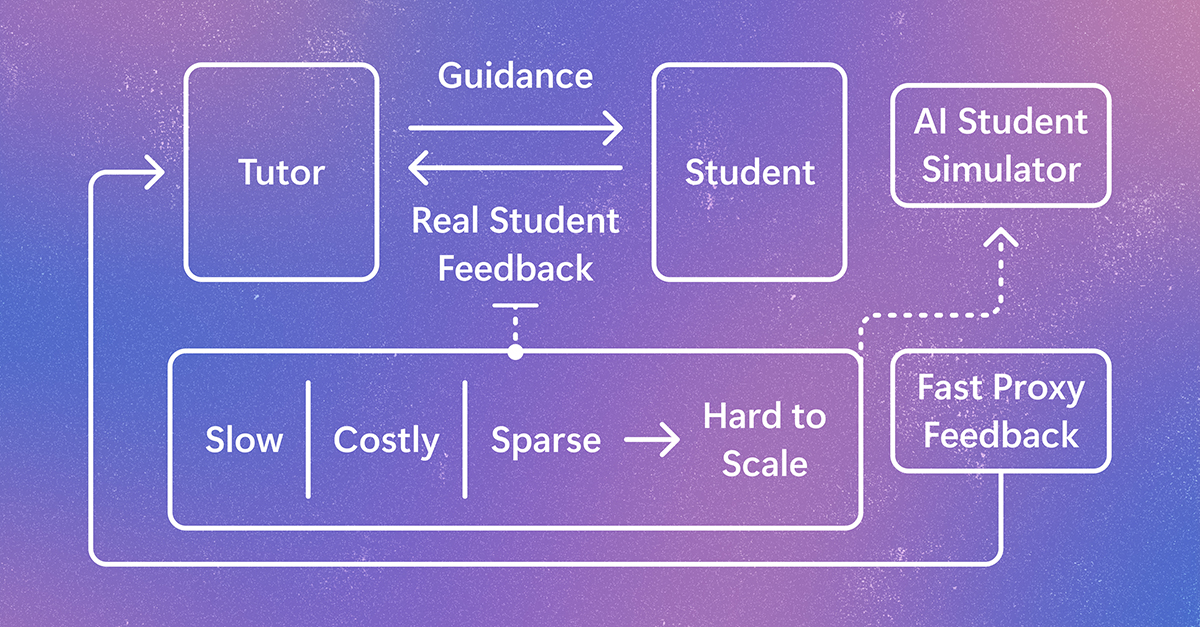
StudentSim is a research system for evaluating and improving AI tutoring tools before they are tested with learners. It models how individuals may engage with tutors, giving feedback to improve tutor performance across subjects like chess, writing, and mathematics. The post Simulating student learning for better AI tutoring appeared first on Microsoft Research.
Exploring how generative AI could make machine vision more accessible to businesses. The post GenEye in a Box: Making Machine Vision Something You Can Just Ask For appeared first on GPT-Lab.
We use cookies to run the site and, with your consent, for analytics and to show ads.
See our Cookie Policy.