Efficient attention mechanisms, such as linear and sliding window attention, aim to reduce the computational complexity of Transformers from quadratic to linear. However, their degraded in-context recall often necessitates interleaving full attention layers, leaving the quadratic bottleneck unresolved in long-context p...
Yuhong Chou, Zehao Liu, Yuqi Pan et al.· 0 citations
Counterfactual inference asks how an observed outcome might have differed under different circumstances, such as whether a patient would have recovered had they received a different treatment. Such questions arise whenever decisions depend on the outcomes of alternatives that were not observed. Answering counterfactual...
Neural networks (NNs), while highly flexible and versatile, are often poorly calibrated. Post-hoc calibration methods adjust the outputs of an already trained model using a separate calibration dataset and additional calibration parameters. This process adds overhead that requires separate optimization of the calibrato...
Nektarios Kalampalikis, Pablo M. Olmos, Isabel Valera· 0 citations
Standard Policy Gradient (PG) algorithms suffer from high estimation variance because they rely on Monte Carlo updates. While off-policy variance reduction mitigates this problem, establishing optimal sample complexity currently requires either restrictive assumptions, such as uniformly bounded importance weights, or i...
Linearizing softmax attention offers a route to efficient Transformer inference, but preserving pretrained attention remains challenging. We identify an important source of approximation error overlooked by standard linearization methods: a small number of outlier dimensions contribute disproportionately to query-key d...
Weiqi Sun, Qianyue Wu, Wenjia Wang et al.· 0 citations
The Abstraction and Reasoning Corpus (ARC) is increasingly used to evaluate whether neural networks can infer task-specific transformations from few demonstrations. Recent ARC models differ in architecture, but also in broader training and evaluation protocols, including pretraining data, data augmentation, test-time s...
Adrien Deliege, Marc Van Droogenbroeck· 0 citations
Selecting a subset of features (columns) from a tabular dataset is a ubiquitous challenge in real-world applications. Industry experts seek to minimize model training costs, climate scientists require an interpretable subset of factors to understand extreme weather events, and clinicians need to choose among diagnostic...
Bastian Sch\"afer, Dominika Matus, Lennart Purucker et al.· 0 citations
When a language model is distilled from a teacher that shares its base parameters, the student can inherit behavioural traits of the teacher---including misalignment---even from data that is semantically unrelated to the trait (Cloud et al., 2026). All existing defences require knowing the trait. We remove this require...
Joseph Egan, C. Gilligan-Lee, Michael O'Riordan et al.· 0 citations
Generative Recommenders increasingly use Reinforcement Learning (RL) to optimize outcomes that may appear hundreds or thousands of interactions after a decision. Standard RL propagates reward according to temporal proximity rather than explicit relevance, attenuating the signal assigned to distant but important actions...
Oriol Corcoll, Qiyao Wei, Ciar\'{a}n Mark Gilligan-Lee· 0 citations
Traditional system identification typically involves two steps: initially, training data is processed to estimate a model of the system of interest; then, the model is used to predict outputs for new input queries. In contrast, recent in-context learning approaches learn a meta model that maps directly from training da...
Matteo Rufolo, D. Piga, Filippo Pura et al.· 0 citations
As the production of software passes into the hands of software itself, coding agents are increasingly commissioned to build agents fitted to their users'own workflows. This delegation carries a quiet assumption, that the delivered agent will faithfully serve the requirement it was built for, rather than merely appear...
Jia-Hao Wang, Hong-Jin Qian, Yuyang Hu et al.· 0 citations
In-context-learning Tabular Foundation Models (TFMs) are uniquely suited to scenarios with limited resources or privacy constraints, as they solve new tasks without additional training. However, their architecture consists of multiple transformer blocks, resulting in high computational and memory footprints. Meanwhile,...
Learn how Google DeepMind and GovTech Singapore uses lightweight on-device Gemma models to intercept conversational scams in private chats with zero cloud data egress.
MIT News · Artificial Intelligence· news.mit.eduOct 13, 2026
Machine-learning networks can learn without detailed instructions from a designer. Those that do may offer insight into how the brain reorganizes itself during learning.
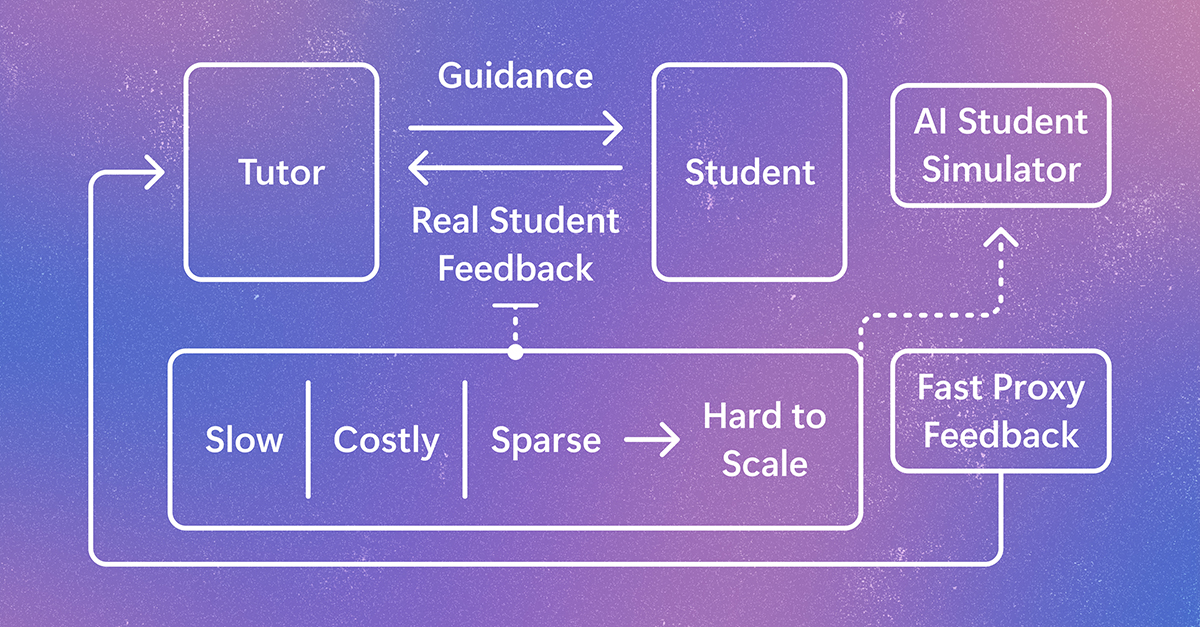
StudentSim is a research system for evaluating and improving AI tutoring tools before they are tested with learners. It models how individuals may engage with tutors, giving feedback to improve tutor performance across subjects like chess, writing, and mathematics. The post Simulating student learning for better AI tutoring appeared first on Microsoft Research.
Exploring how generative AI could make machine vision more accessible to businesses. The post GenEye in a Box: Making Machine Vision Something You Can Just Ask For appeared first on GPT-Lab.
We use cookies to run the site and, with your consent, for analytics and to show ads.
See our Cookie Policy.