Traditional machine learning relies on explicit models and domain assumptions, often limiting flexibility and interpretability. We introduce a "model-free" framework of instance-based learning using surprisal (information theoretic uncertainty) to directly analyze and perform inferences from raw data, eliminating distr...
Christopher J. Hazard, Michael Resnick, Jacob Beel et al.· 0 citations
Large language models (LLMs) are increasingly under scrutiny for perpetuating identity-based discrimination in high-stakes domains such as hiring, particularly against people with disabilities (PwD). However, existing research remains largely Western-centric, overlooking how intersecting forms of marginalization--such...
Mahika Phutane, Hayoung Jung, Matthew Kim et al.· 0 citations
Mechanics-inspired neural dynamical models improve interpretability and physical consistency, but they usually assume a known configuration space, fixed physical parameters, and deterministic prediction from a prescribed initial condition. We introduce Structured Phase Space GAN (SPS-GAN), a conditional generative mode...
Yulong Yang, Jiayin Liu, Vineet Bansal et al.· 0 citations
With origins in game theory, probabilistic values like Shapley values, Banzhaf values, and semi-values have emerged as a central tool in explainable AI. They are used for feature attribution, data attribution, data valuation, and more. Since exact computation can require exponential time, research has focused on effici...
R. Teal Witter, Yurong Liu, Christopher Musco· 0 citations
Reach audiences
Advertise in front of researchers, engineers, and readers.
Generative models have become increasingly powerful tools for robot motion generation, enabling flexible and multimodal trajectory generation across various tasks. Yet, most existing approaches remain limited in handling multiple types of constraints, such as collision avoidance, actuation limits, and dynamic consisten...
Zewen Yang, Xiaobing Dai, Dian Yu et al.· 0 citations
Quantum Diffusion Models (QDMs) are an emerging paradigm in Generative AI that aims to use quantum properties to improve the performances of their classical counterparts. However, existing algorithms are not easily scalable due to the limitations of near-term quantum devices. Following our previous work on QDMs, here w...
Marco Parigi, Stefano Martina, Francesco Aldo Venturelli et al.· 0 citations
Large language models are increasingly deployed in user-facing products that handle sensitive personal data while interacting with untrusted external content. This makes them a prime target for prompt injection attacks, in which an adversary injects malicious instructions in that content to hijack the model. Fine-tunin...
Xiaoxue Yang, Bozhidar Stevanoski, Matthieu Meeus et al.· 0 citations
Federated learning (FL) commonly involves clients with diverse communication and computational capabilities. Such heterogeneity can significantly distort the optimization dynamics and lead to objective inconsistency, where the global model converges to an incorrect stationary point potentially far from the pursued opti...
Shudi Weng, Chao Ren, Ming Xiao et al.· 0 citations
Understanding the internal mechanisms of deep neural networks remains a central challenge in machine learning. In computer vision, one promising yet only preliminarily explored approach is feature inversion via inverse networks, which reconstructs images from intermediate representations using trained inverse networks....
Jan Rathjens, Shirin Reyhanian, David Kappel et al.· 0 citations
Generative models guided by text prompts are widely evaluated for fidelity and prompt alignment, yet their ability to produce diverse outputs remains underexplored. Existing diversity metrics such as Vendi and RKE, which are based on the von Neumann and R\'enyi entropies of kernel matrices, were developed for unconditi...
Mohammad Jalali, Azim Ospanov, Amin Gohari et al.· 0 citations
Originally introduced in game theory, Shapley values have emerged as a central tool in explainable machine learning, where they are used to attribute model predictions to specific input features. However, computing Shapley values exactly is expensive: for a general model with $n$ features, $O(2^n)$ model evaluations ar...
Key Performance Measurement (KPM) forecasting is essential for proactive network management of 5G and next-generation telecom networks. However, existing machine learning (ML) approaches face significant limitations in scalability and explainability, restricting their effectiveness in real-world deployments. We propose...
Geon Kim, Dara Ron, Sukhdeep Singh et al.· 0 citations
Learn how Google DeepMind and GovTech Singapore uses lightweight on-device Gemma models to intercept conversational scams in private chats with zero cloud data egress.
MIT News · Artificial Intelligence· news.mit.eduOct 13, 2026
Machine-learning networks can learn without detailed instructions from a designer. Those that do may offer insight into how the brain reorganizes itself during learning.
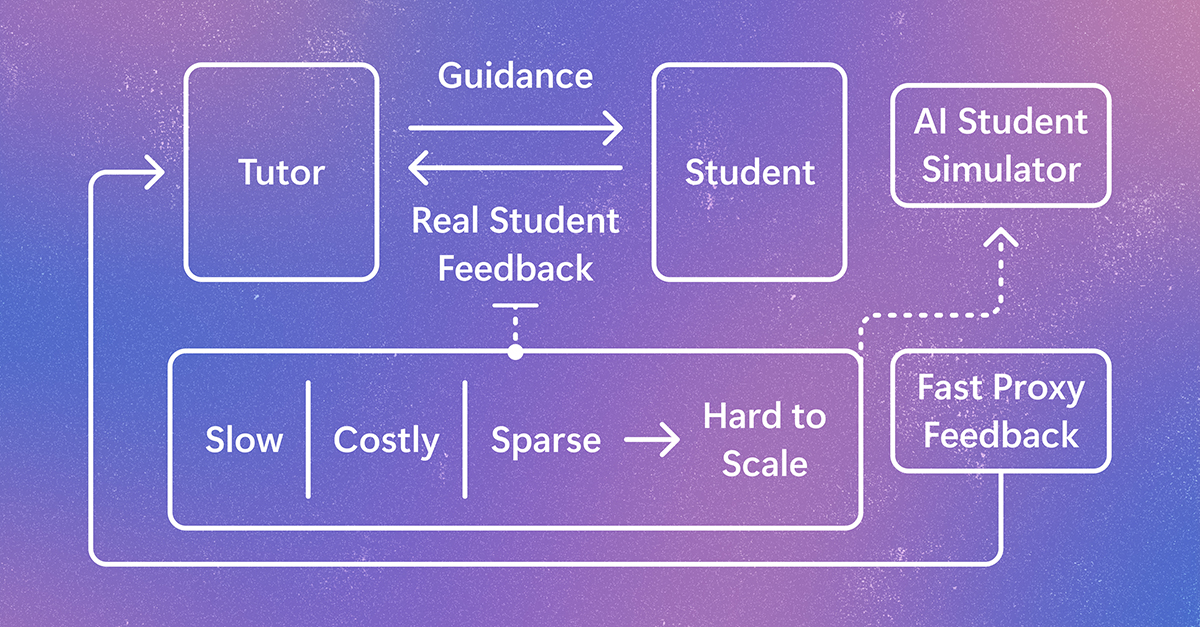
StudentSim is a research system for evaluating and improving AI tutoring tools before they are tested with learners. It models how individuals may engage with tutors, giving feedback to improve tutor performance across subjects like chess, writing, and mathematics. The post Simulating student learning for better AI tutoring appeared first on Microsoft Research.
Exploring how generative AI could make machine vision more accessible to businesses. The post GenEye in a Box: Making Machine Vision Something You Can Just Ask For appeared first on GPT-Lab.
We use cookies to run the site and, with your consent, for analytics and to show ads.
See our Cookie Policy.