Background: Discontinuity in neonatal EEG is a critical marker of brain dysfunction but can be difficult to quantify visually. Inter-burst intervals (IBIs) are a key characteristic of discontinuity, yet their definition does not easily translate to AI detection. Objectives: To introduce low-voltage intervals (LVIs), de...
John M. O'Toole, Sean R. Mathieson, Aurel Luca et al.· 0 citations
Efficient sampling from Bayesian posterior distributions in high dimensions remains a hard problem, despite advances in theory and algorithms. Multiple steps are usually required to draw unbiased samples, for example, iterations of an MCMC algorithm or integration steps in a diffusion-based amortised sampler. However,...
Vincent Pauline, Kirill Tamogashev, Arran Carter et al.· 0 citations
We develop a data-driven sensor-placement framework and apply it to aerosol monitoring in the United Kingdom (UK). A trained convolutional Gaussian neural process is embedded within the DeepSensor optimisation framework. Genetic optimisation with lazy evaluation and caching reduces mean computational time by 60\% (10$\...
Talha Ansar (University of Engineering and Technology, Lahore, Pakistan) et al.· 0 citations
LLM agents executing multi-step workflows fail in two fundamentally different ways: recoverable slips, which further attempts can repair, and knowledge gaps, which retrying cannot resolve. Expert feedback can address the latter, but expert attention is scarce. The key challenge is therefore not whether to ask for feedb...
Ning Liu, Ian Li, Kristina Klinkner· 0 citations
Reach audiences
Advertise in front of researchers, engineers, and readers.
Sparse computation can scale the parametric capacity of LLMs without proportionally increasing active computation, but pretraining sparse architectures remains expensive and data-hungry. Existing sparse upcycling methods mainly target Mixture-of-Experts models, where expert homogeneity, sample inefficiency, and system...
Ranajoy Sadhukhan, Euijin Hong, Sheng Cao et al.· 0 citations
Event sequences are chains of random events, each described by heterogeneous (numerical and categorical) features. The problem of event sequence forecasting occurs in finance, healthcare, business process intelligence, and other fields. In this work, we study multi-horizon forecasting of event sequences as a conditiona...
Dmitry Osin, Egor Surkov, Petr Mokrov et al.· 0 citations
Online reinforcement learning (RL) fine-tunes diffusion models with black-box rewards, but reverse-process methods such as Flow-GRPO are limited in efficiency by poor credit assignment, while forward-process methods such as DiffusionNFT are efficient yet unstable without carefully tuned exponential-moving-average (EMA)...
Zheng-Lin Wan, Jia-Yu Chen, Zhengfeiyang Zhang et al.· 0 citations
Most systems trained by equilibrium propagation or coupled learning are in the same class as multi-layer perceptrons: while they may be universal function approximators, they struggle to learn associative tasks which are easy for transformers. Equilibrium propagation relies on a bidirectional flow of information throug...
Michael C. Abbott, Benjamin B. Machta· 0 citations
Zeroth-order (ZO) optimization offers a memory-efficient alternative to backpropagation for fine-tuning large language models. However, existing ZO methods typically sample training examples uniformly, overlooking their evolving importance and leaving avoidable estimation variance. To address this limitation, we propos...
Hai-Yuan Wan, Yan-Yi Li, Wei-Cheng Lin et al.· 0 citations
Masked diffusion models (MDMs) generate discrete data by iteratively unmasking multiple tokens in parallel using a learned mask predictor. Their output carries two errors: parallelization error due to parallel sampling, and estimation error from the mask predictor learned with finite samples. Existing theory treats the...
Boundary-value problems for the Laplace equation develop singular behaviour near corners, edges and junctions that smooth approximators resolve poorly. We combine holomorphic neural networks with singular functions derived from the local geometry and boundary conditions. The representation is harmonic by construction,...
Kalp Shah, Andrei Vlad Nicula, Mihnea Andrei B\^arsan et al.· 0 citations
Modern machine learning models are typically trained on data assumed to be representative of the predictive tasks the model will face in the future, but practical datasets violate this assumption. We focus on outcome-dependent truncation in which an observation appears in the training data depending on its label. Our w...
Itai Zilberstein, I. Anagnostides, Arman Kilic et al.· 0 citations
Learn how Google DeepMind and GovTech Singapore uses lightweight on-device Gemma models to intercept conversational scams in private chats with zero cloud data egress.
MIT News · Artificial Intelligence· news.mit.eduOct 13, 2026
Machine-learning networks can learn without detailed instructions from a designer. Those that do may offer insight into how the brain reorganizes itself during learning.
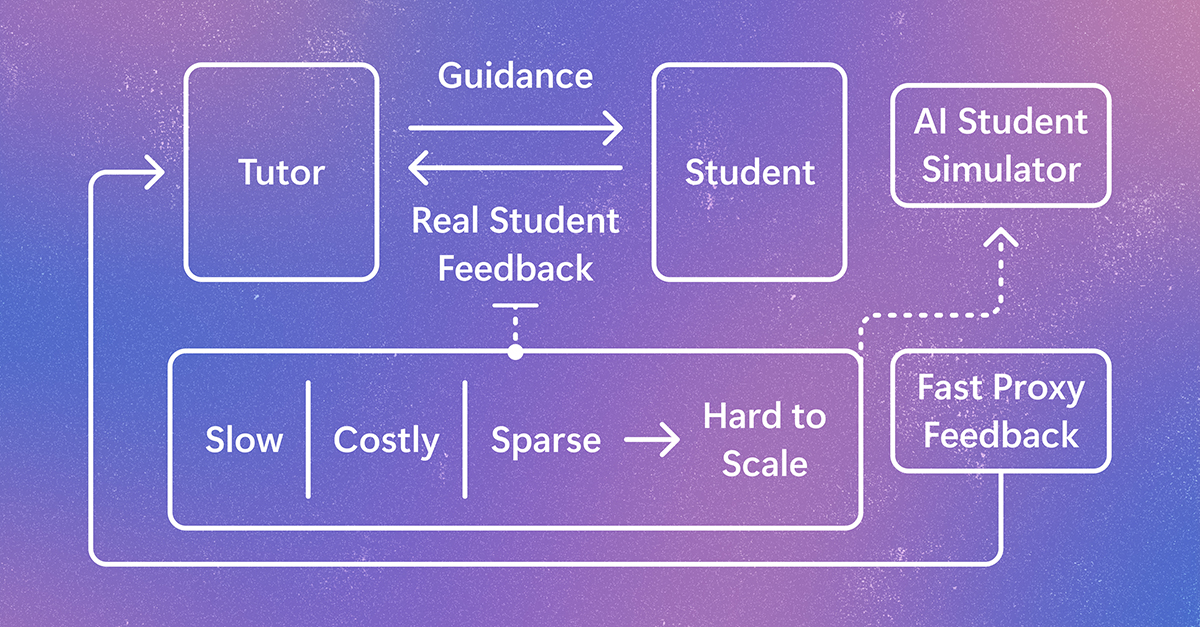
StudentSim is a research system for evaluating and improving AI tutoring tools before they are tested with learners. It models how individuals may engage with tutors, giving feedback to improve tutor performance across subjects like chess, writing, and mathematics. The post Simulating student learning for better AI tutoring appeared first on Microsoft Research.
Exploring how generative AI could make machine vision more accessible to businesses. The post GenEye in a Box: Making Machine Vision Something You Can Just Ask For appeared first on GPT-Lab.
We use cookies to run the site and, with your consent, for analytics and to show ads.
See our Cookie Policy.