Abstract Universal machine learning interatomic potentials (uMLIPs) enable performing condensed-phase molecular dynamics (MD) simulations with accuracy approaching that of first-principles; however, their lack of explicit molecular topology limits bond-aware analysis and reconnection to classical force fields. This stu...
Hodaka Mori, Yu Miyazaki, Takechika Kikkawa· Journal of Chemical Informat...· 0 citations
Abstract Understanding how galaxy populations emerge and evolve from the growth of dark-matter structures is a central challenge in galaxy formation theory. Semianalytic models (SAMs) provide an efficient framework to address this problem, but exploring large ensembles of merger trees across broad parameter spaces rema...
Xuejie Li, Zhongxu Zhai, Xiaohu Yang et al.· The Astrophysical Journal Su...· 0 citations
Abstract Modeling feature interactions in tabular data remains a key challenge in predictive modeling, for example, as used for insurance pricing. This paper proposes the tree-like pairwise interaction network (PIN), a novel neural network architecture that explicitly captures pairwise feature interactions through a sh...
Ronald Richman, Salvatore Scognamiglio, Mario V. Wüthrich· Annals of Actuarial Science· 0 citations
Healthcare is a domain where AI, and specifically, deep learning, has shown enormous promise. However, this domain also presents unique challenges in terms of safety, interpretability, and clinical integration. In this chapter, we review core neural architectures-convolutional networks, recurrent networks, graph neural...
Zhenjie Yao, Yixin Chen· River Publishers eBooks· 0 citations
Reach audiences
Advertise in front of researchers, engineers, and readers.
Causal discovery in nonstationary multivariate financial time series is a fundamental challenge. Classical algorithms, such as Peter–Clark (PC) algorithm and Peter–Clark momentary conditional independence (PCMCI+), assume stationarity and fail in realworld environments characterized by market regime shifts and structur...
Quang-Vinh Dang, M. Dinh, Dat Le et al.· Journal of Data Science and...· 0 citations
# Suggested Zenodo metadata Use these fields when creating the Zenodo record. Replace placeholders as needed. **Title** Reproducibility package for *Identifier-Derived Signal and Sanitization Degeneracy in Graph Learning: A Sufficiency-Aware Audit* **Creator** Mücahit Soylu — Inonu University, Faculty of Engineering, D...
Mücahit Soylu· Zenodo (CERN European Organi...· 0 citations
This Zenodo record contains the complete reproducibility package for the study Structural Representation in Crystal Property Prediction: A Controlled Benchmark on Band Gaps. The benchmark evaluates how structural representation, model capacity, and training-data availability affect crystal band-gap prediction under a c...
Matthew Osvaldo, Matthew Jun Hao Kang, ETHAN YICONG Pang et al.· Zenodo (CERN European Organi...· 0 citations
This repository contains the datasets, analysis scripts, and experiment configuration used to generate the results presented in our research paper "Online Decentralized Estimation of Network Connectivity in Cooperative Robotic Systems Using Graph Neural Networks". This is a condensed release containing only the materia...
anonymous· Zenodo (CERN European Organi...· 0 citations
Predicting aqueous solubility (log S), co-crystallization, and solvation dynamics remains one of the formidable bottlenecks in drug discovery, formulation engineering, and physical chemistry. Conventional approaches rely either on computationally expensive quantum mechanical methods (DFT/MD) or black-box machine learni...
Yoshihiro Honda· Zenodo (CERN European Organi...· 0 citations
Advanced drug delivery systems (DDS) — including polymeric and lipid nanoparticles, lipid nanoparticles (LNPs) for nucleic acid therapeutics, solid oral dosage forms, and three-dimensional (3D)-printed and stimuli-responsive platforms — require the simultaneous optimization of dozens of interacting formulation and proc...
Avinash Bajpai, Sachin Sharma· Zenodo (CERN European Organi...· 0 citations
Predicting aqueous solubility (log S), co-crystallization, and solvation dynamics remains one of the formidable bottlenecks in drug discovery, formulation engineering, and physical chemistry. Conventional approaches rely either on computationally expensive quantum mechanical methods (DFT/MD) or black-box machine learni...
Yoshihiro Honda· Zenodo (CERN European Organi...· 0 citations
The project bridges traditional static code analysis (Object-Oriented metrics) with advanced embedding representation learning to predict refactoring interventions on code-smelly methods. The predictive framework models a supervised binary classification task across 10 distinct target refactoring operations. Data Sourc...
Andrea Lanza, Matteo Bochicchio, Francesca Arcelli Fontana· Zenodo (CERN European Organi...· 0 citations
Assistant Professor Pat Pataranutaporn describes a new interface that lets everyday users glimpse inside an AI's neural network before their chatbot ever says a word.
Microsoft Research Blog· microsoft.comJul 13, 2026
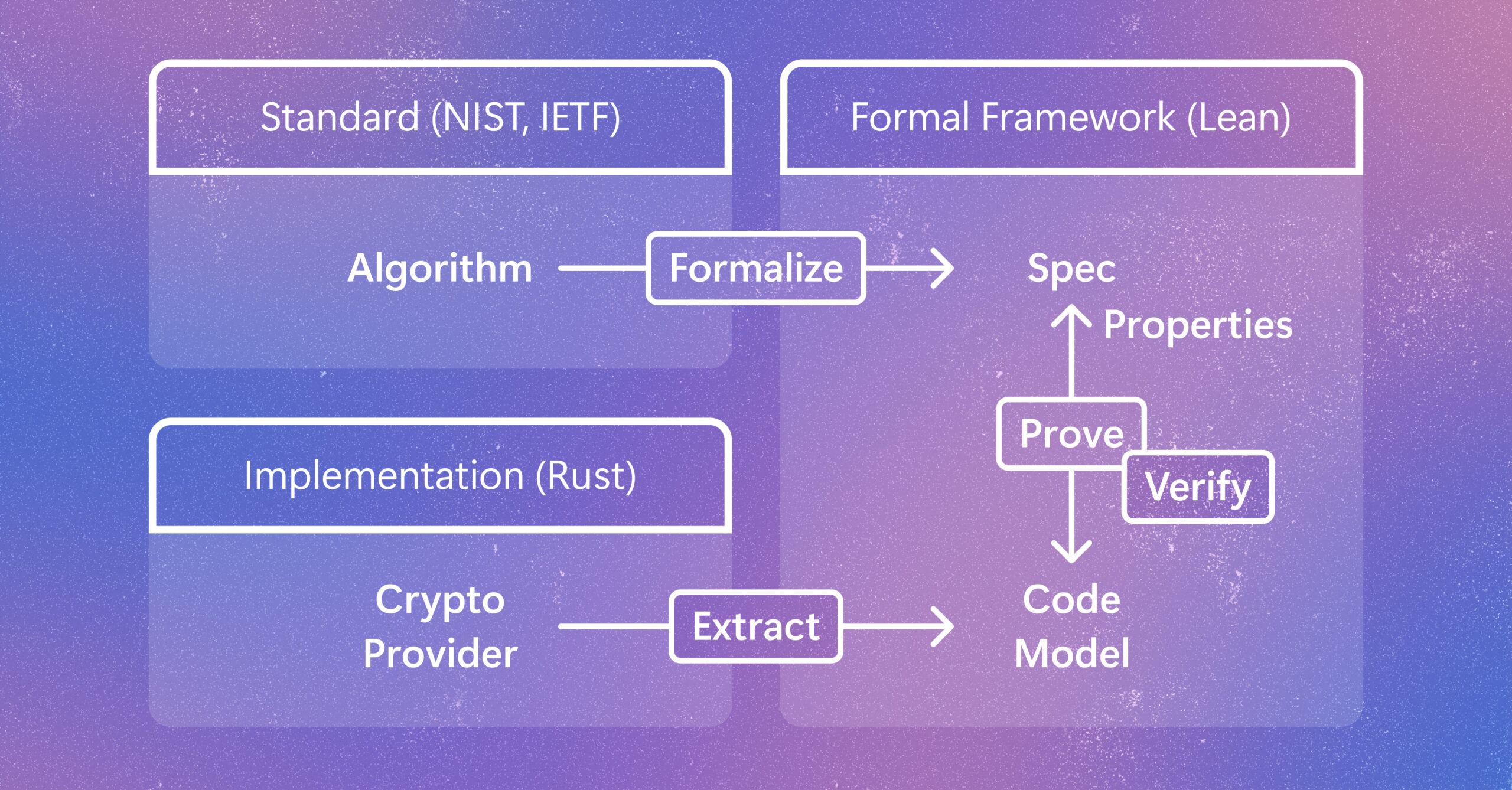
Cryptographic code supports vital protections in modern computing systems. Learn how a new method helps verify code as developers write it while preserving speed and adaptability as it gets implemented and evolves. The post Verifying Rust cryptography in SymCrypt, from standards to code appeared first on Microsoft Research.
MIT News · Artificial Intelligence· news.mit.eduJul 6, 2026
PhD student Rachel Sava, winner of the Envisioning the Future of Computing Prize, explores transformative improvements and dystopian risks of neural technology.