The Drift Neural Network is a neuro-symbolic cognitive architecture that joins four faculties in one closed loop, offered against the prevailing bet on scaling the autoregressive transformer. A transformer produces output by statistical continuation over a fixed matrix of weights, and four of its limits are structural,...
Ibrahim Vandenberg· Zenodo (CERN European Organi...· 0 citations
This Zenodo record is a permanently preserved version of a Structured PREreview. You can view the complete PREreview at https://prereview.org/reviews/22899514. Does the introduction explain the objective of the research presented in the preprint? Yes The introduction clearly establishes the motivation, core research ob...
Amarpreet Bassan· Zenodo (CERN European Organi...· 0 citations
CiteJustice is an automated legal judgment prediction framework designed for Indian courts. Unlike conventional approaches that rely primarily on semantic similarity between a new case and past judgments, CiteJustice incorporates the evolving authority of legal precedents through a Dynamic Precedent Evolution Graph (DP...
Samarth Pawar, Satvik Rokade, Madhav Rakhonde et al.· Zenodo (CERN European Organi...· 0 citations
Graph neural networks (GNNs) are widely used across domains but remain sensitive to class imbalance, class overlap, and complex data distributions, limiting reliability in real-world settings. Existing imbalance-mitigation strategies provide only partial robustness, are often computationally expensive, and leave post-h...
Olumayowa Onabanjo, Gemma Martinez Huerta, Carlos Francisco Moreno-García et al.· Figshare· 0 citations
Proposal checkpoints, benchmark results and training tiles for PiMorph, which reconstructs endothelial monolayers from fluorescence microscopy as embedded cell complexes: cells, gaps, cell-cell contacts and multicellular vertices with exact incidence, plus a posterior over legal complexes for every field. The code, the...
Alexander Okezue Bell· Zenodo (CERN European Organi...· 0 citations
Graph neural networks (GNNs) are widely used across domains but remain sensitive to class imbalance, class overlap, and complex data distributions, limiting reliability in real-world settings. Existing imbalance-mitigation strategies provide only partial robustness, are often computationally expensive, and leave post-h...
Olumayowa Onabanjo, Gemma Martínez Huerta, Carlos Francisco Moreno‐García et al.· Applied Artificial Intellige...· 0 citations
Assistant Professor Pat Pataranutaporn describes a new interface that lets everyday users glimpse inside an AI's neural network before their chatbot ever says a word.
Microsoft Research Blog· microsoft.comJul 13, 2026
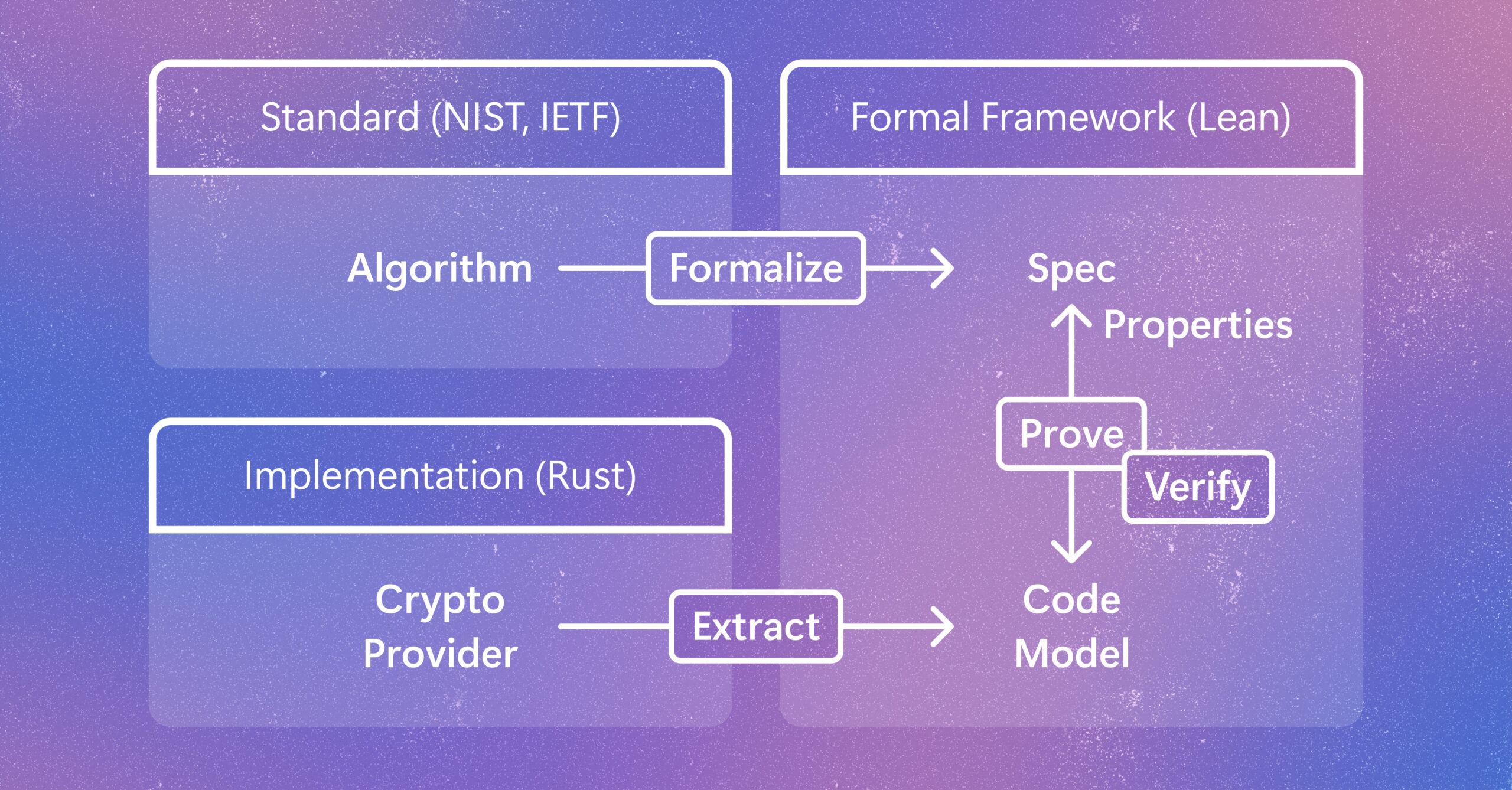
Cryptographic code supports vital protections in modern computing systems. Learn how a new method helps verify code as developers write it while preserving speed and adaptability as it gets implemented and evolves. The post Verifying Rust cryptography in SymCrypt, from standards to code appeared first on Microsoft Research.
MIT News · Artificial Intelligence· news.mit.eduJul 6, 2026
PhD student Rachel Sava, winner of the Envisioning the Future of Computing Prize, explores transformative improvements and dystopian risks of neural technology.