As the growth of electronic commerce and digital payment systems is increasing at a rapid pace, the menace of credit
card fraud has surfaced as a highly advanced global threat with a huge financial loss of billions of dollars on a yearly basis. The
conventional fraud detection systems using traditional rule-based syste...
Mansi Sharma, Amandeep Verma, Rajni Sobti· International Journal for Re...· 0 citations
Version 3 (2026-09-26) corrects errors found by an independent audit of version 2 and by re-checking every cited arXiv abstract. It removes two overstatements from the abstract (that autocatalytic completeness defines a lower bound on network complexity, and that topological data analysis and GNN attribution independen...
Saluca Agentic AI Research Team· Zenodo (CERN European Organi...· 0 citations
Anorthite-NAD is a molecular-dynamics dataset for studying learned nonequilibrium atomistic dynamics under controlled deformation. It contains 36 independent LAMMPS trajectories and 18,000 graph-state transitions of crystalline anorthite (CaAl₂Si₂O₈) at 300 K, spanning isotropic and axis-specific deformation at final s...
Nayan Naleyanda· Zenodo (CERN European Organi...· 0 citations
This Zenodo record is a permanently preserved version of a PREreview. You can view the complete PREreview at https://prereview.org/reviews/22983291. General assessment This manuscript addresses an important and underappreciated problem in computational chemistry and molecular machine learning: apparent differences in p...
Purple Fox· Zenodo (CERN European Organi...· 0 citations
Reach audiences
Advertise in front of researchers, engineers, and readers.
This Zenodo record is a permanently preserved version of a PREreview. You can view the complete PREreview at https://prereview.org/reviews/22983291. General assessment This manuscript addresses an important and underappreciated problem in computational chemistry and molecular machine learning: apparent differences in p...
Purple Fox· Zenodo (CERN European Organi...· 0 citations
This paper introduces a unified, three-layer converged security architecture designed to shield critical digital infrastructure from both classical cyber threats and emerging quantum decryption risks. The architecture integrates a DNA-steganography post-quantum key exchange scheme to secure inter-layer communications,...
Based on the GFUM v4.1 neural fluid network framework, this study applies formallogic mathematical induction to execute a proof of exhaustive exclusion and extremequantitative testing regarding the global regularity of the Navier-Stokes (N-S) equations—aMillennium Prize Problem. We construct a complete graph topologica...
华建 戚· Zenodo (CERN European Organi...· 0 citations
Real-time quantum error correction for superconducting processors requires decoding streaming syndrome data within microsecond cycle intervals (T_cycle ≈ 1.1 μs). Classical minimum-weight perfect matching executed on host processors suffers from communication and serial matching bottlenecks, creating an exponential dec...
Abstract Tissues are complex ecosystems organised in space, and alterations in this organisation underpin multiple diseases. Spatial omics enables molecular profiling of tissue organisation, but linking these patterns to clinical outcomes remains challenging. We present SpaCEy ( Spa tial C linical E xplainabilit y ), a...
Ahmet Süreyya Rifaioğlu, Egle Helene Ervin, Ahmet Sarıgün et al.· Nature Communications· 0 citations
This dataset contains structural molecular property indices (SMPI) calculated for a benchmark collection of 33,715 organic molecules. The dataset is provided as a tab-separated text file (smpi-nog33715mols2.txt) designed for chemoinformatics analysis, quantitative structure-activity/property relationship (QSAR/QSPR) mo...
Lorentz Jäntschi, Alexandra Farcaș· Zenodo (CERN European Organi...· 0 citations
This version corrects one citation error found by an automated check and confirmed by hand: a paper on self-regulatory communication in evolved neural agents, listed among those considered and not included, was cited under the identifier 2602.02840, which belongs to an unrelated paper; the correct identifier is arXiv:2...
Saluca Agentic AI Research Team· Zenodo (CERN European Organi...· 0 citations
Assistant Professor Pat Pataranutaporn describes a new interface that lets everyday users glimpse inside an AI's neural network before their chatbot ever says a word.
Microsoft Research Blog· microsoft.comJul 13, 2026
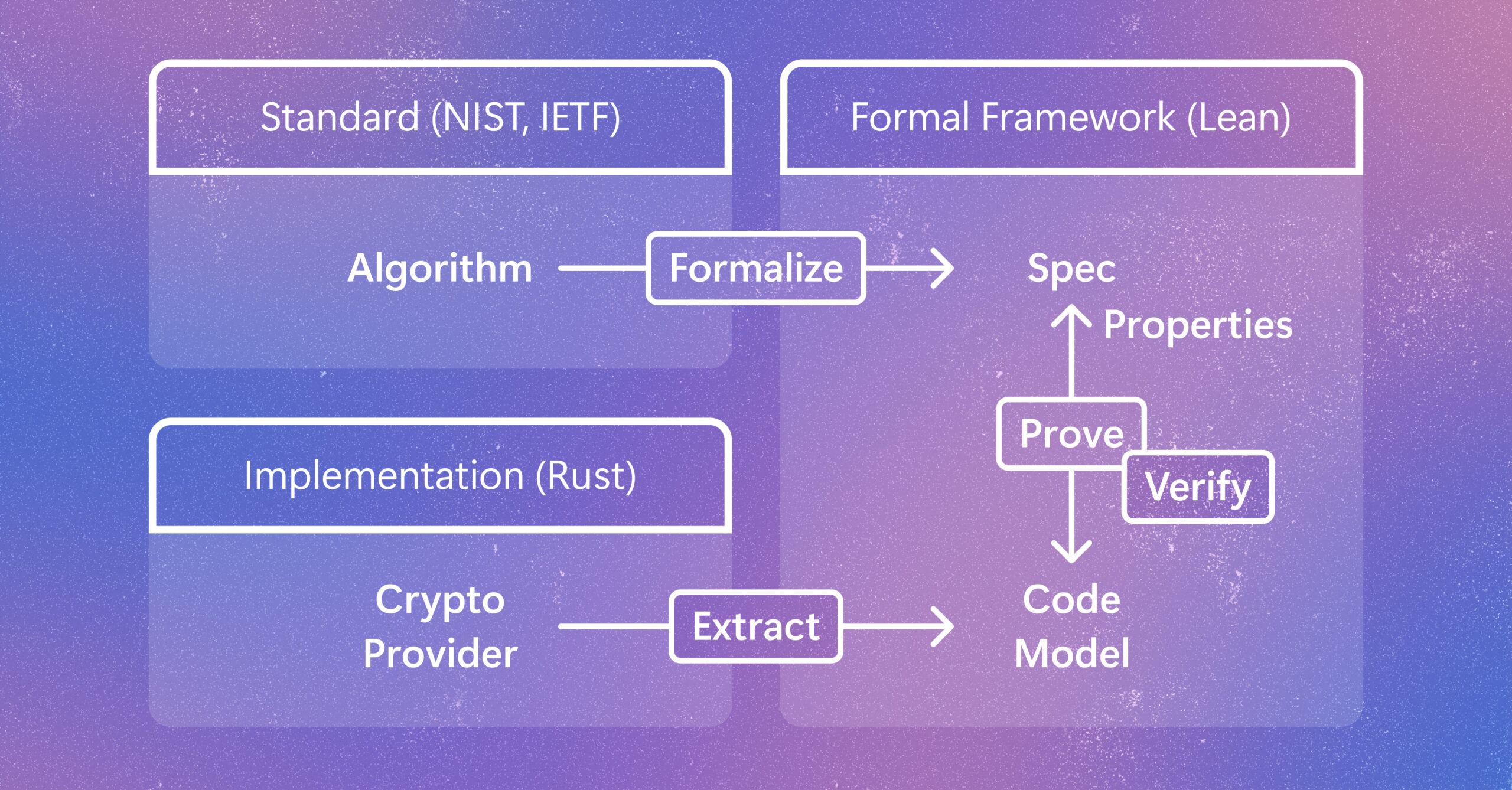
Cryptographic code supports vital protections in modern computing systems. Learn how a new method helps verify code as developers write it while preserving speed and adaptability as it gets implemented and evolves. The post Verifying Rust cryptography in SymCrypt, from standards to code appeared first on Microsoft Research.
MIT News · Artificial Intelligence· news.mit.eduJul 6, 2026
PhD student Rachel Sava, winner of the Envisioning the Future of Computing Prize, explores transformative improvements and dystopian risks of neural technology.