Accurate reconstruction of structural response signals in structural health monitoring (SHM) remains challenging under complex operating conditions involving communication interruptions, sensor malfunctions, and environmental variability. To overcome these challenges, this study proposes a multi-scale temporal feature...
Chao Bao, Ruiqian Yu, 尚绪强 et al.· Structures· 0 citations
Learning from imbalanced data remains a major challenge for graph neural networks (GNNs), as minority nodes are not only rare but also structurally marginalized within the graph. We address this issue with CLARA, a hierarchical learning framework that decomposes node classification into two stages: a coarse subgraph-le...
Vinícius de Almeida Paiva, Leandro Marcolino, Sandro Izidoro et al.· bioRxiv (Cold Spring Harbor...· 0 citations
Graph neural network (GNN) decoders for quantum error correction have historically been locked to specific code families. The POLYMECHANON preprint [1,2] proposes a decoder whose sole input is the detection error model (DEM) — a tripartite graph of detectors, error mechanisms, and logical observables — making the code...
Rowan Brad Quni-Gudzinas· Zenodo (CERN European Organi...· 0 citations
Graph neural network (GNN) decoders for quantum error correction have historically been locked to specific code families. The POLYMECHANON preprint [1,2] proposes a decoder whose sole input is the detection error model (DEM) — a tripartite graph of detectors, error mechanisms, and logical observables — making the code...
Rowan Brad Quni-Gudzinas· Zenodo (CERN European Organi...· 0 citations
Reach audiences
Advertise in front of researchers, engineers, and readers.
This article explores the transformative potential of symbolic artificial intelligence (AI) in the field of materials science, particularly in leveraging experimental data. While state‐of‐the‐art methods like neural networks and statistical models face challenges with limited and imperfect data, symbolic AI offers a pr...
Ahmed Amrani, Mohamed Ali Belloum, Laurence Boudet et al.· Advanced Engineering Materia...· 0 citations
PURPOSE
To develop and validate a repeatable and reproducible approach, QuantoRAGE, for simultaneous whole-brain T1 and T2 mapping using adiabatic magnetization preparation.
METHODS
QuantoRAGE is a 3D FLASH-based sequence using an adiabatic T2-prepared inversion followed by two readout blocks. Sequence repetitions wi...
Natalia Pato Montemayor, Tâm Johan Nguyên, J. Marques et al.· Magnetic Resonance in Medici...· 0 citations
Recommendation systems, as a core technology for mitigating information overload, play a crucial role across many fields. In recent years, graph neural networks (GNNs) have significantly improved recommendation performance by modeling user-item interactions as a graph structure. However, most existing sign-aware method...
Shudong Wang, Dongqin Wang, Kuijie Zhang et al.· Information Sciences· 0 citations
External guards can withhold an accelerator's output and trigger recovery, but their usefulness depends on which faults their numerical tests detect. We examine software fault-injection campaigns in convolutional networks, a vision transformer, and a decoder language model, distinguishing reported results from independ...
Serhii Serhieiev, Lidiia Pukhkan· Zenodo (CERN European Organi...· 0 citations
External guards can withhold an accelerator's output and trigger recovery, but their usefulness depends on which faults their numerical tests detect. We examine software fault-injection campaigns in convolutional networks, a vision transformer, and a decoder language model, distinguishing reported results from independ...
Serhii Serhieiev, Lidiia Pukhkan· Zenodo (CERN European Organi...· 0 citations
The integration of symbolic reasoning with deep reinforcement learning presents a promising paradigm for achieving transparent and interpretable sequential decision-making in complex environments. This work introduces NeuroSymbolic-RLNet, a novel hybrid framework that combines symbolic state transition graphs with neur...
Mohammed Abdullah Alsuwaiket· Scientific Reports· 0 citations
Assistant Professor Pat Pataranutaporn describes a new interface that lets everyday users glimpse inside an AI's neural network before their chatbot ever says a word.
Microsoft Research Blog· microsoft.comJul 13, 2026
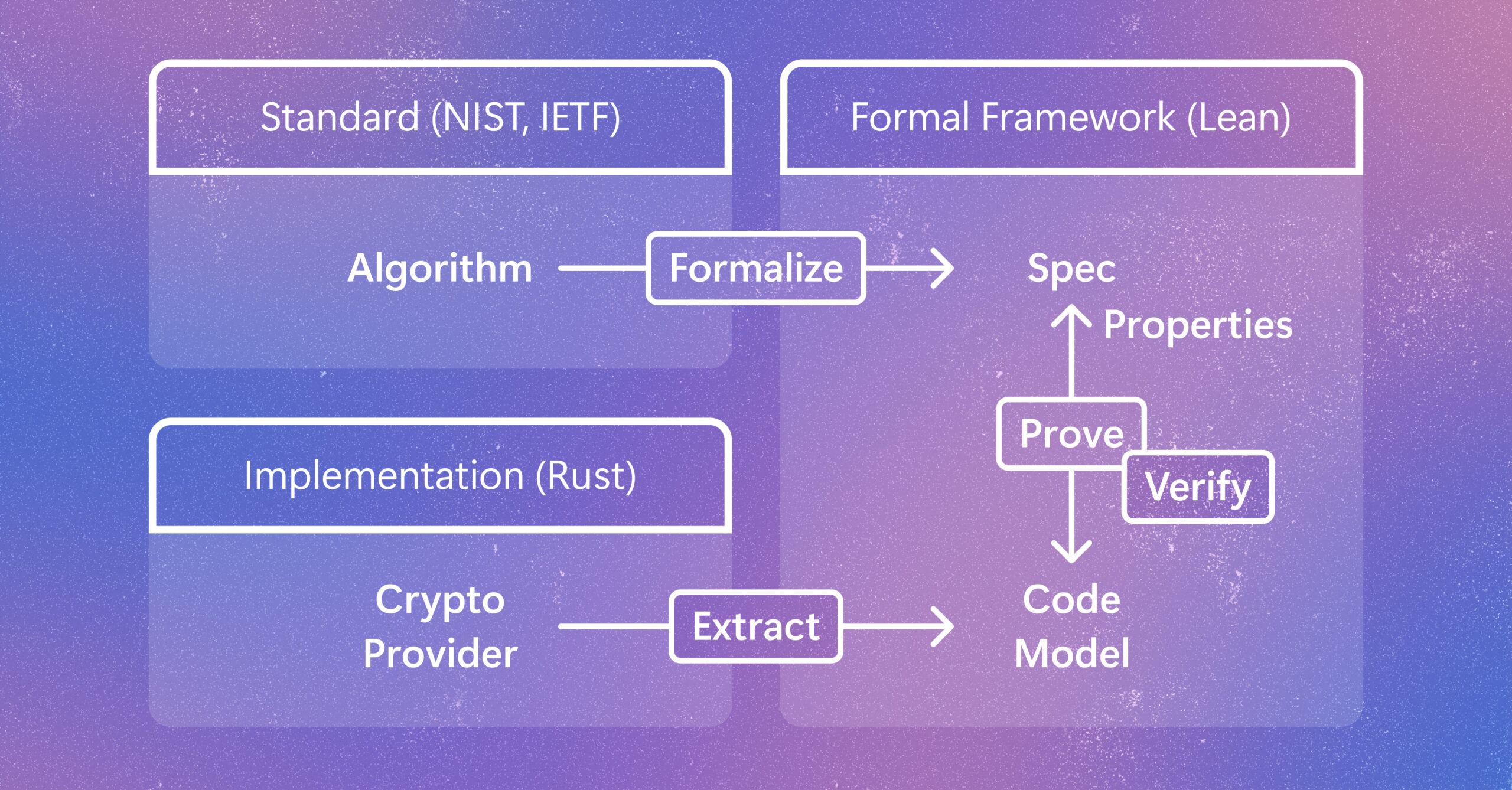
Cryptographic code supports vital protections in modern computing systems. Learn how a new method helps verify code as developers write it while preserving speed and adaptability as it gets implemented and evolves. The post Verifying Rust cryptography in SymCrypt, from standards to code appeared first on Microsoft Research.
MIT News · Artificial Intelligence· news.mit.eduJul 6, 2026
PhD student Rachel Sava, winner of the Envisioning the Future of Computing Prize, explores transformative improvements and dystopian risks of neural technology.