The developed CARDINAL (Cardiovascular Assessment via Representation learning from Deep Imaging with Nested Anatomical Latent embeddings), a clinically grounded framework that learns compact representations from routine non-contrast cardiac CT for major adverse cardiovascular event (MACE) prediction, suggests that non-...
Roy M. Gabriel, Nattakorn Kittisut, Jamshid Hassanpour et al.· 0 citations
Curvature-Aware Radius Shrinkage for Adaptive Nearest Neighbor Classification (CARSANN) is introduced, a geometry-driven framework that adapts the spatial support of each neighborhood according to local geometric complexity and is competitive with adaptive nearest-neighbor methods.
An important finding is that even after full RANSAC orthorectification, bounding box models overestimate pothole depth by 0.16 to 0.21 cm compared to pixel precise segmentation masks, which confirms that the pavement inclusion bias is structural rather than a calibration artifact.
By replacing frame reconstruction with direct probabilistic inference over photon streams, this work bridges photon-counting quanta sensing with robotic vision and bridges photon-counting quanta sensing with robotic vision.
Varun Sundar, Pavan Thodima, Sacha Jungerman et al.· 0 citations
Reach audiences
Advertise in front of researchers, engineers, and readers.
FVeinSyn explicitly decouples synthesis of vascular topology and imaging appearance to mitigate the limitations caused by insufficient training samples, such as inadequate identity diversity and restricted realism.
Yi-Fan Wang, Jie Gui, A. Kong et al.· IEEE Transactions on Pattern...· 0 citations
The results demonstrate that selective, impact-weighted augmentation is vital for balancing practical robustness with the preservation of subtle diagnostic features, and demonstrate that models trained on "destroyed" patches consistently outperform baselines on independent real-world datasets.
Zuzanna Krawczyk-Borysiak, Adam Krawczyk, Mateusz Miller et al.· 0 citations
Experimental results across several CT inverse problem settings show that Flow Matching-based approaches consistently outperform diffusion-based methods in terms of PSNR, SSIM, and perceptual quality, while requiring fewer sampling steps.
This work introduces CURA (Certified Runtime Alarms for Computer-Use Agents), an external monitor that reads only harness-visible telemetry, with no model internals, extra LLM calls, or prompt changes, and turns the running trajectory into a sequential test with certified false-alarm control.
Divake Kumar, Sina Tayebati, Devashri Naik et al.· 1 citation
GMA is presented, a benchmark for evaluating general mobile assistants in challenging real-world scenarios, and shows that appropriate harness design can meaningfully improve performance, particularly on demanding workflows, while the effectiveness of specific designs can vary across foundation models.
Yi-Qi Zhu, Feiyu Gao, Jiakang Fan et al.· 0 citations
An Evaluation Agent, middleware that combines Natural Language Inference factual verification, a five-signal poison detector with relevance-weighted aggregation, and a Trust Index is proposed, which reliably blocks instruction injection of unsafe advice while contradiction and subtle semantic weakening remain hard.
Balkrishna Giri, M. Hasan, Jussi Rasku et al.· 0 citations
ReToken is a single learnable embedding trained as an explicit retrieval target that selects a sparse set of query-relevant visual tokens from a pre-filled visual KV cache that yields consistent gains across image and video benchmarks.
Yao Xiao, Reuben Tan, Zhen Zhu et al.· arXiv.org· 0 citations
This work proposes REST (Reward-Enhanced Scored-Trajectory Distillation), a single-stage RL-distillation co-training framework that attaches a decoupled student to an arbitrary RL teacher that enables few-step CFG-free inference that matches or surpasses its 40-step RL teacher, with an overall additional training cost...
Yuhan Li, Fan-Gao Zeng, Sicong Kang et al.· 0 citations
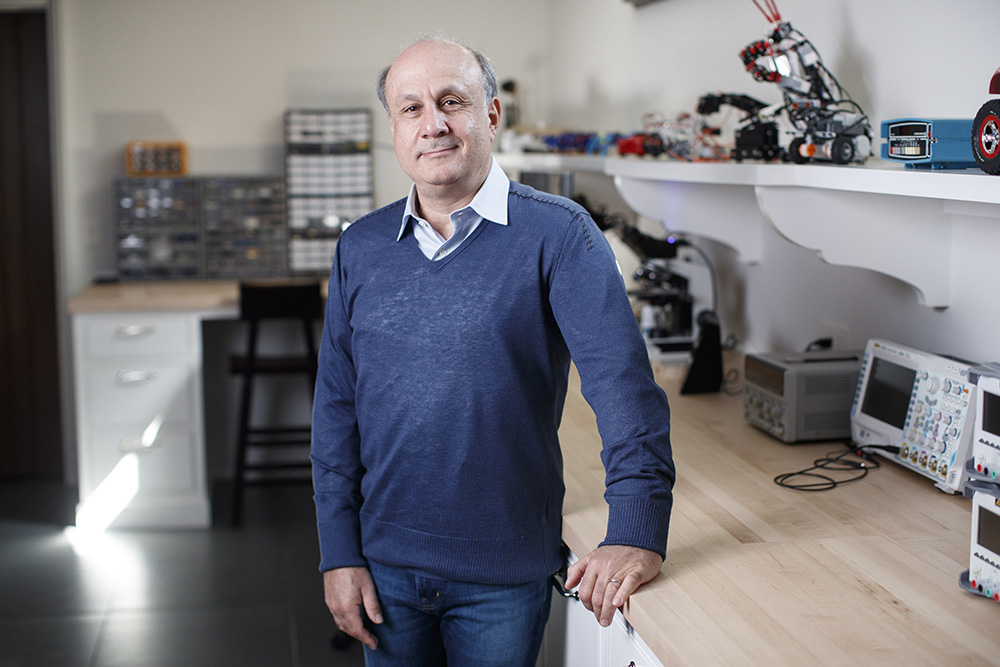
Professor Paris Smaragdis develops computers with superhuman hearing for applications like speech recognition, music understanding, and environmental monitoring.
Exploring how generative AI could make machine vision more accessible to businesses. The post GenEye in a Box: Making Machine Vision Something You Can Just Ask For appeared first on GPT-Lab.
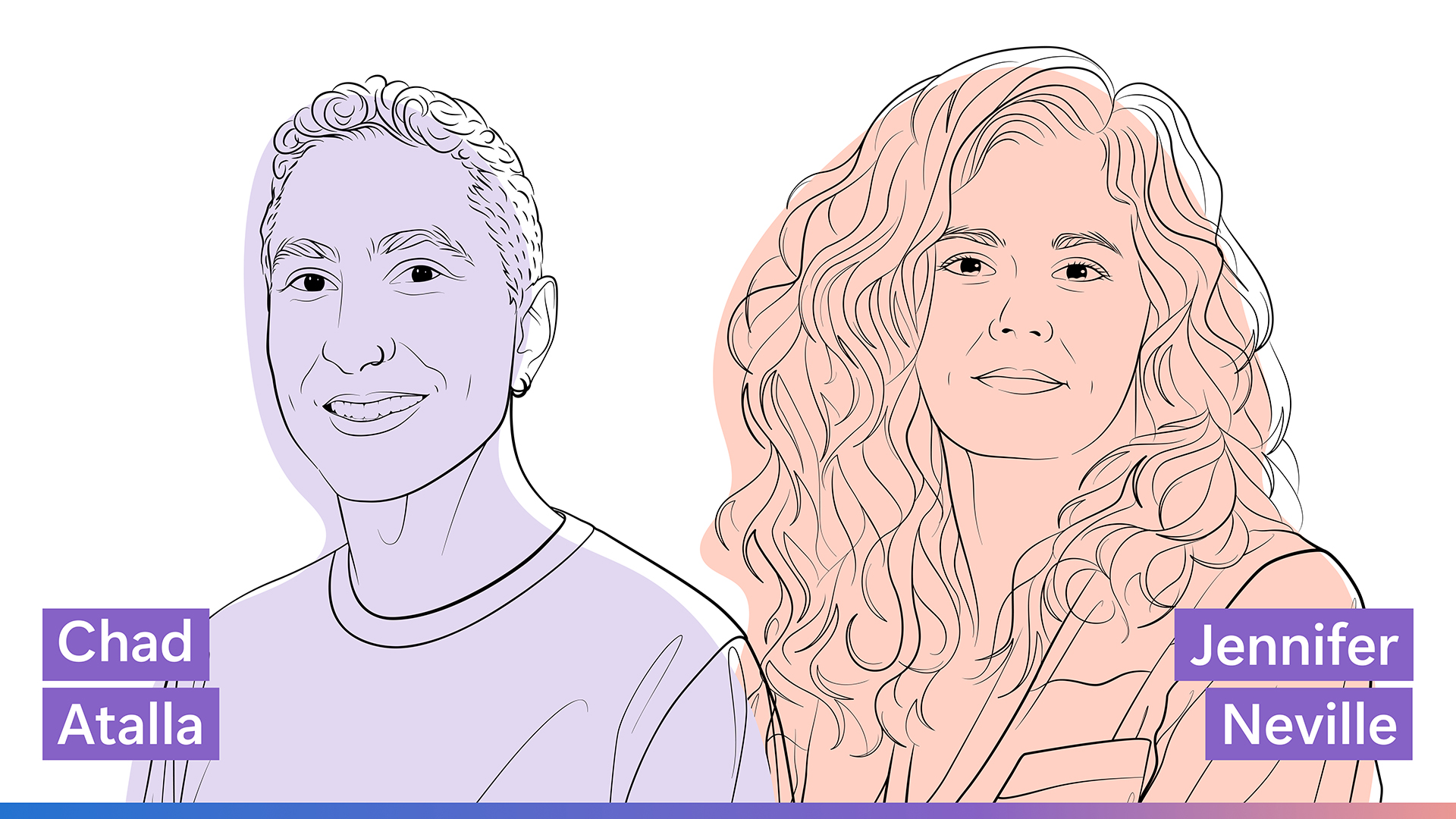
Jennifer Neville did not want to go into computer science—but that’s exactly where she landed. Neville discusses the starts and stops that led to her professional sweet spot and her work identifying “surprising failures” making it hard for AI to handle complexity. The post What AI gets wrong and what failure teaches us appeared first on Microsoft Research.
Computer scientist, entrepreneur, and philanthropist will collaborate with the MIT Schwarzman College of Computing to advance AI and scientific discovery.
We use cookies to run the site and, with your consent, for analytics and to show ads.
See our Cookie Policy.