A hybrid feature fusion framework, termed DWT_AlexNet_DNN, is proposed, which combines Discrete Wavelet Transform (DWT) features with deep features extracted using AlexNet for texture image classification.
Across four-fold cross-validation the organ-supervised model achieves the best and most stable performance, the interactive stage improves the Dice score monotonically with each prompt, and PSMA-specific training yields the strongest tracer-wise results.
Pablo Lozano-Jimenez, Sergio Romero-Tapiador, Ruben Tolosana· 0 citations
An Anatomy-Routed Contrastive Learning for 3D Chest CT (ARC-CT), a region-aware framework that addresses limitations using only reports extracted from reports by an LLM, with no manual annotations or bounding boxes, outperforms both comparable efficient baselines and larger transformer models.
H. Isik, Mehmet Alp Ozaydin, S. Kurugol et al.· 1 citation
A subject-conditioned causal neural surrogate is developed using OpenSim-derived static parameters, temporal joint kinematics, true muscle capacities, and training-only perturbations to establish a leakage-free evaluation and credibility framework for pediatric MSK surrogates, while identifying force modeling and epist...
Mohammad Arif Ul Alam· 0 citations
Reach audiences
Advertise in front of researchers, engineers, and readers.
Qualitative evaluations on heterogeneous medical spectral acquisition systems demonstrate the practical relevance of the proposed training data augmentation protocol as an enabler for spatially coherent spectral fusion in HSI workflows.
E. Wisotzky, Jost Triller, Simon W. Härtl et al.· 0 citations
This work presents a standardized, open-source benchmark for evaluating state-of-the-art (SOTA) deep learning methods for Earth observation change detection, and reveals that well-optimized classical architectures, such as Siamese U-Nets, frequently outperform more complex contemporary models when computational efficie...
Tadej Tomanič, Alice Baudhuin, Jan Sotošek et al.· 0 citations
This work presents CheXtriev, a graph-based, anatomy-aware framework for chest radiograph retrieval that leverages graph transformers to extract informative features from specific anatomical regions and captures spatial context and the interplay between anatomical location and findings.
Naren Akash, Arihanth Tadanki, J. Sivaswamy· International Conference on...· 1 citation
The results suggest medical vision encoders carry a map of where organs usually lie, and little of the machinery for comparing structures within a particular patient, in addition to five architectural configurations and three medical foundation models, frozen and finetuned.
VersaGauss is introduced, a unified framework for generation, simulation, and rendering that supports versatile physics-based dynamic generation, particularly for multiphase interactions, and proposes the Coupled Multiphase Point Method to effectively model and generate multiphase interactions.
Rui Su, Lingxiao Yang, Xiaohua Xie et al.· 1 citation· ⚡1
Experiments show that DAC consistently reduces hallucinations while maintaining strong overall performance, and combines Layer-wise Semantic Compensation to mitigate inter-layer degradation with Sequential Semantic Correction to constrain temporal drift.
Kai-Rong Yu, Zi-Xin Zhu, Le Yu et al.· 0 citations
This work presents PCBnet, a large-scale PCB schematic dataset comprising over 300 real-world designs with annotated pins and paired SPICE netlists, and develops an automated schematic-to-netlist pipeline that combines visual recognition, topology construction, and domain-knowledge-guided multi-agent correction.
Zhen Huang, Yu-Hao Gao, Yu-Zhi Liu et al.· 0 citations
The crux of the method lies in a set of learnable parameters, termed Distortion Extenders (DEX), that model the fisheye distortion coefficients and the distributional shift between fisheye and perspective images encoded in the latent space, which transforms the latent embeddings of fisheye images to resemble those of p...
Professor Paris Smaragdis develops computers with superhuman hearing for applications like speech recognition, music understanding, and environmental monitoring.
Exploring how generative AI could make machine vision more accessible to businesses. The post GenEye in a Box: Making Machine Vision Something You Can Just Ask For appeared first on GPT-Lab.
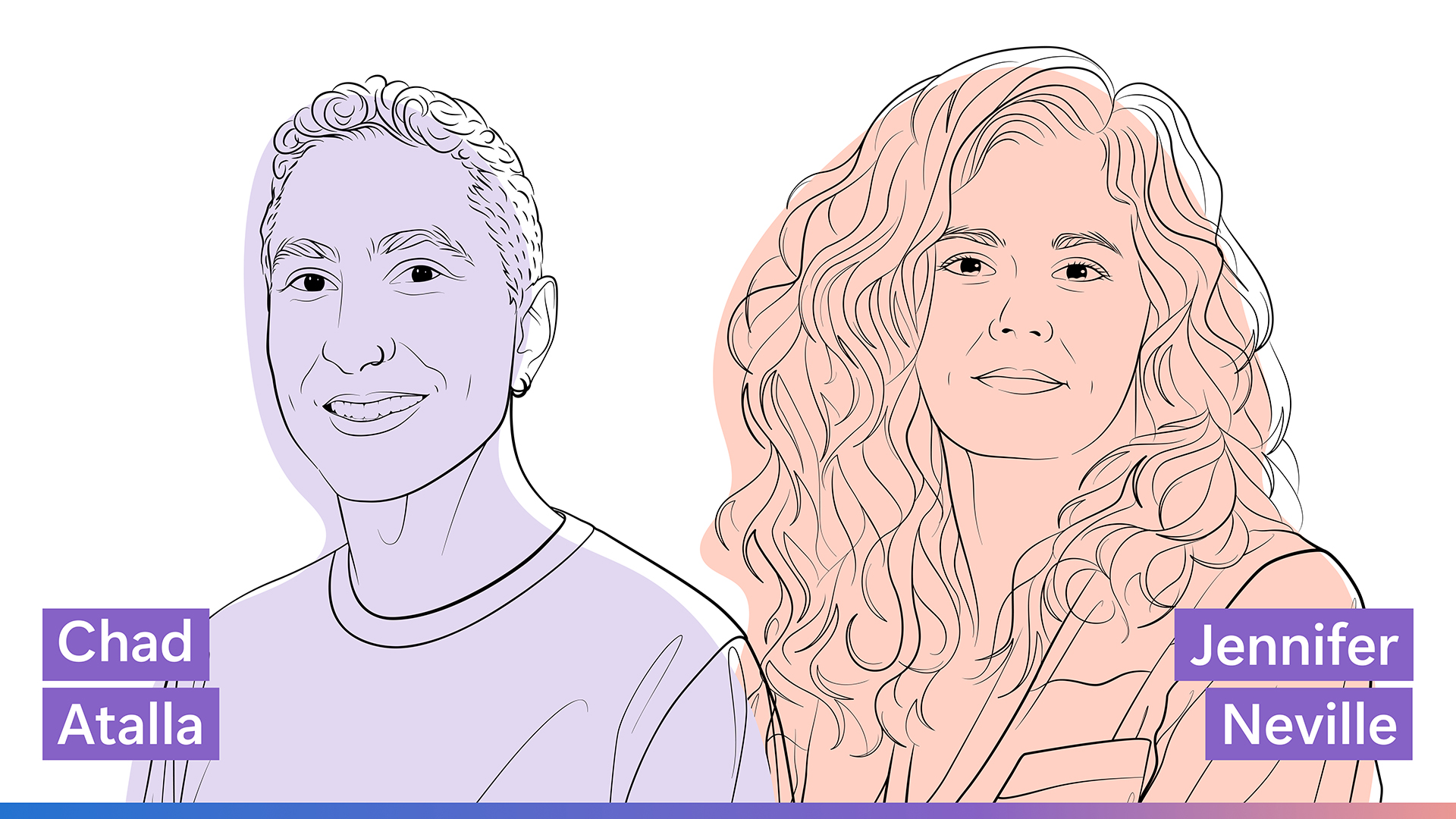
Jennifer Neville did not want to go into computer science—but that’s exactly where she landed. Neville discusses the starts and stops that led to her professional sweet spot and her work identifying “surprising failures” making it hard for AI to handle complexity. The post What AI gets wrong and what failure teaches us appeared first on Microsoft Research.
Computer scientist, entrepreneur, and philanthropist will collaborate with the MIT Schwarzman College of Computing to advance AI and scientific discovery.
We use cookies to run the site and, with your consent, for analytics and to show ads.
See our Cookie Policy.