The framework, INFUSE, first stabilizes visual and textual representations around perturbation-averaged and ground-truth anchors, then aligns the stabilized representations across modalities with bidirectional contrastive objectives.
Aditi Sarker, Rafi Ibn Sultan, Hui Zhu et al.· 0 citations
Diversify, Anchor, and Filter (DAF), a stabilization framework that augments entropy-based adaptation with a marginal diversity loss that resists collapse, a cross-modal anchor consistency loss that constrains feature drift relative to a frozen source model, and feature salience filtering that skips low-value backward...
Chandler Timm C. Doloriel, Yun-Bei Zhang, Sarthak Kumar Maharana et al.· 0 citations
Sensitivity-Guided Erasing Adaptation (SEGA) is introduced, a method for strict online continual TTA (CTTA) on corruption-style streams that yields consistent robustness and stability gains over strong CTTA baselines while reducing backward passes through sensitivity-based gating.
Chandler Timm C. Doloriel, Yun-Bei Zhang, M. Siddiqui et al.· 0 citations
A paradigm for tactile-enabled embodied manipulation, which integrates tactile sensing hardware, large-scale multimodal data, tactile representation learning, and standardized evaluation is presented, aiming at supporting future work on tactile-enabled embodied manipulation.
NeoteAI Team, Fudan Teai Team· 2 citations· ⚡2
Reach audiences
Advertise in front of researchers, engineers, and readers.
Adversarial Robustness with Manifold-Oriented Training (ARMOR), a novel defense that realizes the core insights of on-manifold adversarial training (OMAT) in low-data regimes and translates insights from manifold-based training to defend object detectors amidst training data scarcity.
Hao-Ran Wang, Matthew Lau, Alec Helbling et al.· 0 citations
The results show that distributionally-regularized joint embedding architectures can be successful on challenging city-scale 3D scenes, and that transfer improves when self-supervision is designed for the capture geometry and spatial context of this domain while also revealing the limits of this specialization.
A. Rusnak, S. Kovalenko, Jingru Wang et al.· 0 citations
An AI-based approach called ChatNDE Figure to Caption is introduced, which aims to automate the interpretation of NDE images using deep learning and natural language processing (NLP). A Vision-and-Language Pretraining (VLP) strategy is developed to help the model learn how to connect visual features with meaningful lan...
FiLM-GPNet is proposed, a geometry-conditioned network for wrapped-phase restoration that explicitly adapts to acquisition differences using Feature-wise Linear Modulation (FiLM) and a 7D per-pair geometry descriptor, supporting geometry-conditioned restoration as an effective alternative to fixed classical filtering a...
Getnet Demil, Muhammad Farhan Humayun, Tomi Westerlund et al.· 0 citations
QCell is presented, a novel query-based model that de-overlaps cell instances in microscopy scenes and outperforms state-of-the-art methods across multiple benchmarks, achieving +2.2 AP and +2.7 AJI on ISBI2014.
Yaroslav Prytula, A. Popov, Dmytro Fishman· 0 citations
The results indicate that subtraction-based input and ensembling support robust tumor segmentation under cross-site domain shift, whereas pCR prediction from baseline DCE-MRI alone remains limited.
High-resolution 3D radar data is scarce. Commodity mmWave sensors use small antenna arrays that limit angular resolution to several degrees, and existing datasets provide only 2D range-azimuth maps or sparse point clouds rather than raw analog-to-digital converter (ADC) signals. Hardware scaling is expensive, synthetic...
A. Armouti, Yixuan Gao, Rajalakshmi Nandakumar· 1 citation
The automated sorting of shredded black plastics from end-of-life (EOF) industrial waste presents a significant challenge in recycling facilities, primarily due to the limitations of current sensing and analytical approaches. Existing studies predominantly rely on single-point contact-based mid-infrared spectroscopy or...
Elias Arbash, Andréa de Lima Ribeiro, Filipa Simões et al.· 0 citations
Exploring how generative AI could make machine vision more accessible to businesses. The post GenEye in a Box: Making Machine Vision Something You Can Just Ask For appeared first on GPT-Lab.
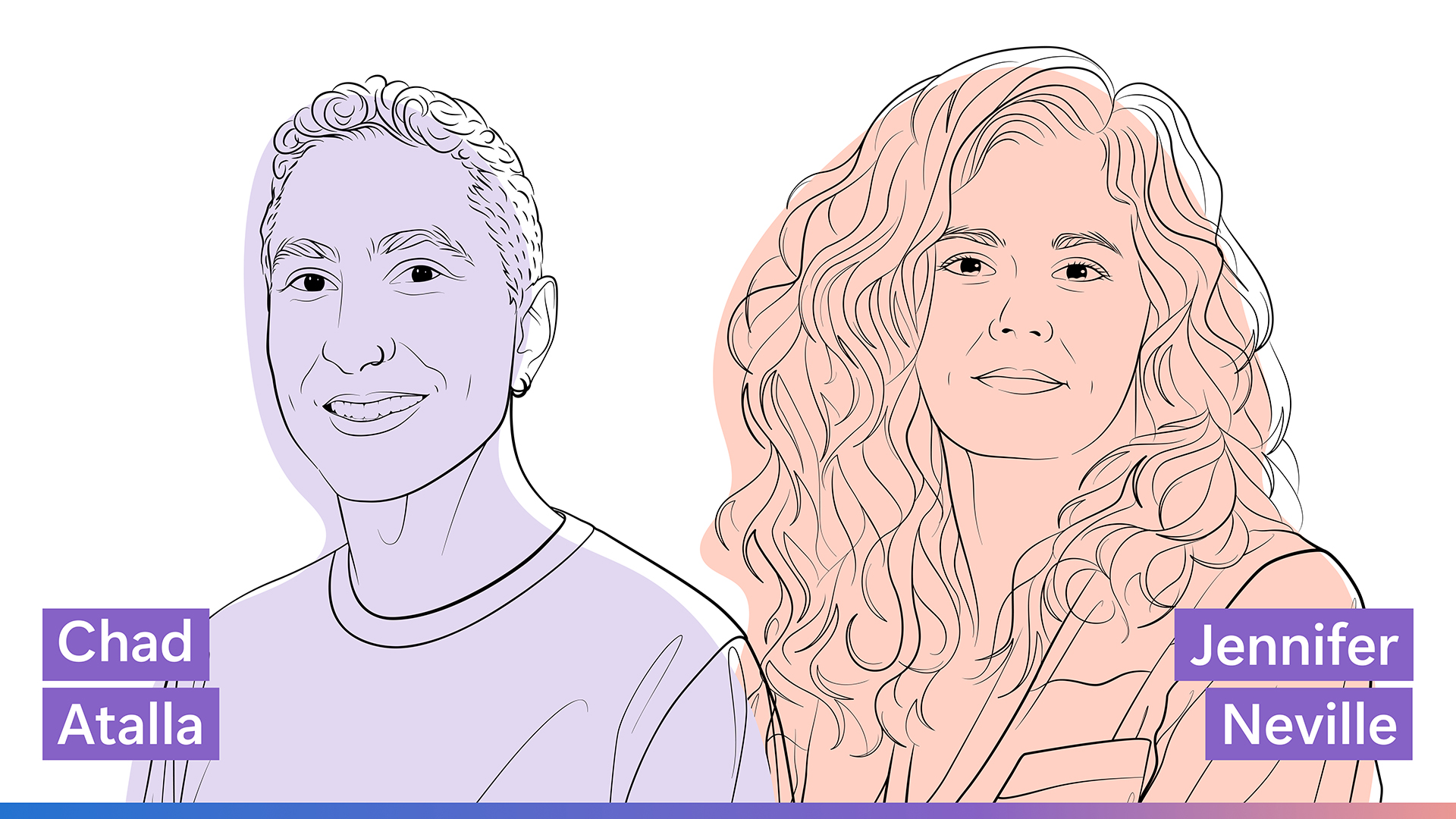
Jennifer Neville did not want to go into computer science—but that’s exactly where she landed. Neville discusses the starts and stops that led to her professional sweet spot and her work identifying “surprising failures” making it hard for AI to handle complexity. The post What AI gets wrong and what failure teaches us appeared first on Microsoft Research.
Computer scientist, entrepreneur, and philanthropist will collaborate with the MIT Schwarzman College of Computing to advance AI and scientific discovery.