Skip to content

Continual Test-Time Adaptation via Entropy Sensitivity-Guidance in Strict Online Setting

Aug 2026 · 0 citations · 34 references
Computer Science

TL;DR

Sensitivity-Guided Erasing Adaptation (SEGA) is introduced, a method for strict online continual TTA (CTTA) on corruption-style streams that yields consistent robustness and stability gains over strong CTTA baselines while reducing backward passes through sensitivity-based gating.


Abstract

Test-time adaptation (TTA) promises robustness under distribution shift by updating a pretrained model on unlabeled test data, but strict online TTA with batch size one and no access to source data is especially prone to drift or collapse. We introduce Sensitivity-Guided Erasing Adaptation (SEGA), a method for strict online continual TTA (CTTA) on corruption-style streams. SEGA uses a small number of structured erasures to probe how predictive entropy changes as information is removed, and uses the resulting per-sample sensitivity trajectories to coordinate recovery and sample selection rather than relying on raw entropy or batch statistics. This yields a practical feedback signal for long-horizon batch-size-one adaptation without periodic resets or model reservoirs. In experiments on ImageNet-C, CIFAR10/100-C, and corruption-generated aquaculture streams treated as controlled corruption-style proxies, SEGA yields consistent robustness and stability gains over strong CTTA baselines while reducing backward passes through sensitivity-based gating.

View source

Similar papers

Preprint Aug 2026

When Test-Time Adaptation Helps, Harms, or Becomes Inactive: A Condition-Level Study on CIFAR-10-C

Results show that aggregate accuracy alone can mask systematic TTA failure modes and motivate condition-level evaluation of when adaptation helps, harms, or becomes effectively inactive, and suggest that reliability filtering can substantially restrict effective adaptation.

Sreeja Guha Majumdar, Aratrika Saha · 0 citations
Preprint Aug 2026

Adaptive Supervised Anchoring for On-Policy Self-Distillation

Context quality is identified as a central bottleneck in on-policy self-distillation and the value of separating rollout-conditioned guidance from canonical supervision is demonstrated, demonstrating the value of separating rollout-conditioned guidance from canonical supervision.

Meilin Yang, Zixuan Ding, Jianhao Nie et al. · 0 citations
Preprint Aug 2026

Logit-Origin Centering for Singleton Test-Time Adaptation

This paper argues that singleton tabular FTTA is not merely a small-batch variant of ordinary FTTA, but a distinct identifiability problem where only the location of the model's score stream remains directly observable, and proposes Prequential Logit-Origin Centering (PLOC), a lightweight approach that keeps the source...

Mayank Sharma, Rohit Kumar Mourya, Pratik Mazumder · 0 citations
Jul 2026

Source-Free Controlled Adaptation of Teachers for Continual Test-Time Adaptation

This work proposes a novel controlled teacher adaptation methodology that dynamically sets a proper momentum value depending on the quality of the incoming data and performs extensive experiments to demonstrate that this approach outperforms different state-of-the-art adaptation frameworks, many of which require access...

Anurag Roy, Riddhiman Moulick, V. Verma et al. · 0 citations
Preprint Sep 2026

When is Test-Time Adaptation Identifiable From Unlabeled Evidence?

The result is a practical way to separate two failure modes that are usually mixed together: a weak selector versus an information channel that cannot support the desired decision in the first place.

Kartik Jhawar, Li-Po Wang · 1 citation
Jul 2026

UNIFUSION: Adapting Autoregressive Language Models into Discrete Diffusion under a Unified Reverse-Rate Objective

This work proposes a simple continual pre-training approach for directly adapting pretrained GPT2 checkpoints to uniform-noise diffusion, and establishes connections among SEDD, MDLM/GIDD, M2S, and Neural CTMC by expressing their conditional losses as a single generalized Kullback--Leibler objective over model reverse...

Xiaoyi Jiang, Jingyuan Li, Yi-Xuan Jiang et al. · 0 citations

Related blog posts

MIT News · Artificial Intelligence Oct 28, 2026

Making machines that can listen

Professor Paris Smaragdis develops computers with superhuman hearing for applications like speech recognition, music understanding, and environmental monitoring.

Microsoft Research Blog Aug 11, 2026

Introducing CARE-X: Towards Clinically Useful Radiology VLMs with Auxiliary Supervision, Reward-Aligned Learning, and Tool-Augmented Measurement

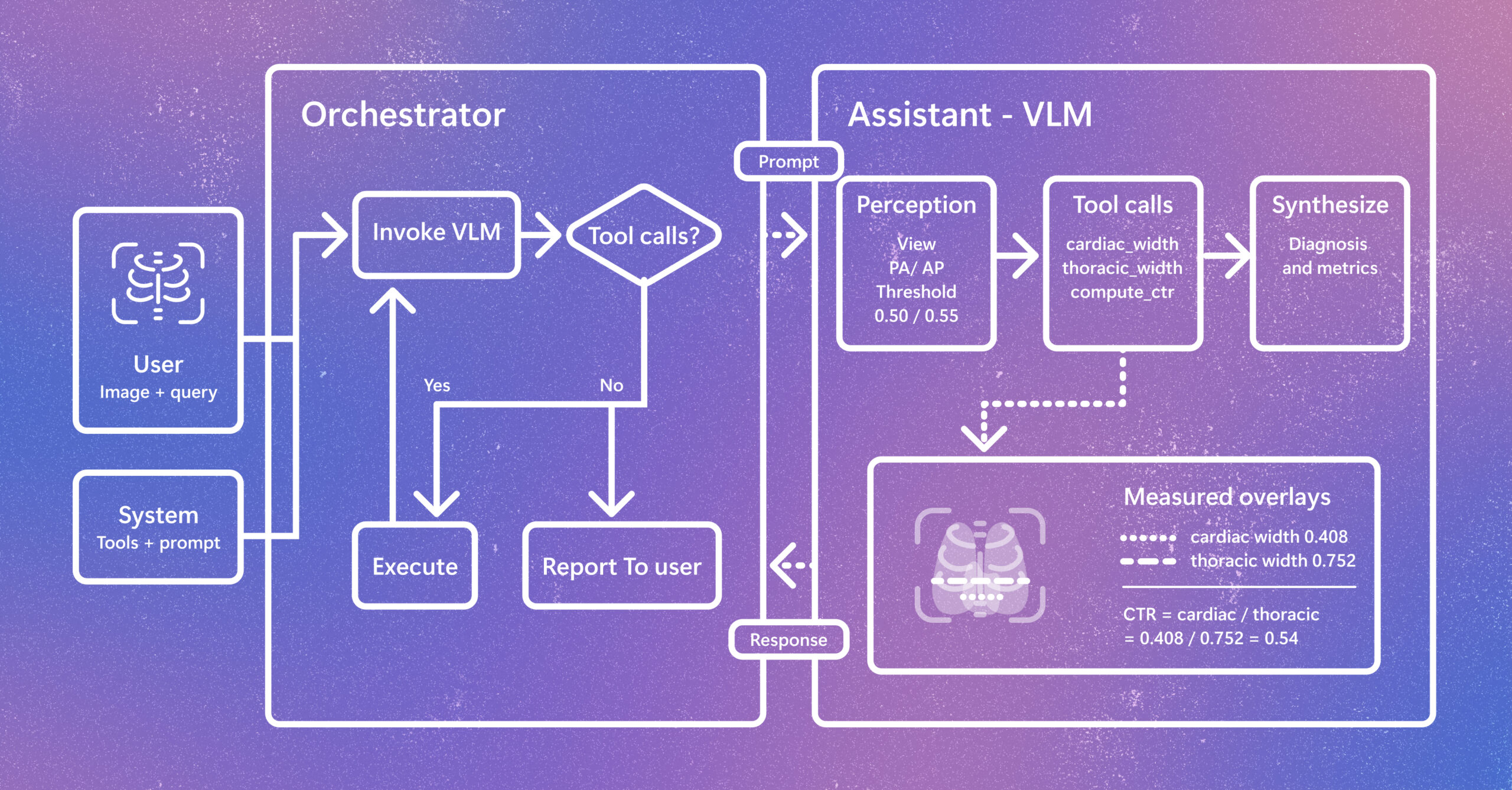
Radiology AI is evolving beyond report generation. CARE-X explores a unified approach that combines flexible reasoning, calibrated predictions, and measurement-based tools for chest X-ray interpretation. The post Introducing CARE-X: Towards Clinically Useful Radiology VLMs with Auxiliary Supervision, Reward-Aligned Learning, and Tool-Augmented Measurement appeared first on Microsoft Research.

We use cookies to run the site and, with your consent, for analytics and to show ads. See our Cookie Policy.