
How NGINX Vulnerabilities Have Evolved
 GPT-Lab
· gpt-lab.eu · By abrar morshed · August 5, 2026
GPT-Lab
· gpt-lab.eu · By abrar morshed · August 5, 2026 What 17 years of advisories reveal about recurring weaknesses, risky modules,patching speed, and static-analysis limits The short version: NGINX usually releases small fixes at or before public disclosure. Its biggest recurring problem is memory safety, while newer protocol code such as HTTP/2 and HTTP/3 has become a major area of risk. Why look at NGINX? NGINX runs as a web server, reverse proxy, and gateway across a large part of the Internet. A flaw in request parsing, protocol handling, or m…
More from the blog
Introducing CARE-X: Towards Clinically Useful Radiology VLMs with Auxiliary Supervision, Reward-Aligned Learning, and Tool-Augmented Measurement
Radiology AI is evolving beyond report generation. CARE-X explores a unified approach that combines flexible reasoning, calibrated predictions, and measurement-based tools for chest X-ray interpretation. The post Introducing CARE-X: Towards Clinically Useful Radiology VLMs with Auxiliary Supervision, Reward-Aligned Learning, and Tool-Augmented Measurement appeared first on Microsoft Research.
Echoverse: Deep, evolving environments for computer-use agents
Computer-use AI agents struggle with multi-step workflows like email and customer support. Echoverse trains agents in realistic environments rather than simply providing more training tasks, helping them improve as the tasks, tests, and environments evolve. The post Echoverse: Deep, evolving environments for computer-use agents appeared first on Microsoft Research.
EvoLib: Turning experience into evolving knowledge
LLMs do not get smarter just by remembering more. EvoLib turns experience into evolving knowledge, taking reusable skills and insights that help models learn and adapt across tasks long after deployment. The post EvoLib: Turning experience into evolving knowledge appeared first on Microsoft Research.
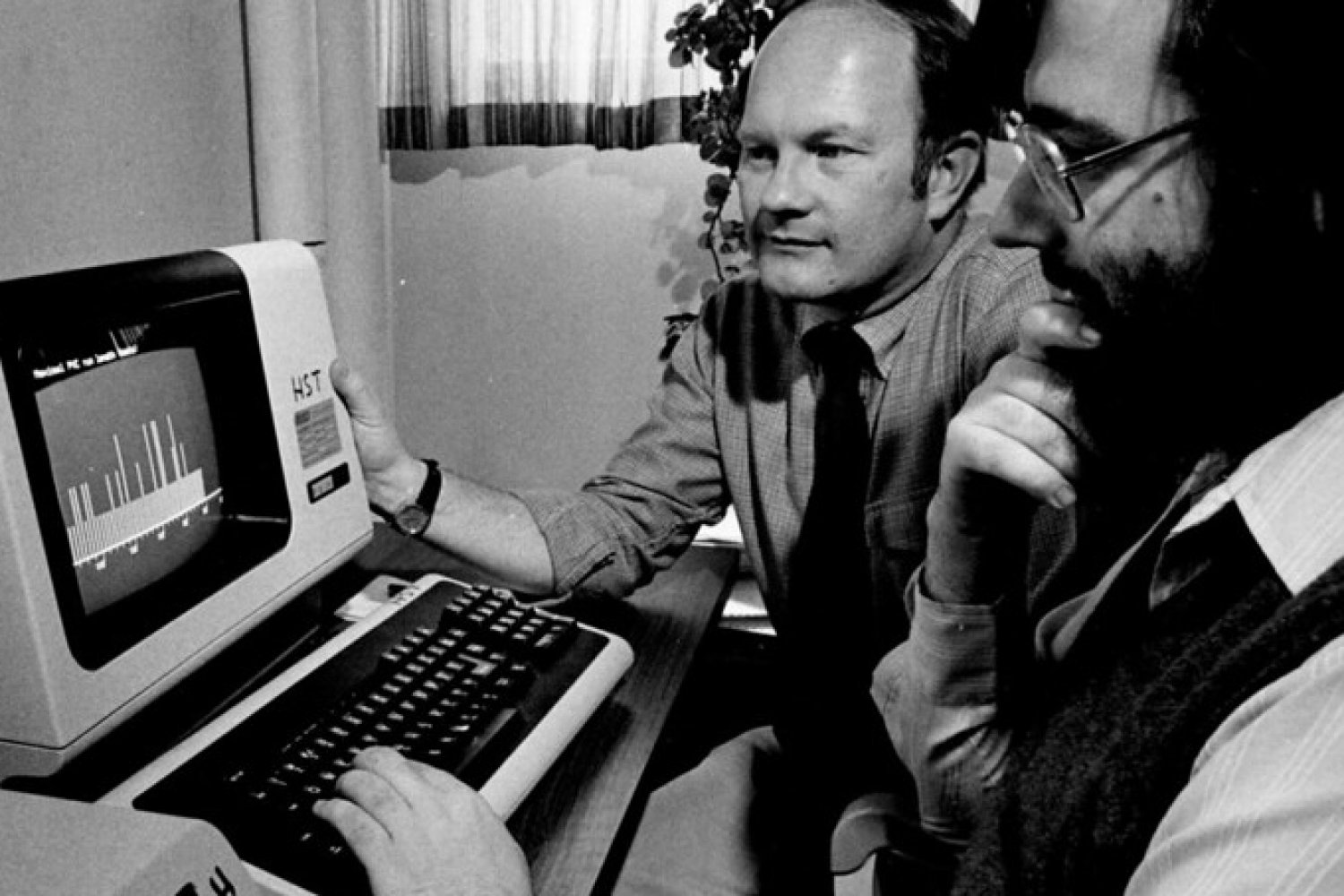
How a medical database developed at MIT evolved into a global standard of data-sharing
The visionary PhysioNet platform launched 25 years ago, based on a system developed at MIT in the 1970s. It has become one of the most comprehensive biomedical and clinical data repositories in existence.
Related papers
Software Development in Startup Companies: The Greenfield Startup Model
The results are packaged in the Greenfield Startup Model (GSM), which explains the priority of startups to release the product as quickly as possible, and the need to shorten time-to-market, by speeding up the development through low-precision engineering activities.
Software Startups - A Research Agenda
Software startup companies develop innovative, software-intensive products within limited timeframes and with few resources, searching for sustainable and scalable business models.
“Failures” to be celebrated: an analysis of major pivots of software startups
This study conducts a case survey study based on the secondary data of the major pivots happened in 49 software startups, and demonstrates that customer need pivot is the most common among all pivot types.
A survey study on major technical barriers affecting the decision to adopt cloud services
The comparison of adopter and non-adopter sample reveals three potential adoption inhibitor, security, data privacy, and portability, which underlines the importance of the technical and security perspectives for research investigating the adoption of technology.