Sep 2026· IEEE Transactions on Neural Networks and Learning Systems· Vol PP· 0 citations
Medicine
TL;DR
This work proposes a multiagent belief state computation method termed mutual awareness belief (MAB), which extends belief modeling to decentralized partially observable settings by incorporating agents' behavioral intentions and collaborative relationships and proves effective in the nonmonotonic Pursuit environment.
Abstract
In multiagent reinforcement learning (MARL), agents engage in collaborative or competitive interactions, adapting their policies to maximize rewards. However, in environments with only team rewards, agents cannot accurately perceive the rewards obtained from their individual actions. To address this limitation, we propose a multiagent belief state computation method termed mutual awareness belief (MAB). MAB extends belief modeling to decentralized partially observable settings by incorporating agents' behavioral intentions and collaborative relationships. This allows each agent to infer the contribution of individual behaviors to team rewards during decision-making and supports team-advantageous joint decisions. In addition, to address the issue of information lag, we develop progressive graph construction (PGC), a novel module for computing MAB. PGC constructs a dynamic graph with progressively updated node features and cooperation-informed edge weights. Through interaction with PGC, agents iteratively update and retrieve graph information to derive the MAB. Empirical results show that our method achieves competitive performance against baseline approaches on the StarCraft unit micromanagement benchmark and proves effective in the nonmonotonic Pursuit environment.
This publication proposes a definition and a classification of agile software development approaches and analyses ten software development methods that can be characterized as being "agile" against the defined criterion.
P. Abrahamsson, O. Salo, Jussi Ronkainen et al.· arXiv.org· 727 citations· ⚡54
The study shows that agile practices improve both informal and formal communication, but indicates that, in larger development situations involving multiple external stakeholders, a mismatch of adequate communication mechanisms can sometimes even hinder the communication.
M. Pikkarainen, Jukka Haikara, O. Salo et al.· Empirical Software Engineeri...· 401 citations· ⚡48
The results indicate that software engineering work practices are chosen opportunistically, adapted and configured to provide value under the constrains imposed by the startup context.
Nicolò Paternoster, Carmine Giardino, M. Unterkalmsteiner et al.· Information and Software Tec...· 394 citations· ⚡54
The perception of the impact of agile methods is predominantly positive, and several challenge areas were discovered, but based on this study, agile methods are here to stay.
M. Laanti, O. Salo, P. Abrahamsson· Information and Software Tec...· 260 citations· ⚡20
AI is making software generation faster, but speed does not remove the need for expertise. As more work is delegated to AI, tacit knowledge may become one of the most important human advantages in software engineering. The post Beyond Prompt Engineering: The Role of Tacit Knowledge in Software Engineering appeared first on GPT-Lab.
MIT News · Artificial Intelligence· news.mit.eduSep 9, 2026
A weeklong summer workshop brought higher education faculty to campus to explore how AI and machine learning materials can be adapted for their classrooms.
MIT News · Artificial Intelligence· news.mit.eduSep 2, 2026
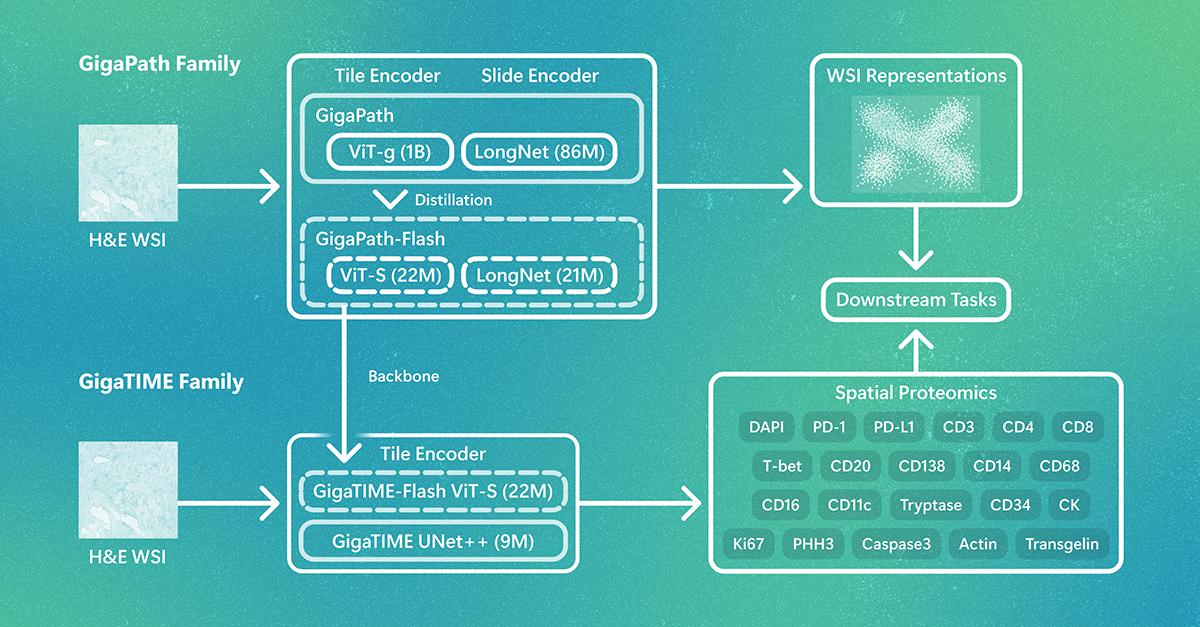
What if pathology foundation models could do more with less? GigaPath-Flash and GigaTIME-Flash cut computational demands while maintaining strong performance, opening the door to larger studies and broader exploration. The post GigaPath-Flash and GigaTIME-Flash: Toward population-scale discovery with efficient pathology foundation models appeared first on Microsoft Research.
We use cookies to run the site and, with your consent, for analytics and to show ads.
See our Cookie Policy.