General-purpose reward models are increasingly the bottleneck for scaling robot learning, yet the recipe for learning value-related capabilities from large-scale heterogeneous corpora remains underexplored. Existing approaches tie supervision to task-internal anchors such as preferences or normalized progress, none of which transfer cleanly across embodiments and data sources. We introduce RynnValue, an open-source value foundation model for robotic manipulation that replaces these anchors with temporal distance, the directed cost-to-go from an observation to the language-specified goal. Because temporal-distance labels can be derived directly from timestamps, RynnValue scales to over 7,000 hours and roughly 3M instruction-conditioned clips without preference or progress annotations. To make temporal-value learning reliable at scale, we combine random temporal sampling, temporal-order shuffling, and value-isolation attention, suppressing shortcuts that would leave predictions insensitive to failures and regressions. Trained without preference labels, RynnValue attains an average Kendall's $\tau_a$ of 0.704 on RBM-EVAL-OOD, surpassing the fully preference-supervised state of the art (0.655) and more than doubling a progress-only counterpart (0.292), while generalizing zero-shot to unseen tasks, embodiments, and viewpoints. As a zero-shot reward model, RynnValue serves a range of downstream applications. Converted into dense rewards via potential-based shaping, it raises real-world policy success from 52.5% to 72.5% online and from 63.8% to 82.5% offline; used for data filtering, it improves multi-task behavior cloning success from 35.0% to 42.5%; and applied as inference-time value guidance, it lifts a frozen policy's success from 67.5% to 80.0%. These results establish temporal distance as a scalable supervision target and practical reward interface for generalist robot policies.

This work introduces SeeQ (Subtask-elicited Q-functions), which instead learns Q-values for the currently active subtask, which substantially improves best-of-N policy steering on real-world manipulation tasks.
Saksham Singh, Zhe-Yuan Hu, Max Sobol Mark et al.· 0 citations
Existing approaches to offline goal-conditioned reinforcement learning (GCRL) struggle with long-horizon tasks. Discounting shrinks value differences between distant states until they fall below the function approximation error, leaving the agent with no signal for ranking states. Temporal abstraction, which treats k e...
P. Dutenhefner, Dikshant Shehmar, Wagner Meira et al.· 0 citations
This work introduces Robo-Dopamine 2.0, a history- and OOD-aware process reward model with a pairwise prediction interface that combines history-conditioned pairwise rewards that use source-aligned reference panels for synthetic OOD queries and observed rollout history for online queries, while preserving the queried e...
Yijie Xu, Hao-Peng Jin, Run Zhou et al.· 2 citations
A mechanism-by-mechanism transition to the recurrent behavior-cloning baseline shows that replacing the predictive pathway with direct observation input produces the largest single performance drop, accounting for approximately $70\% of the endpoint gap.
Vision-language models (VLMs) can replace human annotators in preference-based reward learning, but sequential API requests and single-environment data collection make training slow and costly. We present RAPID (Reward learning with Adaptive Parallel Image Diversity), a system that couples GPU-parallel rollout with dat...
Lobna Joualy, Eric Demeester, Nikolaos Tsiogkas· 0 citations
This work introduces Dream2Reward, which learns a language-conditioned successful latent transition field from positive demonstrations that provides stronger success-failure separation and more informative feedback on low-quality behavior than progress-based alternatives.
Hao-Yu Zhang, Ze-Cui Zeng, Bin Wang et al.· 3 citations
Related blog posts
MIT News · Artificial Intelligence· news.mit.eduOct 28, 2026
Professor Paris Smaragdis develops computers with superhuman hearing for applications like speech recognition, music understanding, and environmental monitoring.
Exploring how generative AI could make machine vision more accessible to businesses. The post GenEye in a Box: Making Machine Vision Something You Can Just Ask For appeared first on GPT-Lab.
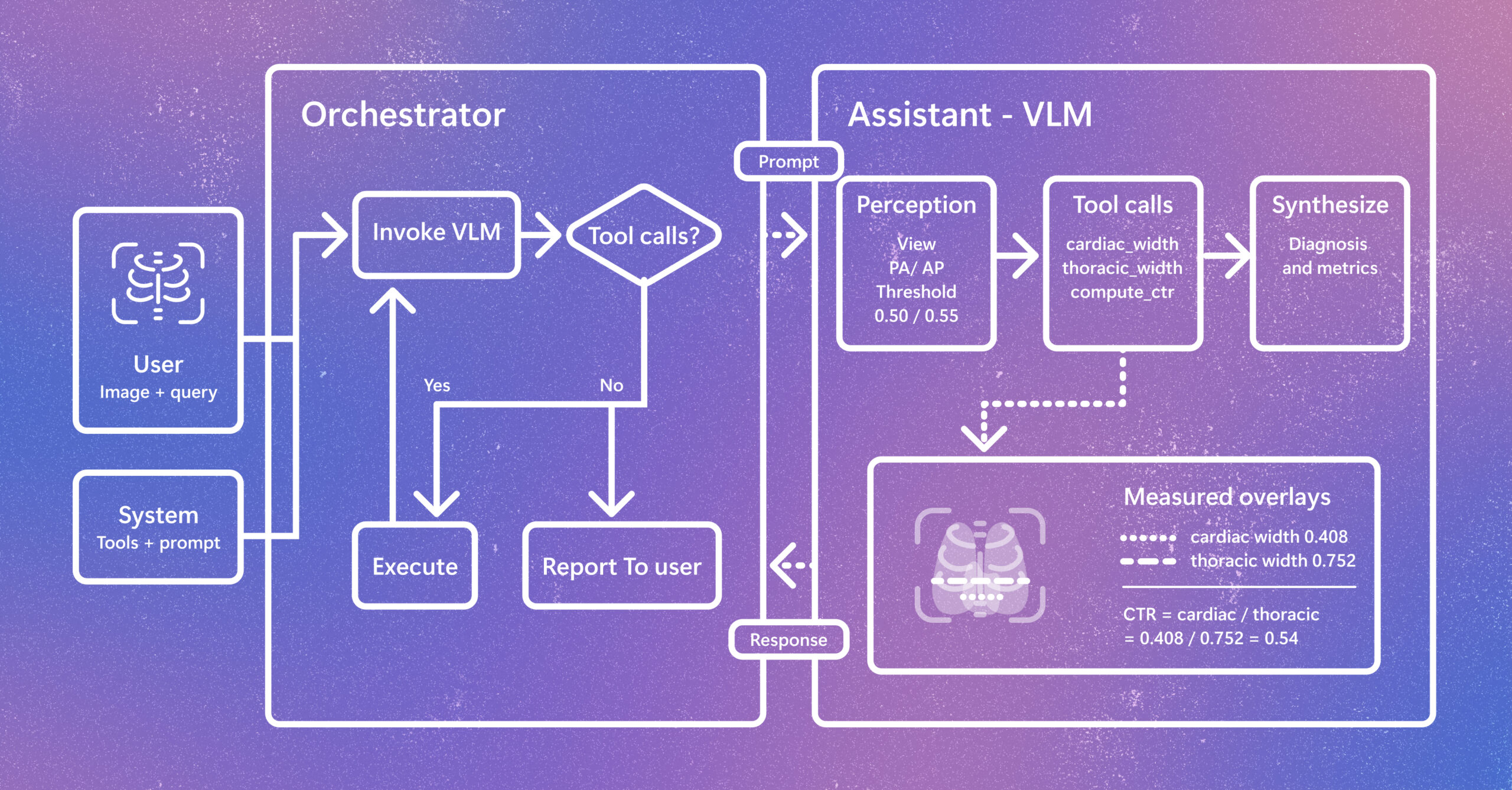
Radiology AI is evolving beyond report generation. CARE-X explores a unified approach that combines flexible reasoning, calibrated predictions, and measurement-based tools for chest X-ray interpretation. The post Introducing CARE-X: Towards Clinically Useful Radiology VLMs with Auxiliary Supervision, Reward-Aligned Learning, and Tool-Augmented Measurement appeared first on Microsoft Research.
We use cookies to run the site and, with your consent, for analytics and to show ads.
See our Cookie Policy.