ExAONE Finance is pretrained on a synthetic financial corpus whose generative process is designed to reproduce the properties of financial series such as heavy tails, volatility clustering, jumps, regime shifts, and cross-asset dependence, combined with a domain-agnostic synthetic source.
Abstract
This technical report presents EXAONE Forecast for Finance (EXAONE Finance), a financial time series foundation model (TSFM) tailored to financial forecasting. While recent TSFMs achieve strong zero-shot performance through large-scale pretraining, they are primarily developed for general-domain time series and largely rely on self-attention backbones whose computational cost grows quadratically with sequence length and variate count. Moreover, they assume fully observed inputs and are pretrained on corpora that fail to adequately capture the unique dynamics of financial markets. These limitations hinder their applicability to finance, where long, many-channel, intermittently observed panels are common. To address these challenges, EXAONE Finance adopts an attention-free architecture, replacing self-attention with two simple yet effective linear-time operators: (1) a causal 1D convolution for temporal mixing and (2) a group-aware pooling multi-layer perceptron (MLP) for variate mixing. Furthermore, a masked-context augmentation exposes the model to contiguous missing spans during training, improving robustness to the missingness pervasive in financial markets. EXAONE Finance is pretrained on a synthetic financial corpus whose generative process is designed to reproduce the properties of financial series such as heavy tails, volatility clustering, jumps, regime shifts, and cross-asset dependence, combined with a domain-agnostic synthetic source. On FinVerse, a financial forecasting benchmark covering diverse asset classes, EXAONE Finance attains state-of-the-art performance, ranking first across all three evaluation tiers: point-forecast accuracy, cross-sectional asset ranking, and portfolio profitability.

KiT, a K-line Diffusion Transformer foundation model, is introduced and reformulate future prediction as conditional path generation via flow matching: given a historical context window, the model generates an ensemble of plausible future OHLCV trajectories.
The findings indicate that passing attention-derived context into a bidirectional memory module offers a practical means of combining long-horizon structure with local temporal variation, although computational cost remains relevant for latency-sensitive trading applications.
Tabby, a long context probabilistic time series foundation model, is released together with a complete and open recipe of how it was built, which achieves competitive zero-shot forecasting performance on GIFT-Eval and the out-of-distribution TIME benchmark.
Shi-Feng Xie, Bahaeddine Abdessalem, Ze-Hao Xiao et al.· 1 citation
Results show that replacing or augmenting the original training set with SI-CVAE–generated data yields consistent accuracy gains across multiple forecasting baselines, and that SI-CVAE attains higher synthetic-data quality than state-of-the-art generators on standard metrics.
Jian-Ping Zhu, Lei Wang, Yang Chen et al.· 0 citations
SETTer is introduced, a transformer-based model that addresses challenges of long-term multivariate time series forecasting by incorporating novel techniques for decoupled self-attention and hybrid masking and outperforms state-of-the-art models in 88% of the scenarios.
Abraham Ezema, C. Eze, F. Ponci et al.· 0 citations
A novel pattern-guided mixture-of-experts that expands model capacity through sparse activation and uses shallow patch similarities to constrain deep-layer routing, guiding expert specialization across heterogeneous time series and an implicit quantile network head that predicts arbitrary quantiles to characterize pred...
Xingjian Wu, Chen-Juan Guo, Xiangfei Qiu et al.· 0 citations
Related blog posts
MIT News · Artificial Intelligence· news.mit.eduOct 13, 2026
Machine-learning networks can learn without detailed instructions from a designer. Those that do may offer insight into how the brain reorganizes itself during learning.
MIT News · Artificial Intelligence· news.mit.eduSep 29, 2026
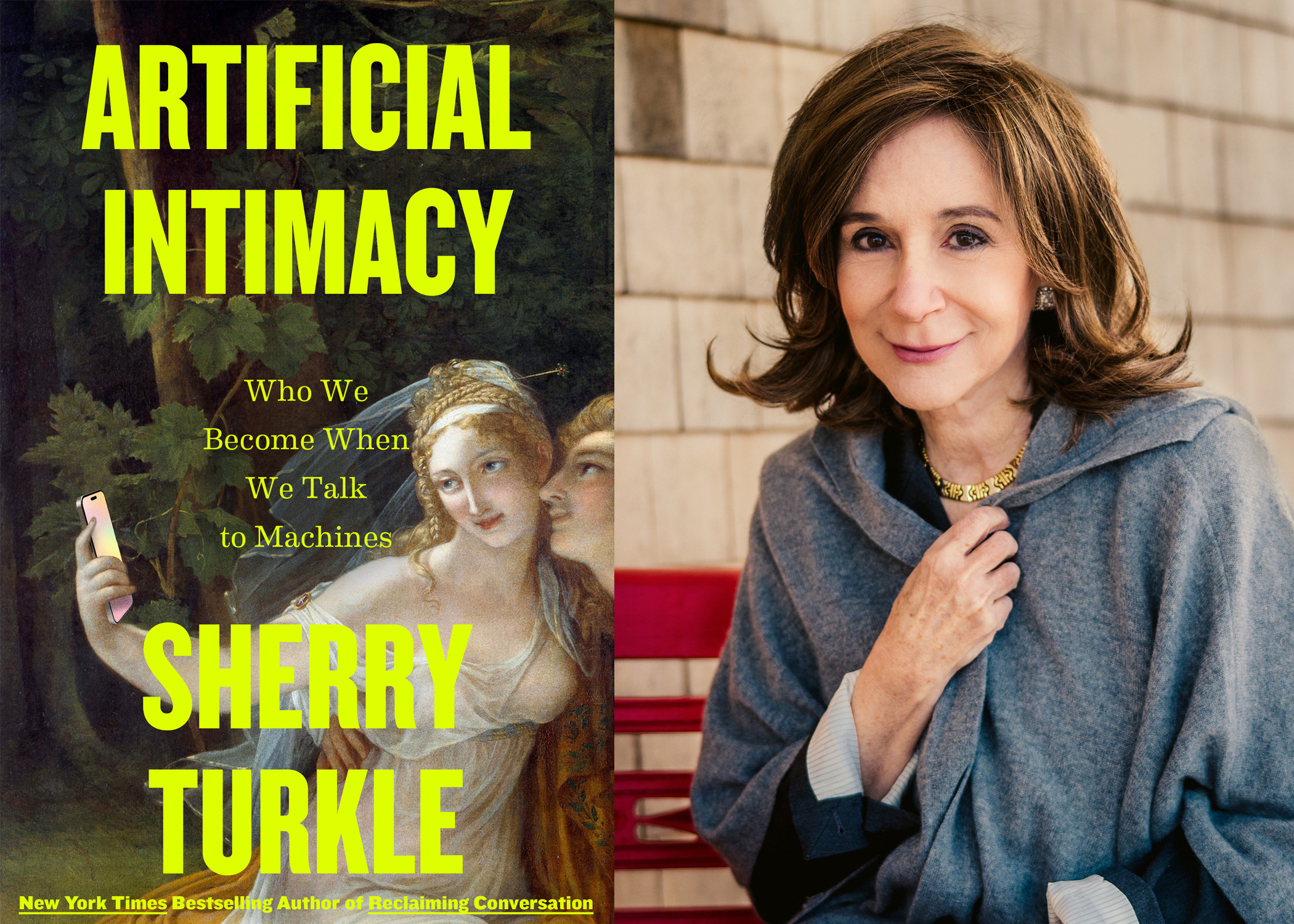
Professor Sherry Turkle’s new book, “Artificial Intimacy,” offers a withering critique of chatbots and the antisocial dynamics she believes they encourage.