The system advances prior physical Turing Machine demonstrations through autonomous execution, reprogrammable optical input, and quantitative evaluation of its mechanical, optical, and computational performance.

Abstract
Physical implementations of Turing Machines remain rare, and existing electromechanical demonstrators and mechanical logic games typically require manual operator intervention, either to trigger each computational step or to reconfigure the state table, or both. This restricts prior physical models to short, operator-paced demonstrations and prevents autonomous execution of extended computations. This paper addresses that gap with a hardware Turing Machine that enables autonomous multi-step execution and reprogrammable optical input without manual intervention between programs. The system integrates an Arduino Mega for state-transition logic, dual NEMA 17 stepper motors for bidirectional tape actuation, infrared reflectance sensors for symbol detection, and an ESP32-CAM-based optical punched-card reader for automated state-table loading. Hole detection under non-uniform illumination used a Breadth-First Search flood-fill algorithm with local adaptive thresholding rather than fixed global thresholding, driven by the memory and library constraints of the ESP32-CAM's microcontroller environment; this improved card-decoding accuracy from 75% to 90% (100% with mechanical card flattening) on a 20-card test set. Mechanical evaluation showed fabrication accuracy of +/-0.15 mm, rack-and-pinion positional error below 0.3 mm across 50 trials, and voltage supply stability within +/-0.2 V under full system load. End-to-end computation was validated against a parallel software simulator (tlang), with all hardware outputs matching the simulated reference exactly across multiple test programs. The system advances prior physical Turing Machine demonstrations through autonomous execution, reprogrammable optical input, and quantitative evaluation of its mechanical, optical, and computational performance.
As quantum circuits grow beyond small toy examples, preparing them for execution on physical devices becomes increasingly complex. Design automation is therefore essential for scalable quantum computing: Compilation procedures optimize resource requirements and transform circuits to a format compatible with specific ha...
This work introduces a state-of-the-art, out-of-order vector processor to natively accelerate VSA world modeling for autonomous systems with a power envelope of less than 130 mW, and unifies a structured, generalizable world model with hardware-efficient vector processing, which enables scalable and powerful autonomous...
Andrew Ding, William Youngwoo Chung, N. Bagherzadeh et al.· International Symposium on L...· 0 citations
Arisca establishes a generalized parameter space that unifies previously isolated state-of-the-art SOTA techniques as specific configurations within a broader algebraic reduction theory and expands the verification scope to encompass general arithmetic circuits with any combination of addition and multiplication, such...
Kezhi Li, Min Li, Qiang Xu· arXiv.org· 0 citations
Bounded surrogate compilation is developed, a compilation framework that transforms unbounded polynomial ODE systems into bounded ones while preserving computational limits and time-to-precision guarantees.
A complete state-machine model for the reactive control layer of a differential-drive mobile robot and a discrete control strategy that approximates continuous behavior and incorporates a simplified proportional–integral–derivative (PID) controller for pose correction are presented.
RAINBOT\textsuperscript{TM} is presented, a low-cost, openly reproducible liquid-handling robot built by converting a consumer-grade Cartesian 3D printer, thereby establishing an accessible physical--virtual framework for self-driving laboratory automation.
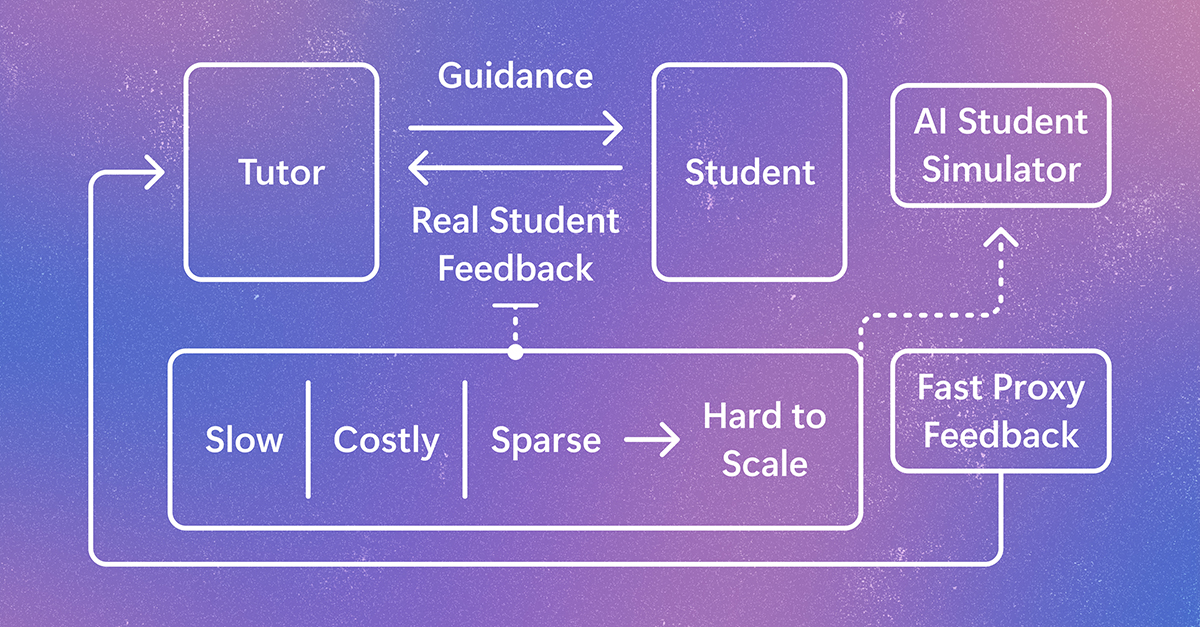
StudentSim is a research system for evaluating and improving AI tutoring tools before they are tested with learners. It models how individuals may engage with tutors, giving feedback to improve tutor performance across subjects like chess, writing, and mathematics. The post Simulating student learning for better AI tutoring appeared first on Microsoft Research.
MIT News · Artificial Intelligence· news.mit.eduOct 6, 2026
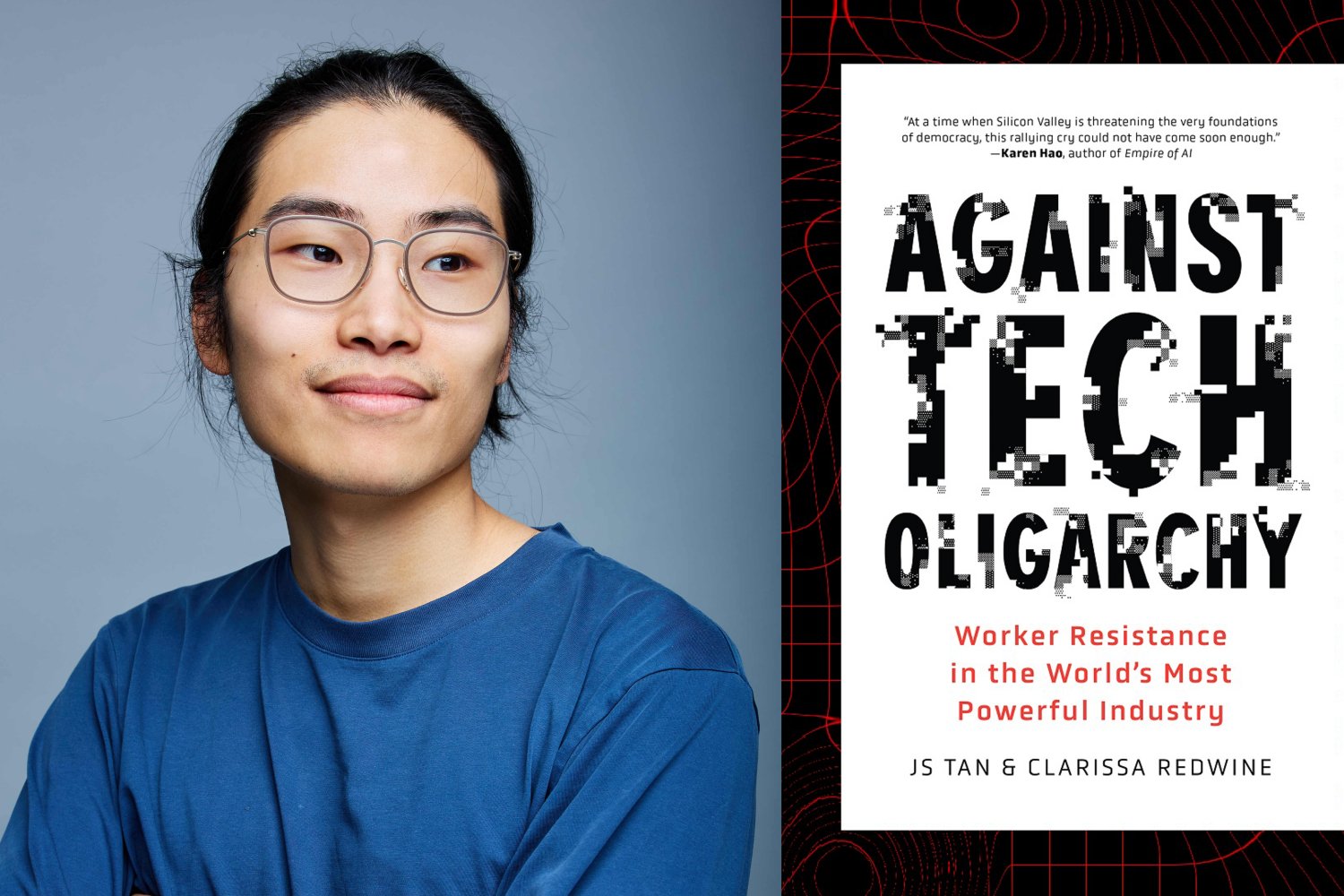
Writing as a participant and researcher, PhD student JS Tan SM ’22 has co-authored a new book about the rise of tech worker protests and the employer backlash that followed.
We use cookies to run the site and, with your consent, for analytics and to show ads.
See our Cookie Policy.