A Low-Cost, Open Platform for End-to-End Autonomous Driving on a Miniature Ackermann Vehicle
Gustavo Claudio Karl CoutoEric Aislan AntoneloGabriel George Zipperer
Sep 2026
Artificial IntelligenceMachine LearningRobotics
Abstract
This paper presents a low-cost, open experimental platform for research in end-to-end autonomous driving with miniature Ackermann vehicles. The platform combines a physical vehicle, a printed urban track, data collection tools, trajectory registration, and a Webots digital twin, enabling controlled experiments that connect simulation-based autonomous-driving methods to real-world execution. As a first baseline, we implement command-conditioned behavior cloning, in which a neural policy receives an on-board camera image and a high-level navigation command and outputs steering and speed. The system is evaluated both on the physical vehicle and in simulation. In real closed-loop experiments, the learned policy follows lanes and executes commanded turns, reaching a mean cross-track error of 6.1 cm with respect to the reference route, close to the 4.7 cm observed in human demonstrations. In the digital twin, camera field of view has a strong effect on performance, reducing the mean cross-track error from 35.6 to 3.3 cm when widened from 58 to 120 degrees. Using the digital twin to generate synthetic driving data and a learned sim-to-real image translator to reduce the appearance gap, we further show that a higher-capacity policy trained on this synthetic data combined with real demonstrations is the only configuration that completes all four track routes in closed loop, whereas the compact baseline and the same network trained on real data alone complete fewer. These results establish the open platform as a practical testbed for sim-to-real studies and provide an initial command-conditioned imitation-learning baseline; we release it to support reproducible research.

The results indicate that software engineering work practices are chosen opportunistically, adapted and configured to provide value under the constrains imposed by the startup context.
Nicolò Paternoster, Carmine Giardino, M. Unterkalmsteiner et al.· Information and Software Tec...· 394 citations· ⚡54
The possibility of inferring high-dimensional data inference in a model that consists of a prior and an auxiliary differentiable constraint given some additional information is considered, thereby allowing a range of potential applications in adapting models to new domains and tasks.
Alexandros Graikos, Esmeralda S. Whitammer, N. Jojic et al.· Neural Information Processin...· 316 citations· ⚡15
It is proved that any global minimizer of the trajectory balance objective can define a policy that samples exactly from the target distribution, and empirically demonstrate the benefits of the trajectories balance objective for GFlowNet convergence, diversity of generated samples, and robustness to long action sequences and large action spaces.
Esmeralda S. Whitammer, Moksh Jain, Emmanuel Bengio et al.· Neural Information Processin...· 302 citations· ⚡60
GAOKAO-Bench is introduced, an intuitive benchmark that employs questions from the Chinese GAOKAO examination as test samples, including both subjective and objective questions that contribute a robust evaluation benchmark for future large language models and offers valuable insights into the advantages and limitations of such models.
Xiaotian Zhang, Chun-yan Li, Yi Zong et al.· arXiv.org· 216 citations· ⚡17
This state-of-practice investigation was performed using a literature review followed by a multiple-case study approach and presents how inconsistency between managerial strategies and execution can lead to failure by means of a behavioral framework.
Carmine Giardino, Xiaofeng Wang, P. Abrahamsson· International Conference on...· 175 citations· ⚡19
This work investigates the possibilities of using LLMs in a resume screening setting via a document retrieval framework that simulates job candidate selection and finds that the MTEs are biased, significantly favoring White-associated names in 85% of cases and female-associated names in only 11.1% of cases.
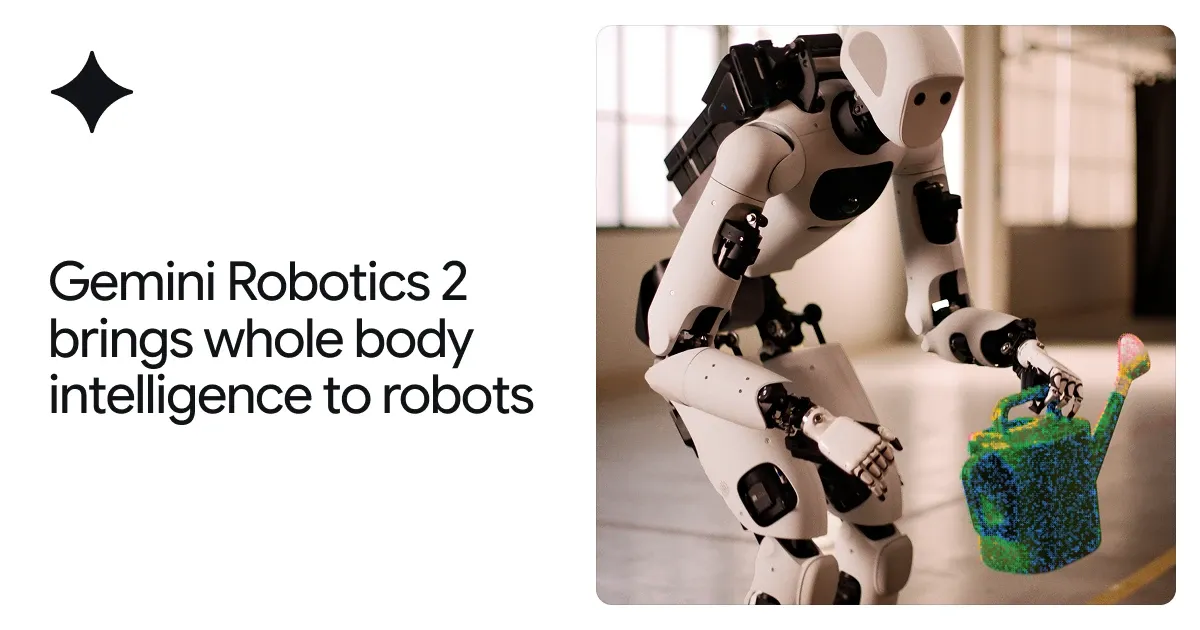
From feet to fingertips — we are teaching robots intelligent whole-body control, fine dexterity, and teamwork to complete a broad range of complex tasks.
We use cookies to run the site and, with your consent, for analytics and to show ads.
See our Cookie Policy.