Air-Ground Collaborative Vision-and-Language Navigation via Shared Bird's-Eye Maps
Shuning ZhangLiang LiYunheng WangTao WangYihang KangRenjing Xu
Sep 2026
Artificial IntelligenceRobotics
Abstract
Air-ground collaborative Vision-and-Language Navigation (VLN) pairs an unmanned aerial vehicle (UAV) with a global bird's-eye view and an unmanned ground vehicle (UGV) with a local first-person view, yet the setting remains largely unexplored: existing training-free methods solve single-agent tasks but offer no collaboration mechanism, and a recent CARLA-Air evaluation found no stable cooperative behavior across five state-of-the-art VLA models; naive semantic communication or bidirectional coupling even degrades performance. We establish AGC-VLN (Air-Ground Collaborative VLN), the first training-free baseline for air-ground collaborative VLN. The key insight is that training-free methods decompose navigation into VLM-based semantic reasoning and deterministic geometric execution, exposing a collaboration interface: the UAV's global view, over which it renders the UGV's reported pose and the VLM-anchored target as CAR/GOAL markers with distance labels, yielding a shared bird's-eye map. From this map, the UGV acquires global spatial context its first-person view cannot provide, plans a road-following path with a frozen VLM, and executes it under closed-loop control; in parallel, the UAV runs 3D-SPF, a spatial-search upgrade of SPF that localizes the target in the downward view and flies toward it. On 100 closed-loop episodes in CARLA-Air's Town10HD scene, AGC-VLN reaches a 77.0% joint success rate, a collaboration gain of +27.0% over the weaker individual agent (the UAV, 50.0%), and exceeds the strongest published single-agent baseline (Travel UAV, 53.0%) by 24.0 points, stemming from the complementarity of the UAV's global view and the UGV's road-following execution. Project page: https://github.com/ZSN2024/AGC-VLN.

GAOKAO-Bench is introduced, an intuitive benchmark that employs questions from the Chinese GAOKAO examination as test samples, including both subjective and objective questions that contribute a robust evaluation benchmark for future large language models and offers valuable insights into the advantages and limitations of such models.
Xiaotian Zhang, Chun-yan Li, Yi Zong et al.· arXiv.org· 216 citations· ⚡17
This work investigates the possibilities of using LLMs in a resume screening setting via a document retrieval framework that simulates job candidate selection and finds that the MTEs are biased, significantly favoring White-associated names in 85% of cases and female-associated names in only 11.1% of cases.
Empirically, PRISM reduces the end-to-end time for data selection and model tuning to just 30% of conventional pipelines, and achieves this efficiency while simultaneously enhancing performance, surpassing models fine-tuned on the full dataset across eight multimodal and three language understanding benchmarks.
Jinhe Bi, Yifan Wang, Danqi Yan et al.· arXiv.org· 73 citations· ⚡4
The method, ECCOLA, is presented, which aims at making the high-level AI ethics principles more practical, making it possible for developers to more easily implement them in practice.
Ville Vakkuri, Kai-Kristian Kemell, P. Abrahamsson· EUROMICRO Conference on Soft...· 64 citations· ⚡6
This paper designs Markov decision processes (MDPs) for different combinatorial problems and proposes to train conditional GFlowNets to sample from the solution space and demonstrates that GFlowNet policies can efficiently find high-quality solutions.
Dinghuai Zhang, H. Dai, Esmeralda S. Whitammer et al.· Advances in Neural Informati...· 59 citations· ⚡8
An empirical study on the current state of practice in artificial intelligence ethics is conducted by means of a multiple case study of five case companies, which indicates a gap between research and practice in the area.
Ville Vakkuri, Kai-Kristian Kemell, Joni Kultanen et al.· arXiv.org· 56 citations· ⚡6
Related blog posts
MIT News · Artificial Intelligence· news.mit.eduJul 30, 2026
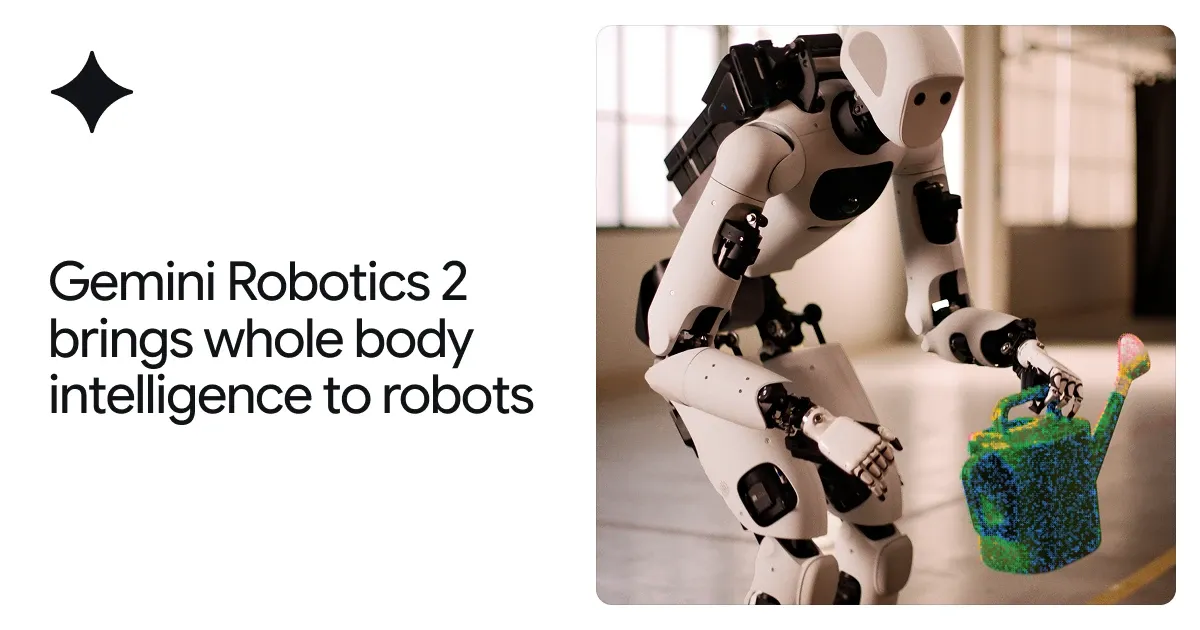
From feet to fingertips — we are teaching robots intelligent whole-body control, fine dexterity, and teamwork to complete a broad range of complex tasks.