Nov 2026· Protein Science· Vol 35· 0 citations· 51 references
Medicine
Abstract
Abstract Targeted protein degradation has emerged as a powerful strategy for modulating intracellular proteins, particularly those lacking traditional small‐molecule binding pockets. While protein‐based degraders expand this approach to undruggable targets, they typically require intracellular expression in target cells, limiting their utility as exogenous research tools. Here, we engineer the Sso7d‐derived KRASG12D binder R11.1.6 for use as a chemically conjugatable, exogenously deliverable degrader scaffold. We show that a C‐terminal arginine‐to‐cysteine variant can be produced in good yield and purity and conjugated to a von Hippel–Lindau (VHL) E3 ligase ligand, albeit with an approximately 10‐fold reduction in KRASG12D affinity relative to parent R11. To reduce the number of lysines available for potential ubiquitination, we generate two lysine‐reduced variants—a fully lysine‐free variant (R11ΔLys) and a “lysine‐lite” variant retaining only the three lysines implicated in KRAS engagement (R11Lite)—and demonstrate that both retain nanomolar affinity for wild‐type KRAS and KRASG12D. Esterification of R11–VHL with an α‐aryl‐α‐diazoamide reagent enables cellular treatment with the chimeric conjugate and leads to VHL‐ligand‐dependent reduction in pan‐RAS levels in HPAF‐II cells, as shown by competition with excess free VHL ligand. Our results establish R11 variants as tractable protein‐engineering scaffolds for developing chemically conjugated biodegraders and provide design principles for engineering lysine‐reduced binders based on the Sso7d scaffold.
Abstract Classical small-molecule drugs have traditionally relied on an occupancy-driven paradigm that requires tight and sustained binding to a well-defined pocket on the target protein. Targeted protein degradation (TPD) approaches have emerged to overcome the limitations of traditional pharmacology to promote the se...
Andrea Bertran-Mostazo, Rosa Barrio· Biochemical Society Transact...· 0 citations
The ability to selectively eliminate pathogenic proteins rather than merely inhibit their activity has redefined contemporary drug discovery, positioning targeted protein degradation (TPD) as one of the most significant advances in chemical biology and precision therapeutics. By harnessing endogenous protein quality-co...
K. Choudhary, Chanchal Sahu, B. Patra et al.· International Journal of Dru...· 0 citations
Targeted protein degradation (TPD) represents an emerging paradigm in drug discovery, capable of overcoming the limitations of traditional therapeutic strategies based on protein inhibition. Exploiting the ubiquitin–proteasome system (UPS), TPD allows the selective elimination of pathologically relevant proteins. The m...
M. Aliberti, M. Chini, Giuseppe Bifulco et al.· ChemBioChem· 0 citations
This review examines the comparative advantages of peptide-based architectures, including reduced molecular weight, access to challenging interfaces, and expansion of the addressable E3 ligase repertoire, against persistent translational barriers in proteolytic stability, membrane permeability, immunogenicity, and manu...
Walaa S. Aburayan, Ibrahim A. Alradwan, Beshair A. Alsaffar et al.· Pharmaceutics· 0 citations
Targeted protein degradation has transformed drug discovery by enabling selective elimination of disease-associated proteins. Beyond classical E3 ligase-recruiting degraders, emerging proteasome-directed strategies seek to recruit targets directly to the proteasome, potentially bypassing E3 ligase dependency and ubiqui...
Yao-Li Shi, Jia-Yi Ma, Yu-Tong Tu et al.· Journal of Medicinal Chemist...· 0 citations
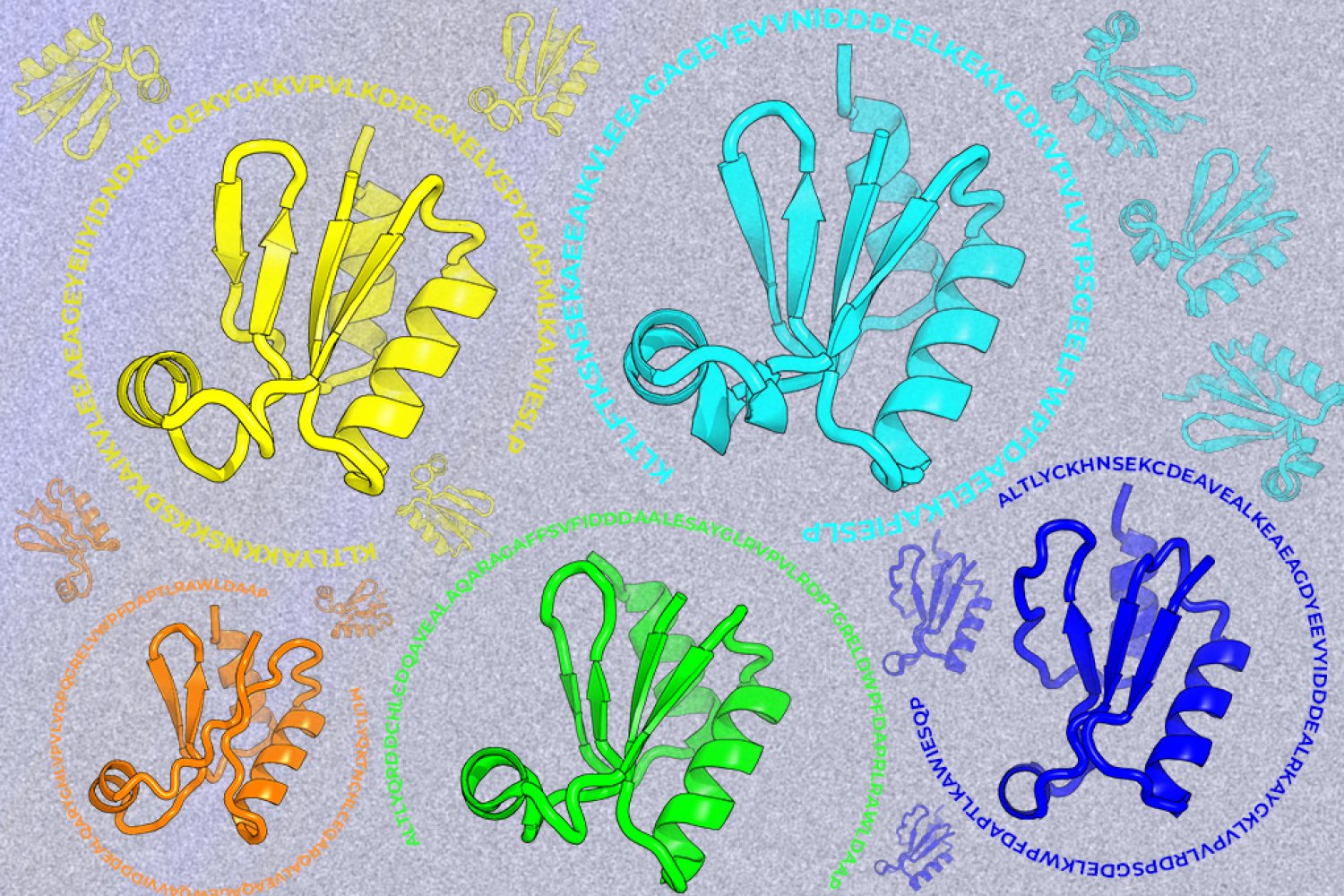
A new machine-learning framework aims to improve the success rate of computational protein design while moving away from results that reproduce sequences found in nature.