Oct 2026· Neural Networks· Vol 206 Pt B, pp.
109801
· 0 citations· 46 references
Medicine
Abstract
The application of iodinated contrast media (ICM) improves the sensitivity and specificity of computed tomography (CT) for a wide range of clinical indications. However, high ICM doses can cause problems such as kidney damage and life-threatening allergic reactions. Deep learning methods can generate CT images of normal-dose ICM from low-dose ICM, reducing the required dose while maintaining diagnostic power. However, existing methods struggle to achieve accurate enhancement with incompletely paired images, mainly because of the limited ability of the model to recognize specific structures. To overcome this limitation, we propose a Structure-constrained Language-assisted Diffusion Model (SLDM), a unified medical generation model that integrates structural synergy and spatial intelligence. First, the structural prior information of the image is effectively extracted to constrain the model inference process, thus ensuring structural consistency in the enhancement process. Subsequently, a language-assisted strategy with spatial intelligence is introduced, which integrates the functions of visual perception and spatial reasoning, thus prompting the model to achieve accurate enhancement. Finally, the subtraction angiography enhancement module is applied, which serves to improve the contrast of the ICM region to suitable interval for observation. Qualitative analysis of visual comparison and quantitative results of several metrics demonstrate the effectiveness of our method in angiographic reconstruction for low-dose contrast medium CT angiography.
The results are packaged in the Greenfield Startup Model (GSM), which explains the priority of startups to release the product as quickly as possible, and the need to shorten time-to-market, by speeding up the development through low-precision engineering activities.
Carmine Giardino, Nicolò Paternoster, M. Unterkalmsteiner et al.· IEEE Transactions on Softwar...· 178 citations· ⚡14
Software startup companies develop innovative, software-intensive products within limited timeframes and with few resources, searching for sustainable and scalable business models.
M. Unterkalmsteiner, P. Abrahamsson, Xiaofeng Wang et al.· e-Informatica Software Engin...· 157 citations· ⚡17
This study conducts a case survey study based on the secondary data of the major pivots happened in 49 software startups, and demonstrates that customer need pivot is the most common among all pivot types.
Sohaib Shahid Bajwa, Xiaofeng Wang, Anh Nguyen-Duc et al.· Empirical Software Engineeri...· 127 citations· ⚡15
The comparison of adopter and non-adopter sample reveals three potential adoption inhibitor, security, data privacy, and portability, which underlines the importance of the technical and security perspectives for research investigating the adoption of technology.
Nattakarn Phaphoom, Xiaofeng Wang, S. Samuel et al.· Journal of Systems and Softw...· 111 citations· ⚡8
Objective There is dearth of information on the timeliness of antenatal care (ANC) uptake. This study aimed to determine the timely ANC uptake by a medically trained provider (MTP) as per the World Health Organization (WHO) recommendations and the country guideline. Methods Cross-sectional survey was done with 2,731 wo...
B. Sarker, Musfikur Rahman, T. Rahman et al.· PLoS ONE· 89 citations· ⚡7
This study investigates how Lean internal startup facilitates software product innovation in large companies and identifies its enablers and inhibitors, and shows the potential of the method-in-action framework to investigate the Lean startup approach in non-startup context.
Henry Edison, Nina M. Smørsgård, Xiaofeng Wang et al.· Journal of Systems and Softw...· 78 citations· ⚡6
Related blog posts
Microsoft Research Blog· microsoft.comNov 16, 2026
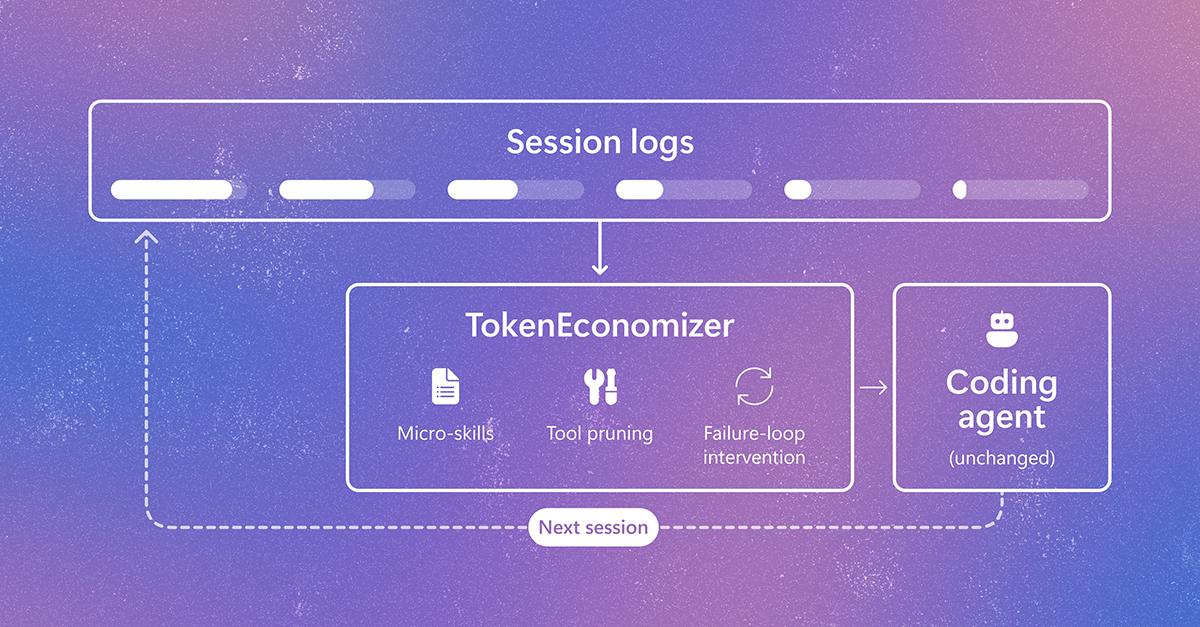
AI coding agents are increasingly help developers fix bugs and build features largely on their own, but every interaction with their models consumes tokens. In each session, an agent sends instructions, tool descriptions, and session history to its model. Most efforts to reduce this cost focus on individual tasks. Yet developers return to the same […] The post TokenEconomizer: Learning from Experience to Make AI Coding Agents More Efficient appeared first on Microsoft Research.
MIT scientists developed a training method to generate models that simulate the effects of human activities on climate much more quickly than other approaches.