WP4: Stacking superior alleles improves protein secretion across genetic backgrounds Combinatorial engineering of the alleles identified through the QTL study, consistently led to improved protein secretion (different stain backgrounds, target proteins and genetic elements controlling gene expression). Recombinant protein production in microbial cell factories like Saccharomyces cerevisiae or Komagataelle phaffii is a cornerstone of modern biotechnology. However, yields are often suboptimal and attempts to increase secretion have shown mixed and target-specific results. To identify broader engineering targets, we systematically evaluated the secreting capacity for β-glucosidase and a VHH-IgA nanobody across 230 genetically diverse natural S. cerevisiae strains. Notably, several strains outperform commonly used chassis strains like CEN.PK by up to fourfold. QTL analysis of high-performing strains revealed natural alleles affecting processes ranging from mRNA splicing (HSH155) to vesicle trafficking (SPO20) and vacuole targeting (ENV9). Stacking these alleles via gene editing increased secretion across strains and target proteins, including pre-insulin and a GLP1-like peptide. Furthermore, heterologous expression of these alleles in K. phaffii also improved secretion. Together, our findings highlight new engineering strategies and support development of more efficient yeast cell factories for production of a range of proteins for applications in medicine and industry.

Some claim that especially in the field of agile software development the research lags years behind of the practice. In this paper, we characterize the status and main challenges for research on agile software development, and propose a preliminary roadmap, focusing on providing more empirical research, primarily on e...
Torgeir Dingsøyr, T. Dybå, P. Abrahamsson· Agile Conference· 92 citations· ⚡7
The results indicate that software developers are a slightly happy population, but the need for limiting the unhappiness of developers remains, and 219 factors representing causes of unhappiness while developing software are identified.
D. Graziotin, Fabian Fagerholm, Xiaofeng Wang et al.· International Conference on...· 84 citations· ⚡6
This study investigates how Lean internal startup facilitates software product innovation in large companies and identifies its enablers and inhibitors, and shows the potential of the method-in-action framework to investigate the Lean startup approach in non-startup context.
Henry Edison, Nina M. Smørsgård, Xiaofeng Wang et al.· Journal of Systems and Softw...· 78 citations· ⚡6
The goal is to not only refine the accuracy of the LLM-based tool but also to underscore its potential in streamlining the software development lifecycle through proactive code improvement and education.
Z. Rasheed, Malik Abdul Sami, Muhammad Waseem et al.· arXiv.org· 62 citations· ⚡3
Agile methods continue to gain popularity. In particular, the Scrum method appears to be on the verge of becoming a de-facto standard in the industry, leading the so called Agile movement. While there are success stories and recommendations, there is little scientifically valid evidence of the challenges in the adoptio...
A. Marchenko, P. Abrahamsson· Agile Conference· 59 citations· ⚡11
A comprehensive overview of how enhanced sampling methods are reshaping the field, with a particular focus on the data-driven construction of collective variables, is provided.
Kai Zhu, Enrico Trizio, Jintu Zhang et al.· Chemical Reviews· 58 citations
Related blog posts
MIT News · Artificial Intelligence· news.mit.eduNov 10, 2026
With up to $53 million from ARPA-H, the researchers will use AI to generate safer herbicides that reduce dependence on imports and improve the security of the U.S. food supply.
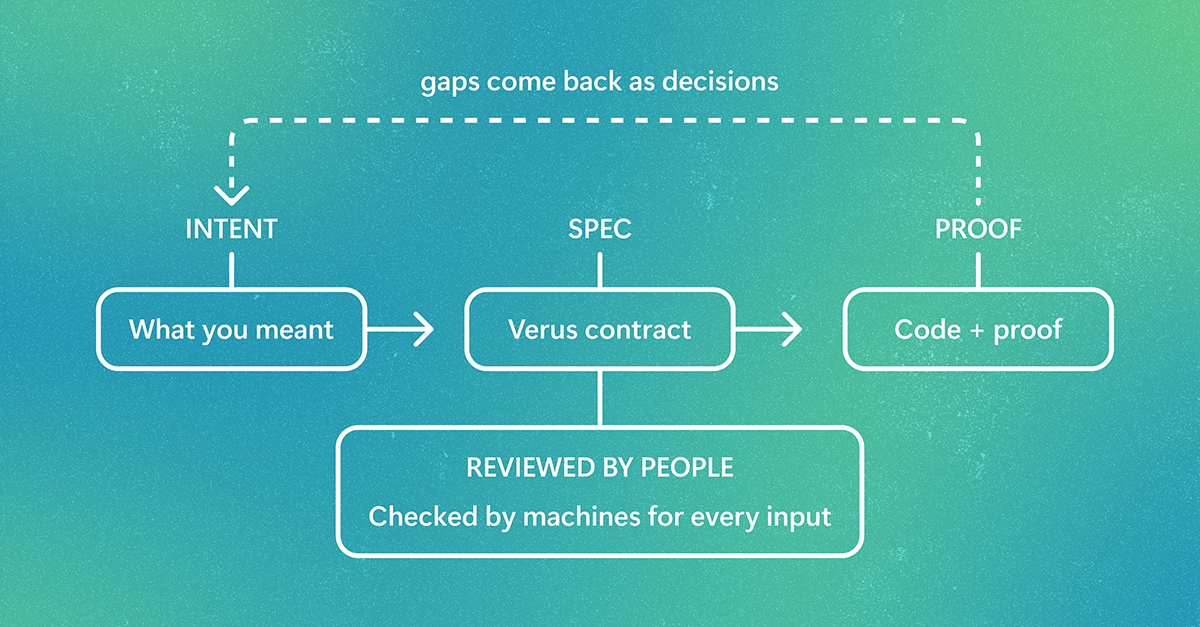
AI agents can generate code at a scale that’s hard for humans to review line-by-line. PDD Kit helps ensure the code is doing what the developer intended by creating formal specifications and testing against them. It converts developer intent into a Verus specification, proves AI-generated code meets it for every input, and uses tests where proofs aren't practical. Developers review intent, not every line. The post Formally verifying agent-written full-stack web apps with PDD Kit appeared first o…
We use cookies to run the site and, with your consent, for analytics and to show ads.
See our Cookie Policy.