Nov 2026· Proceedings of the 35th ACM International Conference on Information and Knowledge Management· pp. 1801-1812· 0 citations· 33 references
Recommender Systems and Techniques
Abstract
As a critical stage in the modern multi-stage recommendation pipeline, list-wise reranking determines the final exposed item sequence and directly shapes the user experience by modeling complex dependencies among candidate items within a list. Existing methods typically formulate this task as selecting indices from the local input list. However, this approach suffers from a semantically inconsistent action space: the same output neuron (logit) corresponds to different items across different samples, preventing the model from forming a stable, item-intrinsic representation. To address this, we propose GloRank (Global Action Space Ranker), a generative framework that shifts reranking from selecting local indices to generating global identifiers. Specifically, we represent items as sequences of discrete tokens and reformulate reranking as a token generation task. This design effectively decouples the scoring mechanism from the order of variable inputs, ensuring that items are evaluated against a consistent global standard. To further strengthen the framework, we adopt a two-stage optimization pipeline: supervised pre-training to initialize the model with high-quality behavioral demonstrations, followed by reinforcement learning-based post-training to directly maximize list-wise utility. Experiments on two public benchmarks and a large-scale industrial dataset, complemented by online A/B testing, demonstrate that GloRank consistently outperforms state-of-the-art baselines and also achieves strong robustness in cold-start scenarios. GloRank has been deployed in production on our large-scale short-video recommendation platform, serving over a hundred million users daily.
Generative recommendation has emerged as a prominent paradigm, unifying retrieval and ranking through large-scale sequence transducers. However, existing generative recommenders are basically pointwise: they optimize for next-item prediction, leaving the construction of the final exposure list---a slate---to heuristic...
Zhe-Li Zhou, Si-Thanh Dong, Wei-Wen Liu et al.· Proceedings of the 35th ACM...· 0 citations
Reranking is a critical stage in e-commerce recommendation that reorders items to optimize the final list as a whole. Existing generative reranking methods suffer from two limitations: (1) they rely on next-item exposure prediction as supervision, neglecting page-level multi-objective signals such as total clicks or tr...
Long-Xia Xiong, Chao-Qun Hou, Zi-Hao Zhu et al.· Proceedings of the 20th ACM...· 0 citations
Recent advances in generative modeling have reshaped recommender systems by formulating recommendation as a next-item generation problem. Existing retrieval approaches primarily follow two paradigms: user-to-item (U2I) methods represent user context using one or a few deterministic embeddings, which limits the ability...
Reranking is instrumental in multi-stage recommender systems as it produces the target sequence of items exposed to users. Generative models have shown promise in this field recently, surpassing traditional discriminative paradigms. However, current methods generally follow an item-level generation manner. They either...
Hui-Ying Hu, Xin-Lang Yue, Mu-Yang Li et al.· Proceedings of the 35th ACM...· 0 citations
Generative recommendation promises to simplify conventional multi-stage recommender systems by generating item Semantic IDs (SIDs) autoregressively. However, two obstacles limit its effective- ness in industrial settings: interaction-only supervision underuses the semantic knowledge encoded in pretrained language model...
Zhuo-Hang Jiang, Yu-Xin Chen, Hao-Hao Qu et al.· 0 citations
Generative recommenders predict an item's semantic identifier (SID) one code at a time. Early codes select broad branches, so a routing error can exclude relevant items before fine-grained prediction begins. In multimodal recommendation, these coarse decisions must reflect collaborative preferences as well as item sema...
Ji-Nan Dai, Zhi-Peng Wei, Zhuang Zhuang et al.· 0 citations
Related blog posts
Microsoft Research Blog· microsoft.comNov 16, 2026
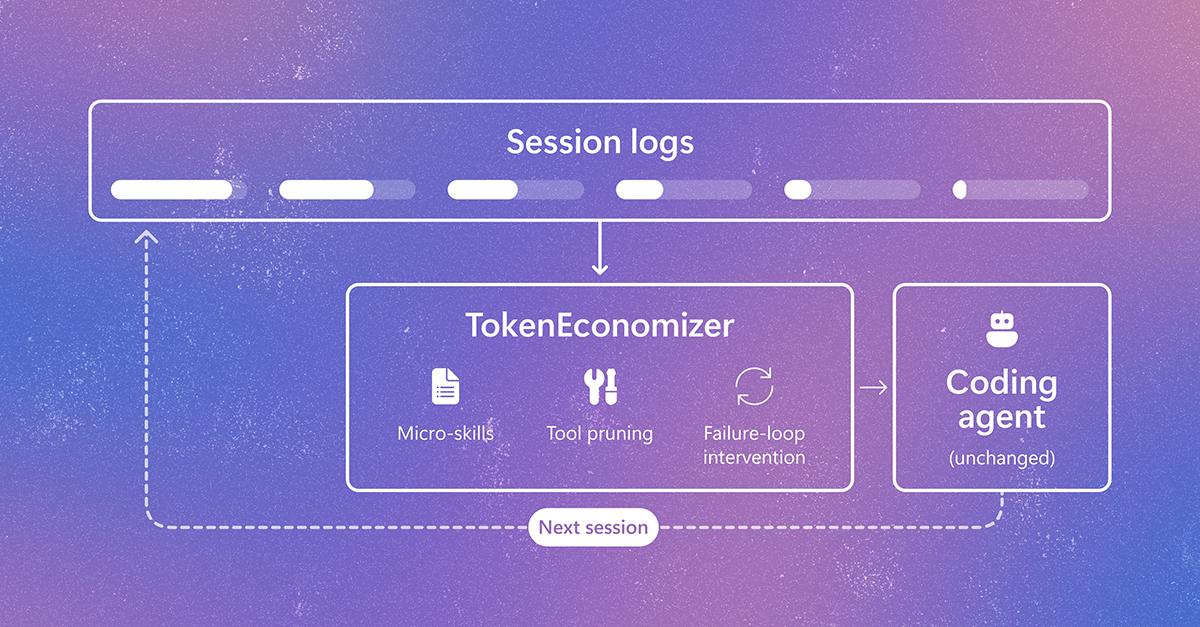
AI coding agents are increasingly help developers fix bugs and build features largely on their own, but every interaction with their models consumes tokens. In each session, an agent sends instructions, tool descriptions, and session history to its model. Most efforts to reduce this cost focus on individual tasks. Yet developers return to the same […] The post TokenEconomizer: Learning from Experience to Make AI Coding Agents More Efficient appeared first on Microsoft Research.
MIT News · Artificial Intelligence· news.mit.eduNov 9, 2026
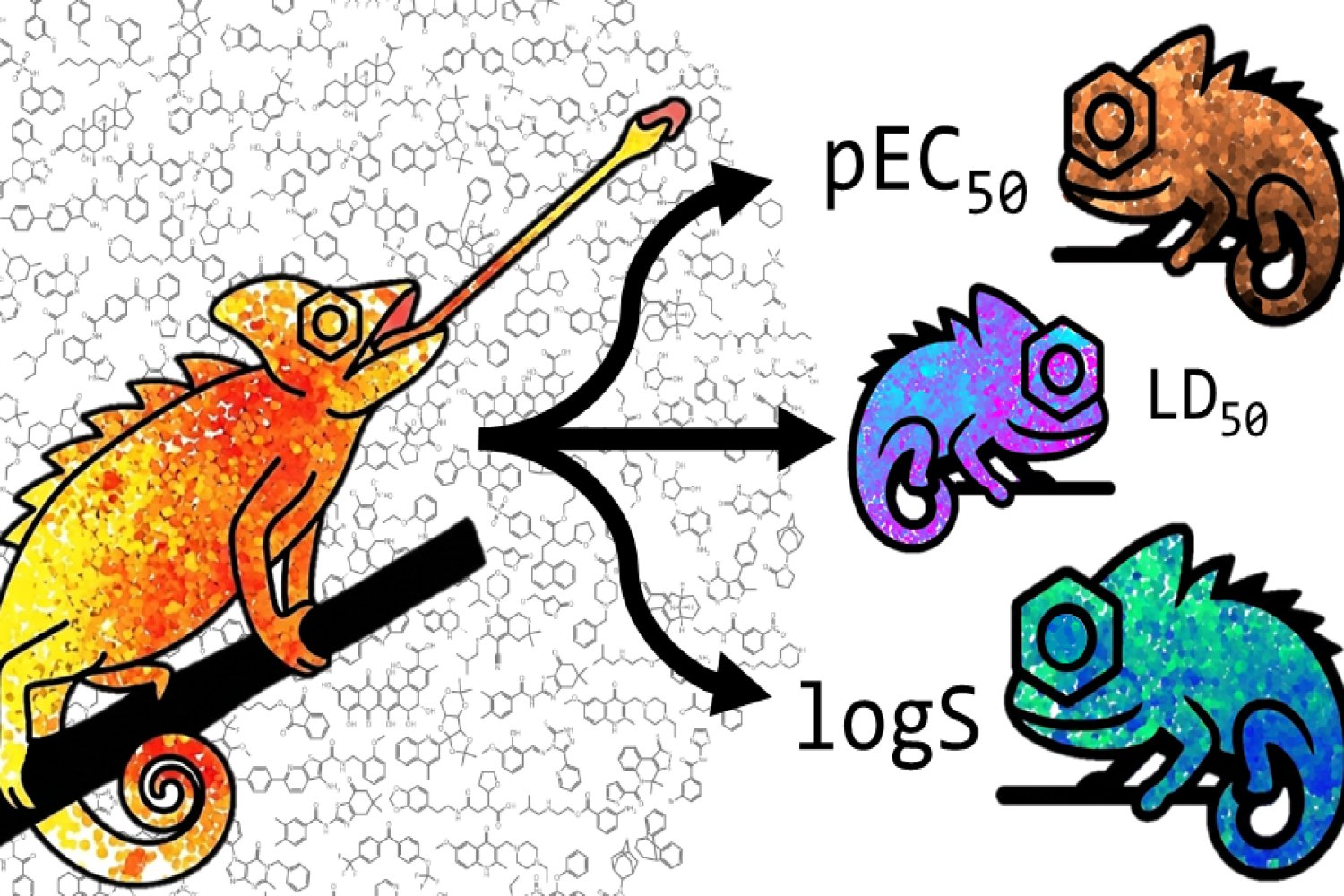
A machine-learning approach called CheMeleon provides a practical way to develop new drugs or other molecules with much less detailed, expensive experimentation.
We use cookies to run the site and, with your consent, for analytics and to show ads.
See our Cookie Policy.