Skip to content

Screening for coeliac disease in children and adults living in a slum of Dhaka, Bangladesh

Apr 2019 · BMJ Open Gastroenterology · Vol 6 · 4 citations · 54 references
Medicine

Abstract

Background and objective Serological screening with a confirmation through biopsy has improved the understanding of coeliac disease (CD) epidemiology worldwide. Prevalence of CD in Bangladesh is not yet explored and therefore, we aimed to assess the seroprevalence of CD in slum-dwelling malnourished children and adults in Dhaka. Methods Serum samples were collected from three different cohorts: stunted (length-for-age Z-scores (LAZ) <−2) and at risk of stunting children (LAZ <−1 to −2) and malnourished adults (body mass index <18.5 kg/m2). Samples from all the participants were assessed for anti-tissue transglutaminase antibody (tTG-IgA) and total serum IgA by ELISA. Positive tTG-IgA and randomly selected low IgA values were reconfirmed using anti-tTG-IgG and gliadin IgG ELISA. CD was diagnosed when second screening tests were found positive and the participants were further investigated by small bowel biopsy. Results A total of 818 participants (240 stunted, 272 at risk of stunting children and 306 malnourished adults) were enrolled in the study. Overall, anti-tTG-IgA was positive in 5/818 (0.6%; 95% CI 0.25% to 1.46%). Of the five positive cases, anti-tTG-IgG and gliadin IgG were found positive in only one participant. Duodenal biopsy of positive participant revealed characteristic lesions of CD. Randomly selected low IgA values were found negative in tTG-IgG and gliadin IgG for all the participants. No participant was found total IgA deficient. Conclusion The incidence of coeliac autoimmunity is low in malnourished slum dwellers regardless of age in Bangladesh. It is important to investigate the nationwide prevalence to reveal the definite picture.


Read PDF

Similar papers

#computer vision Review Sep 2017

Agile Software Development Methods: Review and Analysis

This publication proposes a definition and a classification of agile software development approaches and analyses ten software development methods that can be characterized as being "agile" against the defined criterion.

P. Abrahamsson, O. Salo, Jussi Ronkainen et al. · 727 citations · ⚡54
#small language model Dataset Open access Oct 2026

Socratic guiding questions in synthetic arithmetic data: matched LoRA runs (revision v2)

Supporting data, adapters, predictions and code for the article *Low-Cost LoRA Fine-Tuning of Small Language Models for Multi-Step Arithmetic Reasoning* by Jake O'Grady, Asena Isik Gürhan, Chee Fong Ting and Effirul Ramlan (University of Galway). We generated 20,000 GSM8K-derived arithmetic problems with step-by-step s...

O'Grady, Jake, Gürhan, Asena Isik, Chee, Fong Ting et al. · 465 citations
#computer vision Jun 2008

The impact of agile practices on communication in software development

The study shows that agile practices improve both informal and formal communication, but indicates that, in larger development situations involving multiple external stakeholders, a mismatch of adequate communication mechanisms can sometimes even hinder the communication.

M. Pikkarainen, Jukka Haikara, O. Salo et al. · 401 citations · ⚡48
#machine learning Review Open access Oct 2014

Software development in startup companies: A systematic mapping study

The results indicate that software engineering work practices are chosen opportunistically, adapted and configured to provide value under the constrains imposed by the startup context.

Nicolò Paternoster, Carmine Giardino, M. Unterkalmsteiner et al. · 394 citations · ⚡54
#computer vision Review Mar 2008

Agile methods in European embedded software development organisations: a survey on the actual use and usefulness of Extreme Programming and Scrum

The results show that the embedded industry has been able to apply agile methods in its development processes and that the appreciation of the agile methods and their individual practices appears to increase once adopted and applied in practice.

O. Salo, P. Abrahamsson · 238 citations · ⚡9
#computer vision Open access Jul 2017

What happens when software developers are (un)happy

Consequences of happiness and unhappiness that are beneficial and detrimental for developers' mental well-being, the software development process, and the produced artifacts are found.

D. Graziotin, Fabian Fagerholm, Xiaofeng Wang et al. · 236 citations · ⚡13

Related blog posts

Microsoft Research Blog Oct 12, 2026

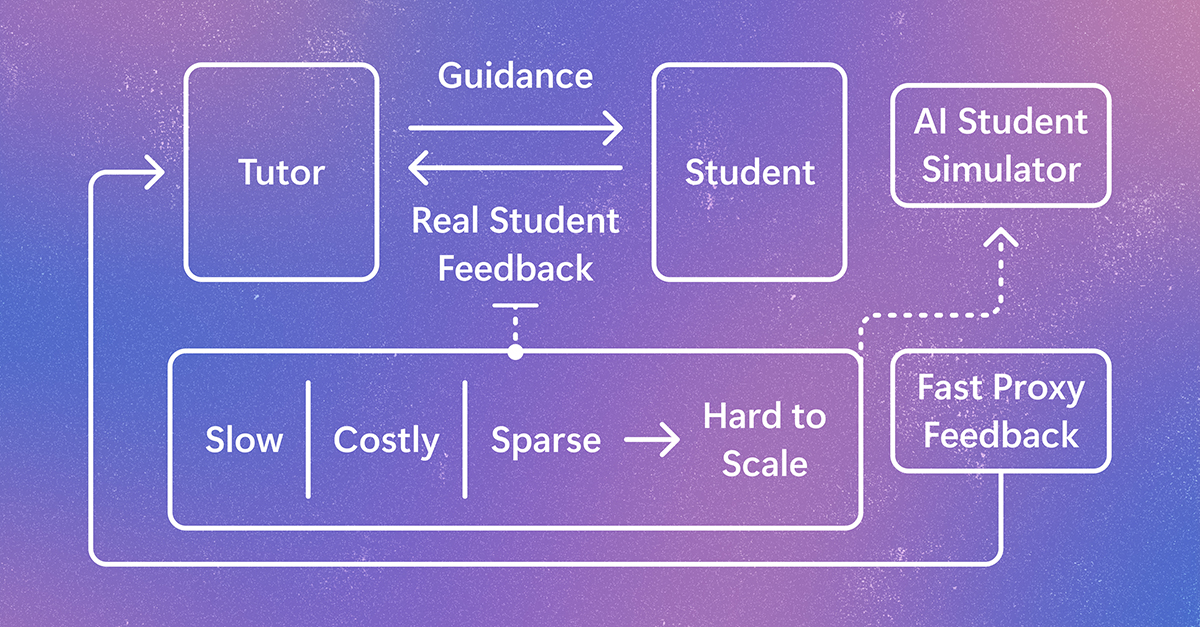
Simulating student learning for better AI tutoring

StudentSim is a research system for evaluating and improving AI tutoring tools before they are tested with learners. It models how individuals may engage with tutors, giving feedback to improve tutor performance across subjects like chess, writing, and mathematics. The post Simulating student learning for better AI tutoring appeared first on Microsoft Research.

We use cookies to run the site and, with your consent, for analytics and to show ads. See our Cookie Policy.